Tawonga Nyirenda is a farmer at heart, and it comes to her naturally. After all, her parents are poultry farmers who were able to feed, clothe, and send their children to school through their business.
As a child, she wasn’t aware of the amount of hard work and uncertainty that comes with farming; all she saw was how agriculture was changing lives in Malawi.
So one day, she decided to become a poultry farmer too, and reality hit.
She quickly learned farming came with major challenges like the rising cost of feed and agricultural inputs.
“I realized that even hardworking farmers could struggle to become truly profitable or sustain their families because the system was working against them. In a country so dependent on agriculture, it should not cost more than the minimum wage to buy a single bag of fertilizer. That is not just an affordability issue; it is a systems issue.”
She decided to do something about it. Nyirenda founded SeedBiz, an initiative that transforms organic waste into livestock feed and fertilizer.
“I founded SeedBiz to build practical, locally driven solutions that strengthen livelihoods, improve food security, and help communities adapt to climate shocks. Today, we work with more than 300 smallholder farmers across Malawi, making farming more sustainable, profitable, and accessible.”
She explains how it works.
“We use Black Soldier Fly Larvae (BSFL) technology to convert organic waste into sustainable, high-protein livestock feed and organic fertilizer. This allows us to address two urgent challenges at once: the high cost of agricultural inputs and poor waste management. What many people see as waste, we see as opportunity. By transforming waste into value, we help farmers reduce production costs, improve productivity, and adopt climate-smart farming practices.”
Turning Waste into Innovation
According to the World Bank Group, agriculture is the backbone of Malawi's economy, with the sector employing 93% of Malawians in rural areas. The industry is undergoing significant changes, and ideas and innovations like Nyirenda’s come in handy.
Nyirenda, 34, studied tourism and hospitality management at the Blantyre International University before earning a MSc in tourism management at the Tshwane University of Technology.
She was drawn to farming because it’s in her blood, and to make SeedBiz work, she read up as much as she could.
As she learned more, her inner advocate awakened.
“What sparked my interest in advocacy work was realizing that entrepreneurship alone is not enough. You can build a strong solution, but if policies, financing systems, and market structures do not support innovation, progress remains slow. Across Malawi and much of Africa, there are countless young innovators with ideas that could transform agriculture and livelihoods, yet many face barriers to capital, infrastructure, and recognition,” she says.
“That is why I use my voice to advocate for sustainable regenerative agriculture, youth inclusion, women’s leadership, and investment in climate-smart innovation. I believe that local innovators must be part of policy conversations because we understand the realities communities face every day. Innovation in Malawi is not a luxury – it is how we survive, adapt, and build a better future.”
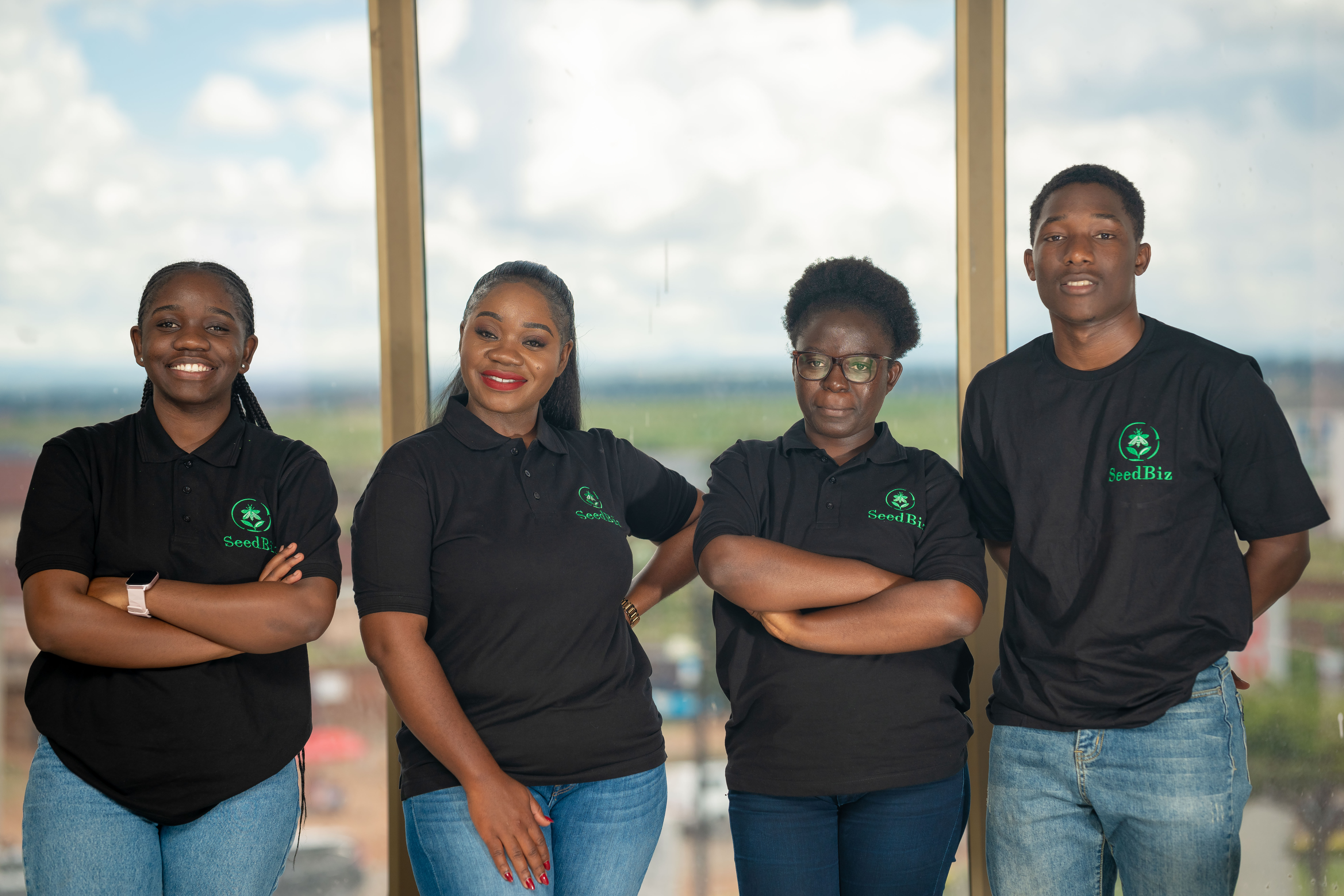
Tawonga Nyirenda and the SeedBiz team are building sustainable agricultural solutions that transform waste into livestock feed and fertilizer — creating jobs and supporting food security across Malawi. Image: Robert Edward Phiri for Global Citizen
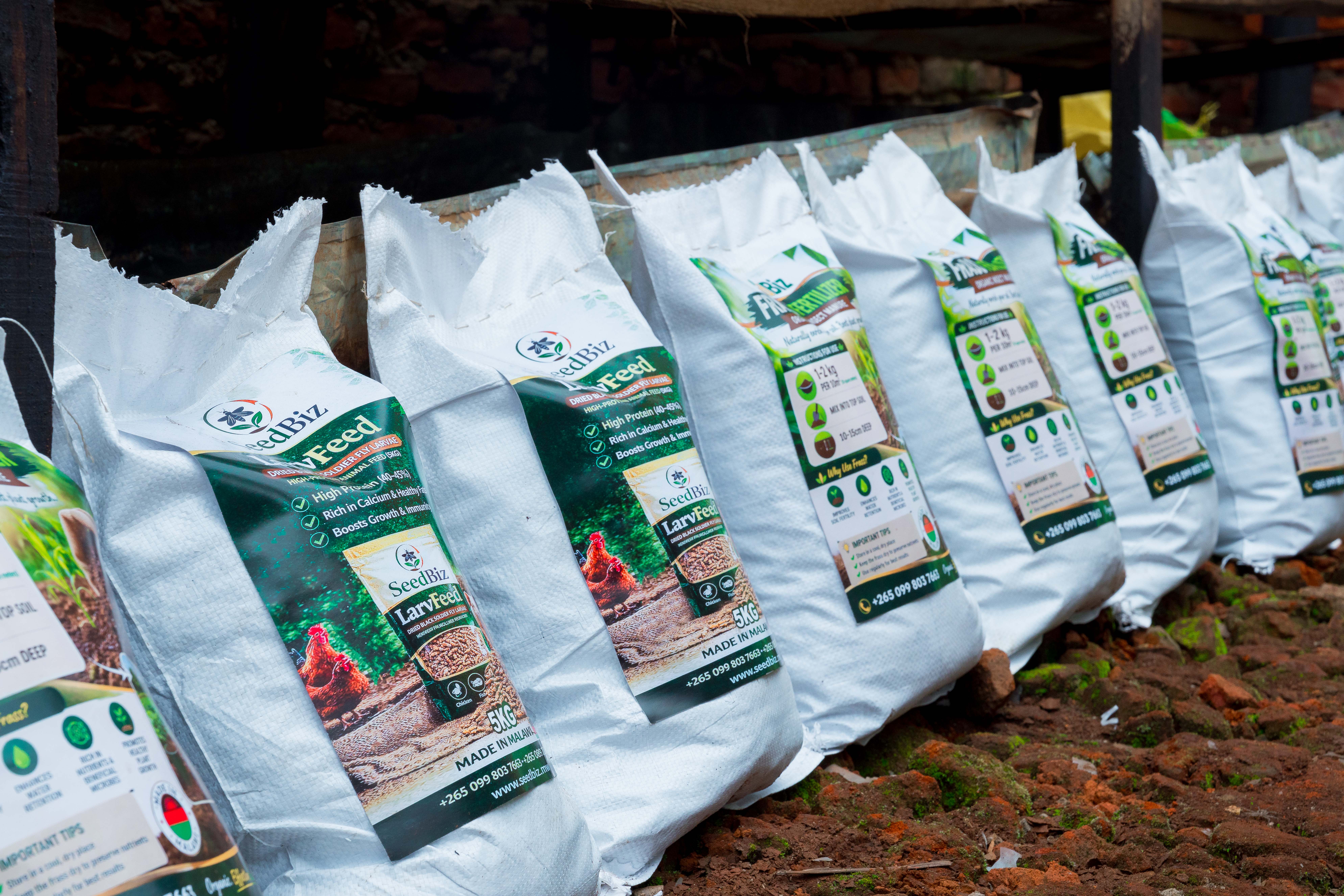
SeedBiz’s insect-based livestock feed is helping farmers in Malawi reduce costs while turning organic waste into valuable agricultural products. Image: Robert Edward Phiri for Global Citizen
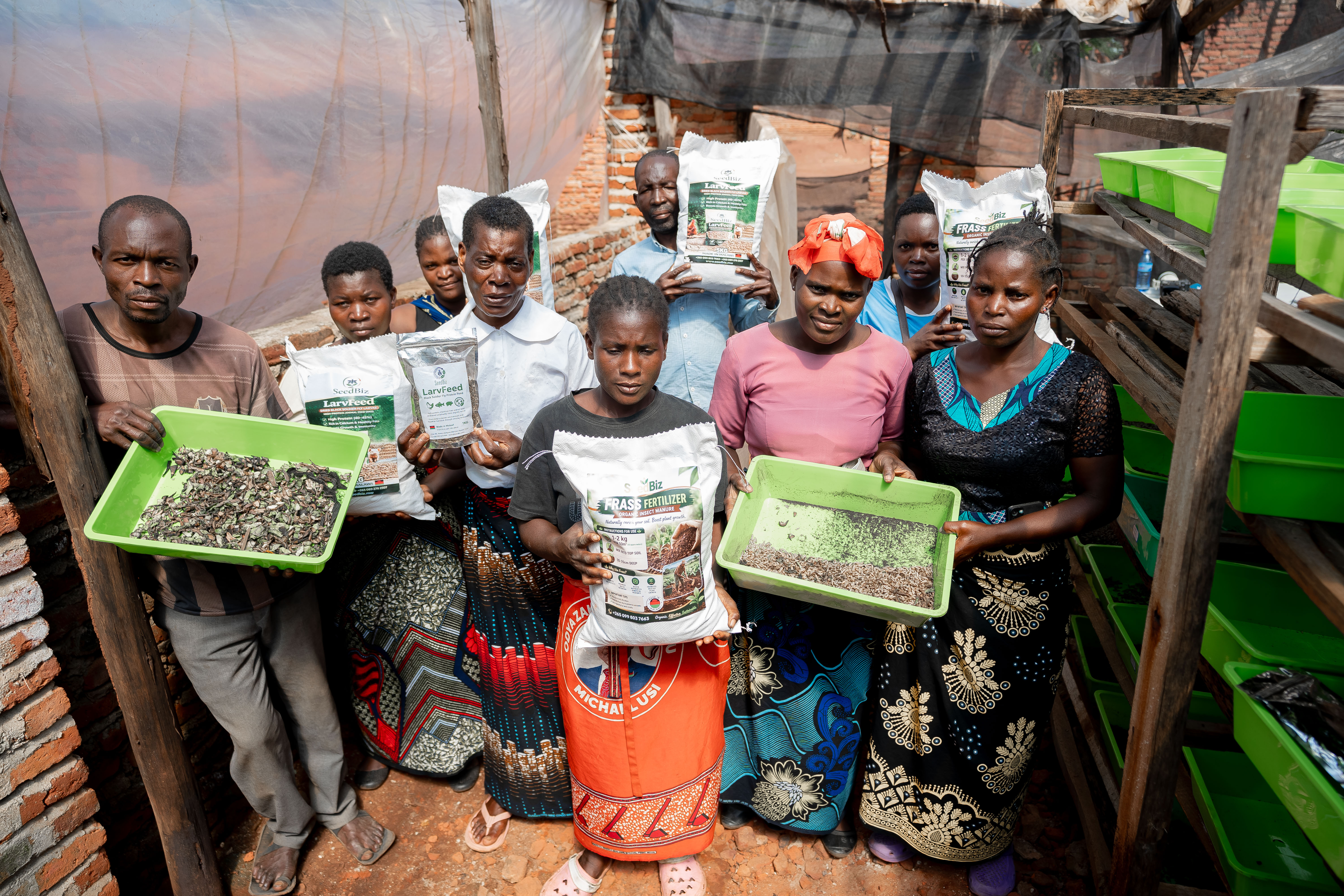
Farmers and community members display SeedBiz’s organic fertilizer and livestock feed products, developed by Global Prize winner Tawonga Nyirenda to make farming more affordable, productive, and climate-smart. Image: Robert Edward Phiri for Global Citizen
On the Global Stage
Nyirenda feels seen after winning the Global Citizen Prize. She says it is both an honor and a responsibility to be among the winners.
“For me personally, it is a reminder that ideas born in communities like mine matter on the global stage. It validates the work we are doing and gives visibility to challenges and opportunities in Malawi. For my work, this recognition opens doors to partnerships, networks, and resources that can help us scale our impact faster. It gives us a platform to show that African-led innovation can solve global challenges such as food insecurity, climate resilience, and sustainable production.”
She’s got big plans for this year with Global Citizen.
“When I look back a year from now, I want to have achieved measurable and meaningful growth through this partnership with Global Citizen. I hope to have scaled our operations to reach more farmers with affordable feed and fertilizer solutions, created new green jobs for young people, and strengthened community awareness around circular agriculture in Malawi and beyond.”
She also wants to use the platform to advocate for investment in youth-led innovation across Africa. There are thousands of talented young people with the passion to solve urgent problems if given the chance and support, and she wants to shine a light on them.
“If I can help shine a light on that potential, then this opportunity will have created an impact far beyond myself. Most of all, I want to look back knowing that this recognition was transformed into action, that it helped move communities closer to food security, economic opportunity, and sustainable futures. That is the kind of success that truly matters.”
Supporting Women in Agriculture
Nyirenda doesn’t want to rise alone. She hopes to bring other women into this journey of innovation.
“I am equally passionate about empowering women and youth in agriculture. Too often, these groups are excluded from ownership, leadership, and participation in modern value chains, despite their central role in food production. Through mentorship, job creation, entrepreneurship opportunities, and skills development, I want to help create a sector where young people see agriculture as an opportunity and where women are recognized as leaders and wealth creators.”
That’s not all. She’s got so many ideas it’s hard to pin down what’s next for this ambitious innovator. Implementing them all will not be easy, she knows this.
“On a personal level, I am inspired by the idea that one person’s action can create a ripple effect. If one innovation can help a farmer reduce feed costs, improve yields, or create jobs, then that impact extends to families, children, and communities,” explains Nyirenda.
“The hardest part of my work is changing broken systems while trying to serve people in real time; farmers need affordable solutions now, but structural change often moves slowly. Another challenge is bridging the gap between vision and access; there are many brilliant ideas across Africa, but too many innovators face limited funding, weak infrastructure, and barriers to growth,” she adds.
“Sometimes the challenge is not the lack of solutions-it is the lack of support for the people creating them. Convincing people to trust new technologies can also take time. Yet I have learned that consistency, evidence, and community trust build credibility and can overcome resistance.”