A crisis does not have to end for its effects on a child to begin. War, displacement, hunger, and climate disasters can interrupt schooling overnight, separating children from the routines, relationships, and support systems that help them feel safe. Prolonged exposure to extreme stress during childhood can also affect learning, development, and mental health long after the immediate emergency has passed.
That is why education in emergencies matters. A classroom can restore routine, connect children with trusted adults, provide psychosocial support, and create a space where learning can continue even when almost everything else has been disrupted.
Education Cannot Wait (ECW), the first global fund dedicated to education in emergencies, reports that almost 258 million school-age children and adolescents are now impacted by crises around the world.
That’s 21 million more children than just 18 months earlier.
Today, 93 million children are out of school, while millions more remain enrolled but struggle to stay — a crisis begins in early learning and hardens into an access crisis by adolescence.
Access to education offers a way forward, starting with foundational learning skills that help students catch up at scale. From there, it also means removing barriers such as access to safe spaces and teaching resources that keep learning on track despite the day-to-day crisis.
Every child deserves the chance to learn, dream, and build a bright future. Each crisis may look different, but the need for education remains the same. Here's what's happening, and how education can help.
Gaza: 625,000 children and almost no schools
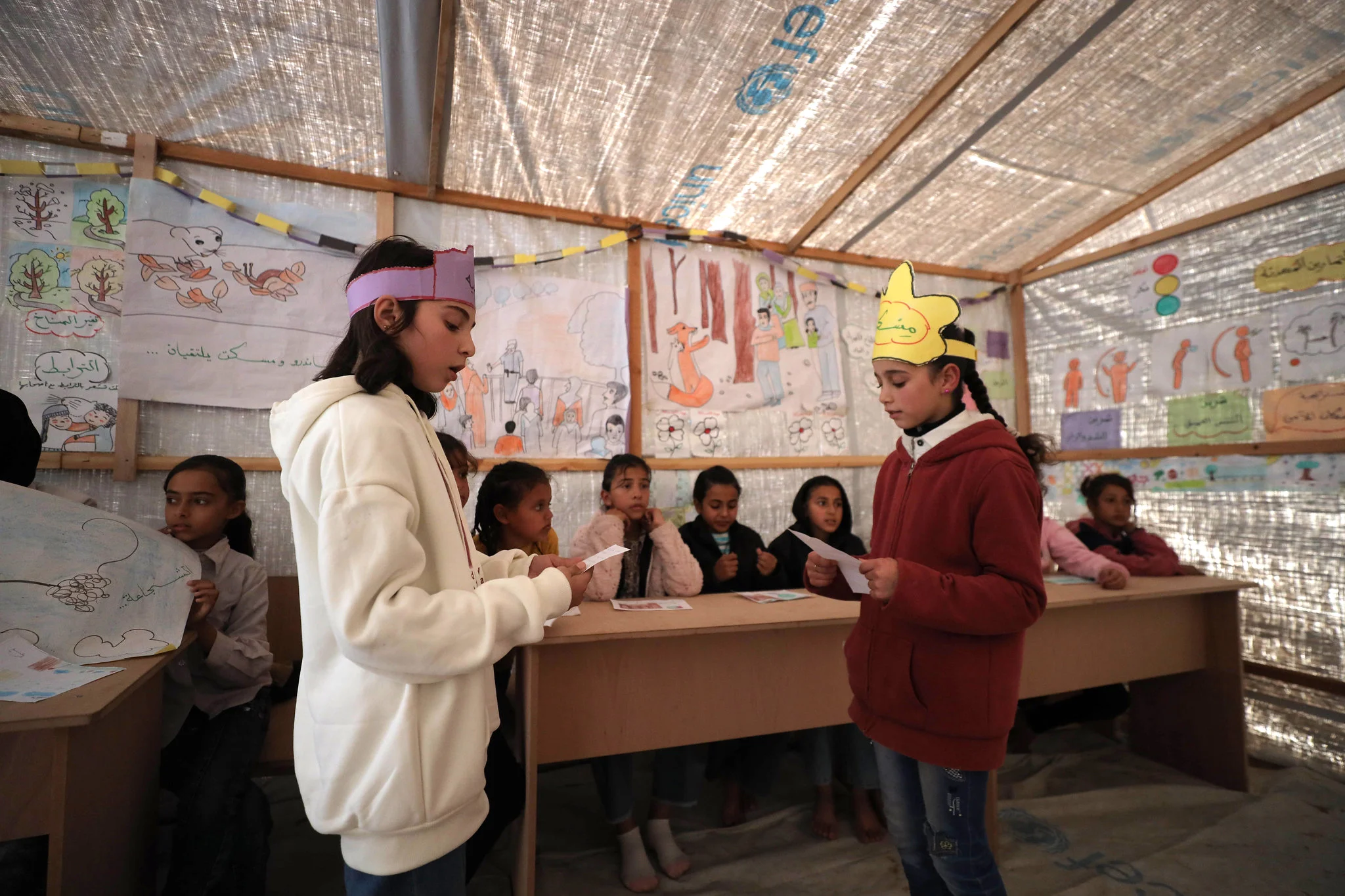 Children engaging in a learning activity at a temporary educational space in Gaza, part of NRC's Better Learning Programme.
Since the Gaza war began in 2023, 625,000 children are out of school due to a total absence of education in Gaza, with upwards of 97% of schools damaged or destroyed, according to Islamic Relief.
Researchers with the United Nations Relief and Works Agency (UNRWA) and the University of Cambridge have also warned that prolonged disruption could set children’s education back by as much as five years, raising fears of a “lost generation” of students. ECW is among the donors supporting UNICEF’s effort to restore learning spaces and psychosocial support for children in Gaza, a critical need as conflict and compounding humanitarian crises continue.
South Sudan: 2.8 million displaced children still seeking learning
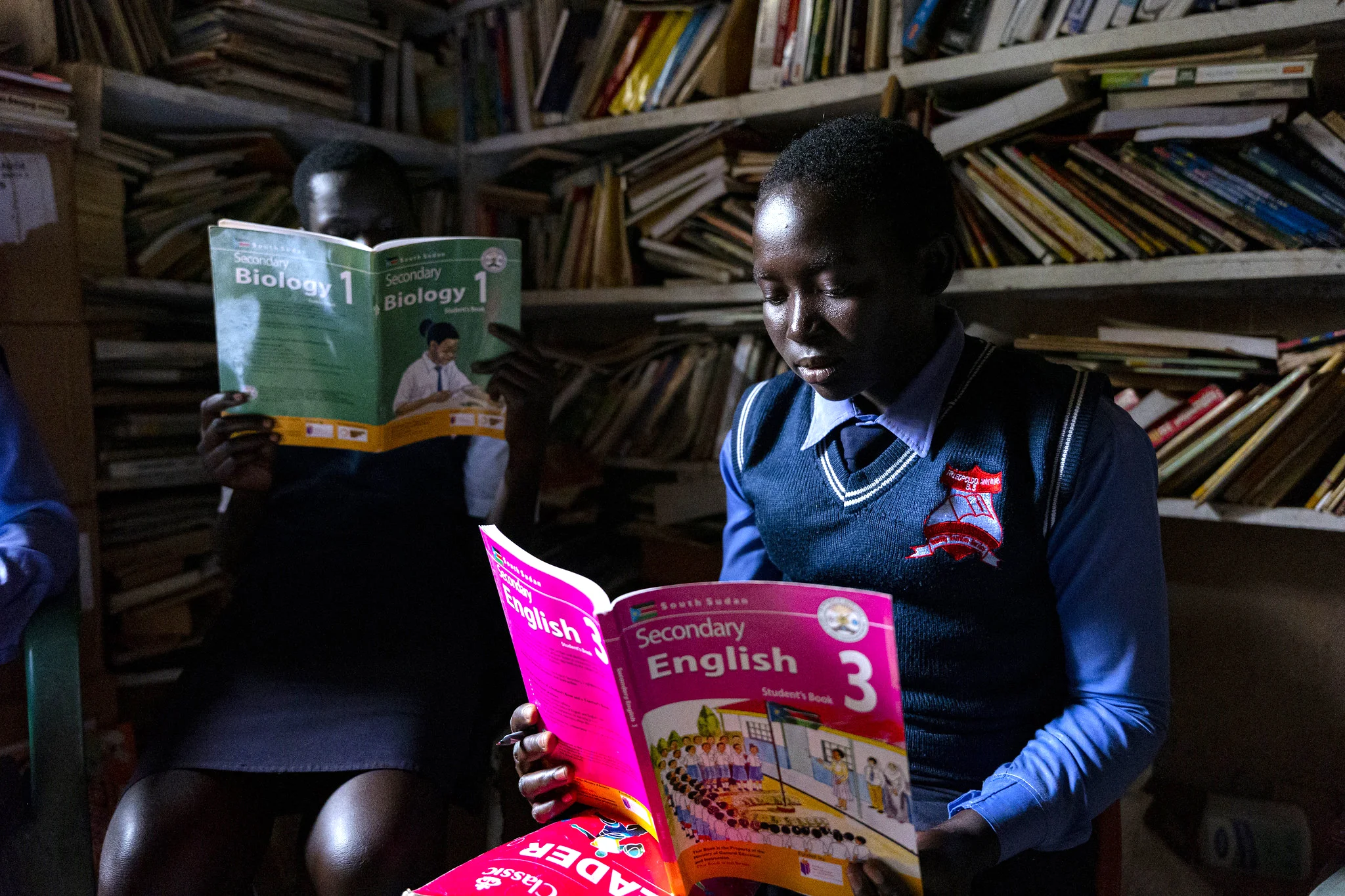 ECW and its partner AVSI are helping girls and young women in South Sudan return to school through safe, inclusive education.
In South Sudan, more than 2.8 million children are out of school, representing more than 70% of school-age children, with girls disproportionately affected.
Years of conflict, displacement, poverty, and instability have made consistent access to education difficult, impacting entire generations of young learners.
Since 2020, ECW has supported partners in expanding access to inclusive education that helps young South Sudanese students stay in class and keep turning up. This includes students who have and are actively experiencing displacement, children with disabilities, and girls who may be marginalized. In 2021, ECW and its partners, including Save the Children, distributed more than 1 million textbooks to schools across the country.
Climate change has also taken a heavy toll on the country and across the continent, with more than 7 million children affected by the impacts of climate change globally. In South Sudan, that means drought and flooding that compound forced displacement nationwide.
As conflict continues and more children are displaced daily, ECW needs support to get them the educational access they need.
Afghanistan: 80% of school-age girls need access to education now
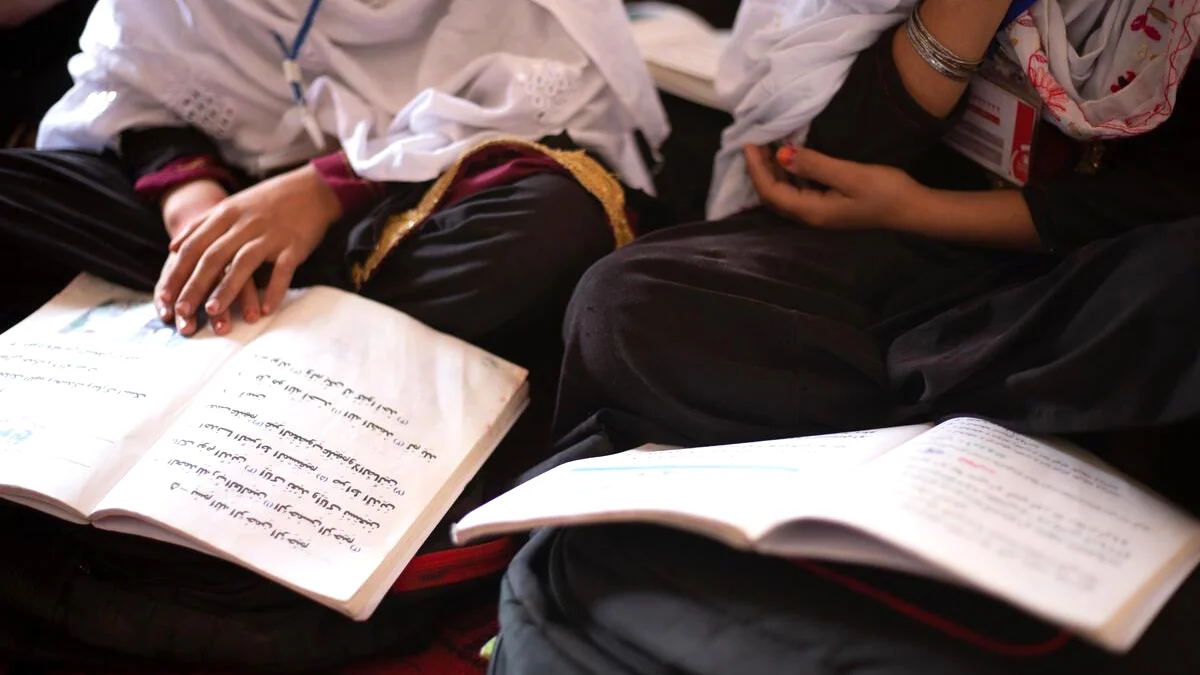 A student in Afghanistan holds her workbook. Education Cannot Wait and its partners are working to expand access to safe, inclusive learning for crisis-affected children.
In Afghanistan, upwards of 80% of school-age girls and young women have been pushed out of school following restrictions imposed since the Taliban seized power in August 2021.
Since 2017, ECW has funded partners and education programs across the country, focusing on girls' access to learning and community-based education. That work now continues in a country where girls have been barred from secondary and higher education, despite a UN Women report finding that more than nine in ten Afghans support girls' secondary schooling. Girls make up 58 % of ECW's beneficiaries in Afghanistan, with programs concentrated in Herat, Kunduz, Kandahar, and Uruzgan. The ECW-led #AfghanGirlsVoices campaign also works to raise awareness around milestones, such as the 1,000-day and four-year anniversaries of the secondary education ban.
Lebanon: Years of overlapping crisis have left 340 schools destroyed
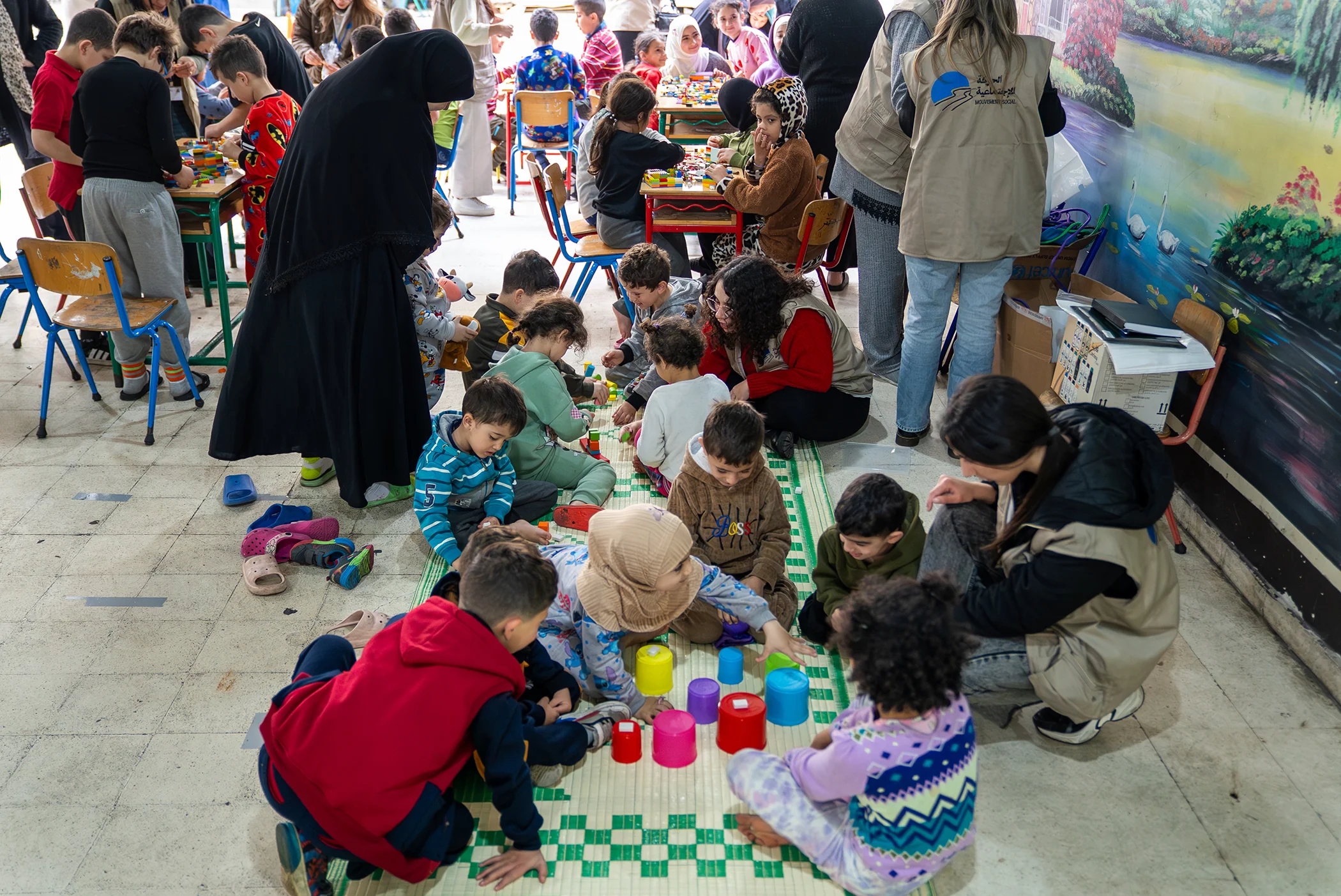 At a public school shelter in Beirut, children displaced by conflict take part in learning, recreational, and psychosocial activities supported by ECW, UNICEF, and local partners.
According to ECW, Lebanon is facing a severe humanitarian crisis, with more than one million people displaced and more than 250,000 children across the public school system experiencing disruption to their education. That disruption comes after years of overlapping crises, including economic collapse, the 2020 Beirut port explosion, regional conflict, and repeated displacement.
ECW responded by launching an emergency response focusing on children’s access to safe spaces to continue learning, protection services, and physical support for crisis-affected children.
The organization is also developing a new multi-year investment to strengthen the resilience of Lebanon's education system. Ultimately, the goal is to support up to 150,000 crisis-affected learning-age children.
Children are already choosing to learn — we need to meet them where they are.
Access to education is a right for every child. In a crisis, learning can provide a familiar routine, contact with teachers and other trusted adults, and a way for children to keep developing — even as the world around them is unstable. Staying in school also makes it easier to prevent months of disruption from turning into years of lost learning. Children are already finding ways to keep learning through crisis. The challenge is making sure the resources are there to meet them where they are and help them continue.
That’s where sustained education funding becomes critical. In July, ECW launched a call for new Crisis-Oriented Resilience and Emergency (CORE) Programmes in Afghanistan, Bangladesh, Lebanon, Myanmar and South Sudan. The programs locally driven responses that meet immediate needs while helping systems recover and withstand future crises.
As conflict, displacement, heatwaves, fires, and floods push more children out of school, the risk is not simply that they miss lessons. The longer children are disconnected from education, the harder it can become to return, catch up, and stay in school at all.
Global Citizens can call on governments in Spain, France, Australia, and Canada to fund schools for children in crisis and help ensure that ECW and its partners have the resources to keep children learning through conflict, displacement, and disaster. Take action today through the Global Citizen app or on our website.
Editor’s Note: This article is a part of Global Citizen's grant-funded content.