Africa consumes more than one billion vaccine doses each year, yet manufactures less than 1% of the vaccines it uses, leaving the continent dependent on global manufacturers for one of its most essential health products.
The scale of that reliance has made vaccine manufacturing a major health security priority for the African Union, which wants more than 60% of the continent's vaccine needs to be produced within Africa by 2040. The target would require a substantial leap from current production levels, at a time when African manufacturers still face challenges ranging from regulation to competing for vaccine contracts.
According to the Africa Centres for Disease Control and Prevention (Africa CDC), more than 27 vaccine manufacturing initiatives are underway across Africa, with at least eight vaccine products expected to reach WHO prequalification or enter the market by 2030.
Assietou Diouf, chief executive officer of Senegalese vaccine manufacturer VaxSen, said the case for expanding African vaccine manufacturing comes down to both health equity and sustainable economic growth. “Africa’s population is rapidly growing, and the need to have access to basic health is very critical in our continent,” Diouf told Global Citizen. She also said greater manufacturing capacity would allow African countries to move faster on their own health priorities. Look at how long it took for malaria to reach a stage where it was supported and produced by manufacturers – it took decades.”
COVID-19 vaccine shortages accelerated Africa's manufacturing plans
The risks of relying heavily on vaccine supply from outside the continent became particularly visible during the COVID-19 pandemic, when African countries entered the global market alongside wealthier countries that had already secured large quantities of early vaccine supplies. Africa received vaccines later and in more limited quantities than other regions.
Africa Vaccine Manufacturing Explainer
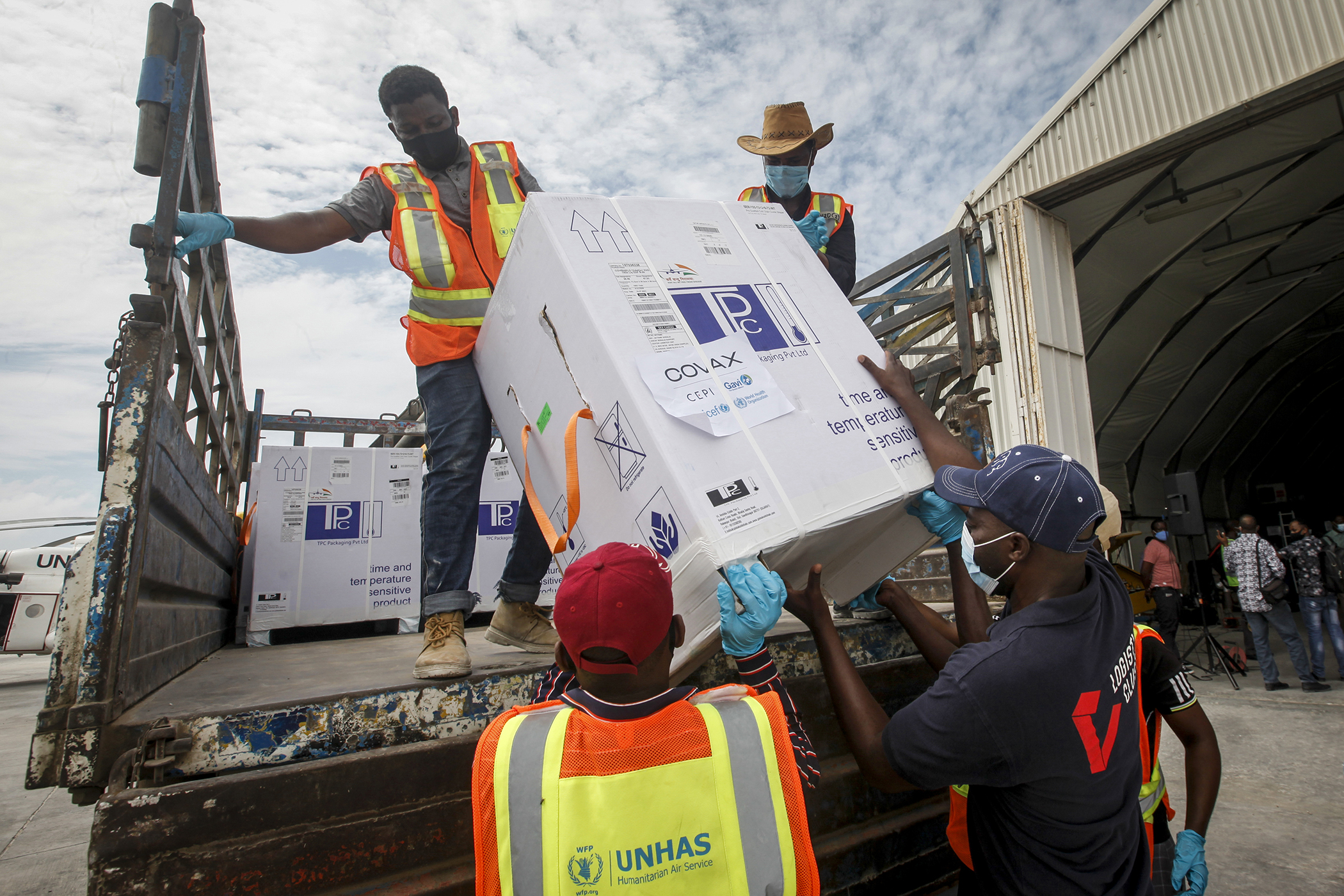
In this March 15, 2021, file photo, boxes of AstraZeneca COVID-19 vaccine manufactured by the Serum Institute of India and provided through the global COVAX initiative arrive at the airport in Mogadishu, Somalia.
Africa Vaccine Manufacturing Explainer
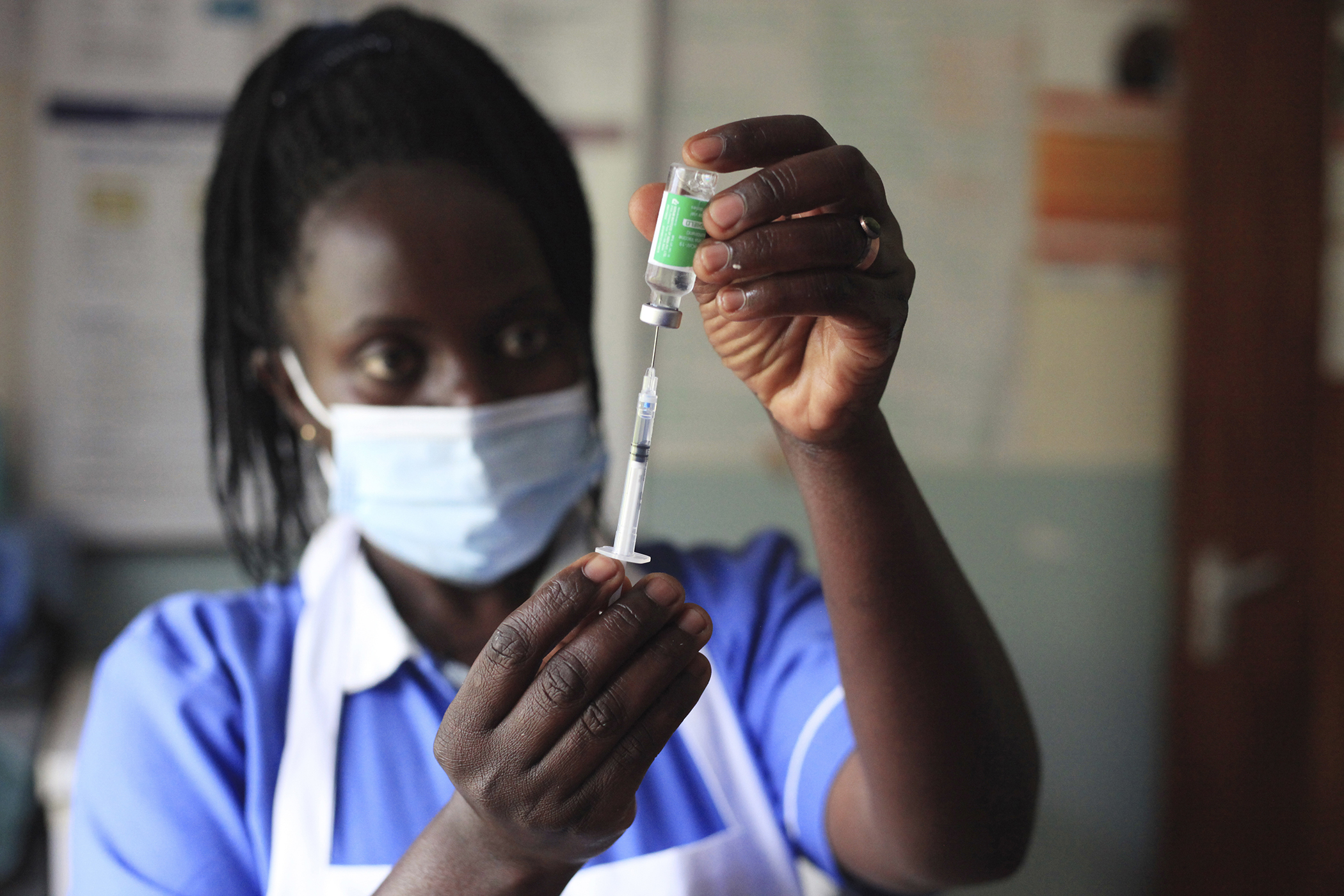
A nurse prepares the AstraZeneca COVID-19 vaccine at the Butanda Health Centre III in Western Uganda, Tuesday, April 27, 2021. In February 2021, it was reported that Uganda would pay $7 per dose for 18 million doses of the vaccine.
When a severe COVID-19 outbreak in India prompted the Serum Institute of India to redirect doses to the domestic response in 2021, deliveries to Africa that were expected through the COVID-19 Vaccines Global Access (COVAX) were disrupted, demonstrating Africa’s vulnerability to relying heavily on vaccine producers outside the continent. COVAX, which operated from 2020 to 2023, was a program designed to provide fair and equal access to vaccines for every country and delivered almost 2 billion vaccine doses globally.
In some instances, African countries paid more for vaccines. At US$5.25 per AstraZeneca dose, South Africa paid more than double what the European Union paid, with the EU purchasing each dose for US$2.15.
Following this and other equity issues impacting Africa’s vaccine supply and delivery during the COVID-19 pandemic, African Union heads of state established the Partnerships for African Vaccine Manufacturing (PAVM) in 2021 under Africa CDC, with a goal for African manufacturers to supply more than 60% of the continent's vaccine requirements by 2040.
The African Union’s original roadmap also set interim targets of 10% by 2025 and 30% by 2030. As the World Health Organization (WHO) reported, the first milestone was not reached. As of February 2026, Africa was still producing less than 1% of the vaccines it consumes. Global Citizen reached out to Africa CDC for comment on the manufacturing targets discussed in this article but had not received a response at the time of publication. We continue to engage with Africa CDC to better understand progress toward these targets, the challenges involved, and opportunities to advance our shared advocacy goals.
Despite this, the 2040 target “is ambitious, but it is within reach,” said Duncan Thela, a technical officer within the Local Production Medicines, Diagnostics, Infrastructure and Technologies Unit at the WHO. He stated that the continent has made more progress in vaccine manufacturing in recent years than in the previous three decades, with 11 manufacturers now operating commercial-scale facilities and several African-made vaccines expected to reach the market within five years.
Vaccine production expanding beyond established manufacturing hubs
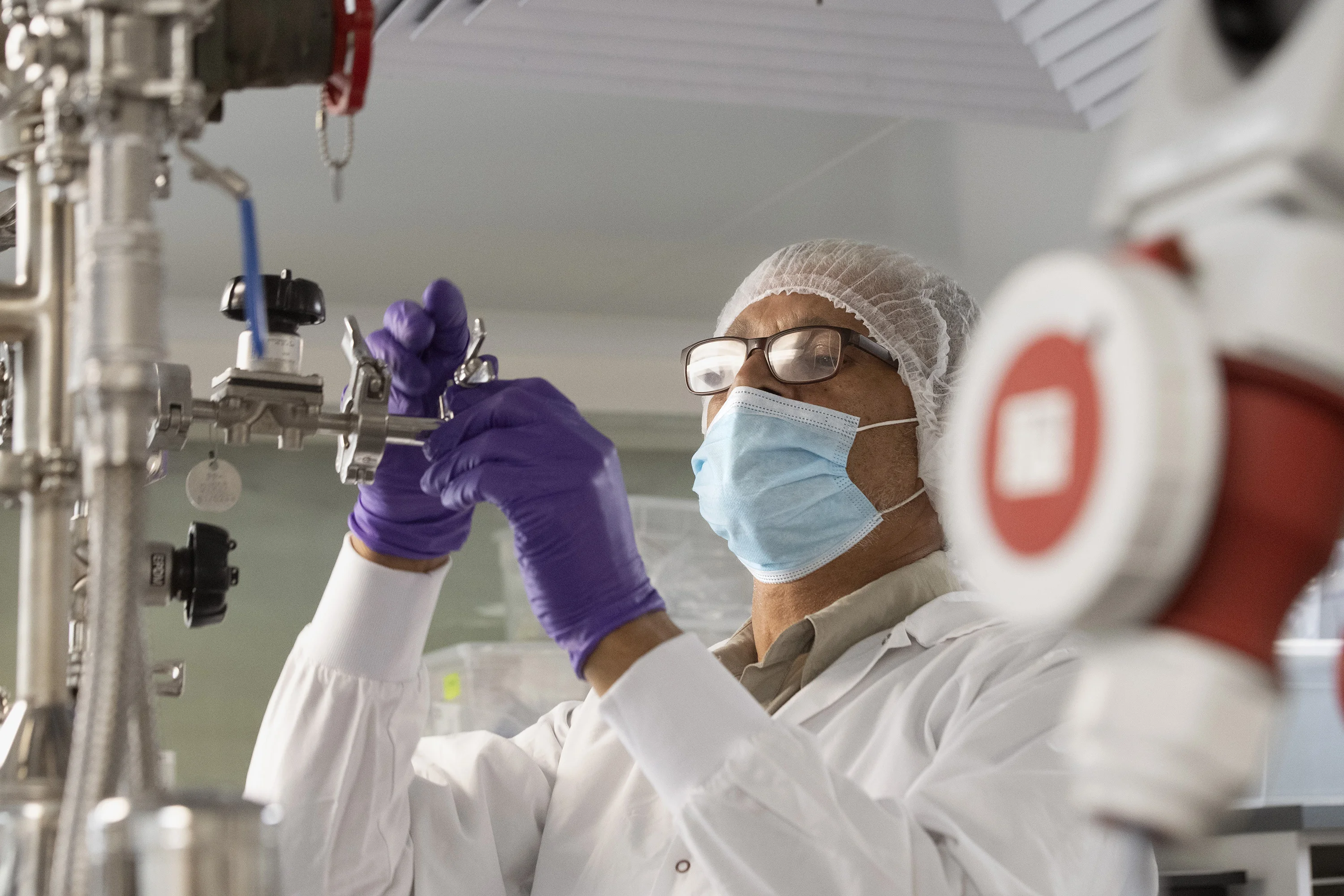 A laboratory technician is pictured at work at Biovac in Cape Town, South Africa on Feb. 10, 2022. The company is the first manufacturing spoke for the mRNA vaccine technology transfer hub.
Vaccine production on the continent is limited, with manufacturing in only five countries on the continent: Egypt, Morocco, Senegal, South Africa, and Tunisia. Since 2021, countries including Kenya, Nigeria, Rwanda, and Ghana have pursued new vaccine production or technology-transfer programs, while existing hubs in Senegal, South Africa, and Egypt have expanded their capacity.
However, despite efforts to expand manufacturing, the number of viable operations remains smaller than the number of announced projects. As of June 2026, VaxSen's industry assessment identified 11 manufacturers with commercial-scale facilities and another 13 projects under development. Africa CDC indicates there are 27 manufacturing initiatives on the continent. It has also tracked projects that have stalled or been abandoned, highlighting the gap between announcing a manufacturing facility and successfully bringing vaccines to market.
Financing and access to buyers remain obstacles to scale
While the continent works to increase the number of manufacturing facilities, Africa CDC recognizes that financing and access to buyers must also improve to develop a sustainable vaccine industry.
The African Vaccine Manufacturing Accelerator (AVMA), launched by Gavi in partnership with the African Union and Africa CDC in 2024, can make up to US $1.2 billion available over 10 years to support commercially viable African vaccine manufacturing. The mechanism provides financial incentives when eligible African-manufactured vaccines achieve milestones such as WHO prequalification and when manufacturers successfully supply eligible doses through UNICEF procurement.
Manufacturers must also finance research and clinical trials, secure technology transfers, meet regulatory requirements, train specialized staff, and reach markets large enough to operate competitively. Diouf said she is “very concerned” about market access, explaining that African manufacturers often compete with established suppliers that produce vaccines at much larger volumes and can therefore sell them at lower prices.
One way to address that challenge is to aggregate demand across countries rather than relying on individual national markets. “We are working with [the] Africa CDC to make sure that we can have one [consolidated way] to serve the continent. This could be a game changer,” she said.
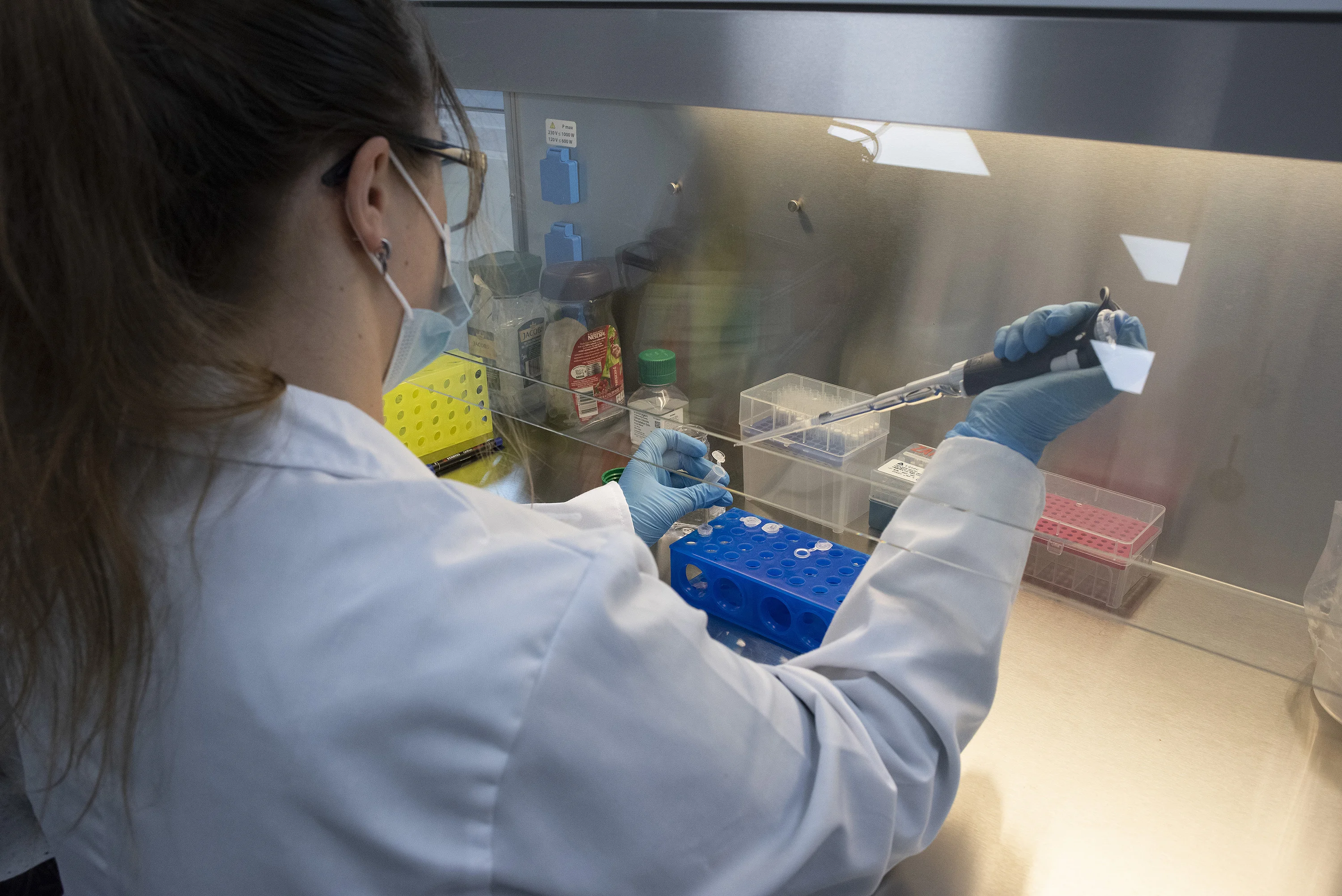 A laboratory technician at work at Afrigen in Cape Town, South Africa on Feb. 11, 2022. The company is home to a WHO-backed hub set up in 2021 to share mRNA vaccine technology and know-how with manufacturers in low- and middle-income countries.
Africa CDC is also developing the African Pooled Procurement Mechanism to consolidate demand among AU member states, with the aim of reducing fragmented purchasing and giving manufacturers a larger, more predictable market.
Those purchasing decisions will be central to whether new manufacturing capacity survives, Diouf said. “Vaccine sovereignty is a political agenda,” she told Global Citizen, stating that African countries should make purchasing decisions that support manufacturers on the continent.
Manufacturing capacity could shape future pandemic response
While much of Africa’s current and planned vaccine production involves vaccines related to routine childhood immunization, the goal is to expand beyond this scope and establish production systems that could be adapted during disease outbreaks and future pandemics.
Diouf said financing vaccine research before an outbreak occurs remains a significant obstacle. Potential vaccines may exist at laboratory level, but moving them through clinical trials requires substantial investment before governments or companies know whether an outbreak will create demand, she said. The challenge is to build that capacity before the next health emergency creates an urgent need for it. “We have seen what happened with COVID,” Diouf said.
While the WHO believes Africa is in a much better position than it was during the COVID-19 pandemic as it has boosted its manufacturing capacity in recent years, it also stresses that a major gap remains: “Africa would be far better prepared than it was during COVID-19. We now have more facilities, more technology platforms, and stronger coordination through African Union agencies – but we are not yet self-reliant. Africa still has limited upstream antigen production, meaning most vaccines cannot yet be made end-to-end on the continent,” Thela stated.
Editor’s Note: This reporting is a part of Global Citizen’s grant-funded content through the Bill & Melinda Gates Foundation.