
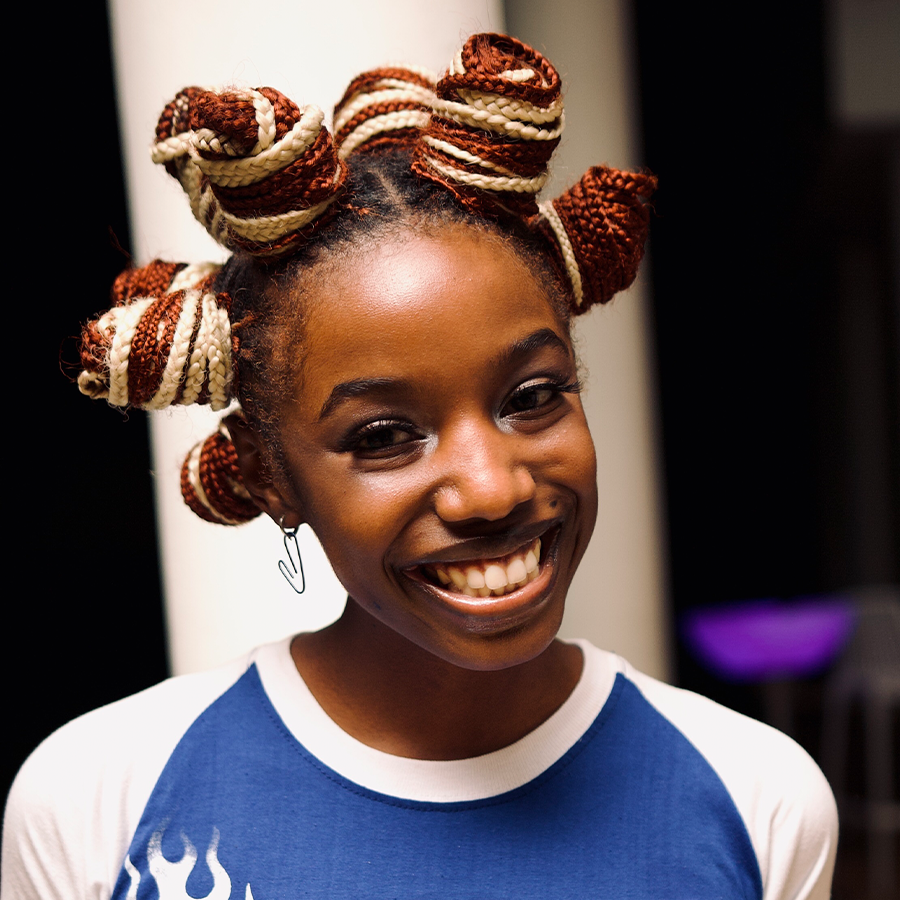
“I don't want to simply participate in existing conversations about African creativity. I want to help expand them.”
- Panashe Mafoti
Panashe Inomusainkosi Mafoti is a multidisciplinary artist from Zimbabwe working across wearable art, experimental textiles, sculpture, installation, styling and creative direction. She describes her practice this way: “I am interested in what happens when ordinary or discarded things are taken out of their expected context and given a new life. My practice often involves materials such as VHS tapes, CDs, plastic and paper bags, second-hand clothing, and other found objects. I transform these materials into wearable and sculptural works that explore memory, identity, consumption, and the possibilities of African futures.”
She describes herself as an experimental creative who constantly questions things, what we value and discard, how we remember, and how we imagine the future.
“Coming from Zimbabwe has deeply influenced that perspective,” Mafoti said. “I am interested in making work that feels distinctly African without being confined to conventional ideas of what African creativity or fashion is supposed to look like.”
There was no single moment when Mafoti decided to become an artist. The shift happened gradually. “The more I created, the more I realized that art could communicate things that a conventional conversation sometimes cannot. It can make someone stop, question something or see an everyday object differently. That is where activism entered my practice. I began to understand that the materials and environments around me were already carrying stories. In Zimbabwe, second-hand clothing, discarded objects, and obsolete technologies are part of our everyday reality. They speak to economic conditions, global systems of consumption, technological change, and memory.”
Civic space in Zimbabwe is repressed, and Matofu is attentive to the ways history and the present intersect. “Working creatively in Zimbabwe also means being conscious of the environment around you. There are realities that influence how openly people communicate, and, as a creative, I am aware that the social and political context can affect how work is received and interpreted.”
She says this has made her thoughtful about how she communicates politically sensitive ideas. “Creative expression does not always need to be completely literal. I often communicate through symbolism, materials, and metaphor. I have not personally experienced direct threats or harassment because of my art. However, I remain conscious of the environment in which I work and the responsibility that comes with publicly expressing ideas.”
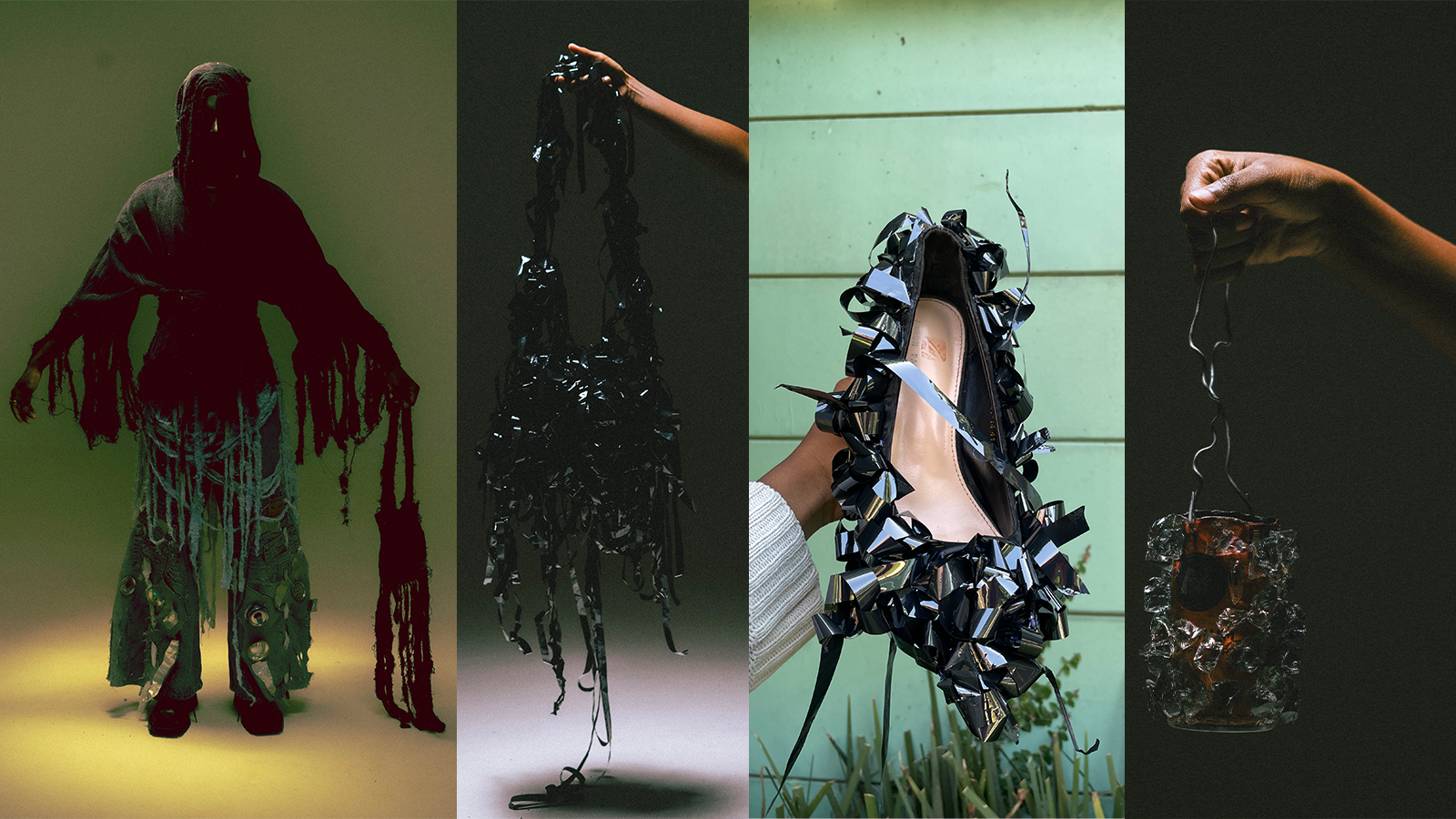
For the Emerging Creatives Program, Matofi chose to showcase images from her wearable art practice, particularly pieces from the Meraki body of work and Shuv-rudi, in which she explores the transformation of discarded and overlooked materials into wearable and sculptural forms. “I chose these pieces because they reflect the core of my creative advocacy: using art and design to challenge perceptions of African creativity while drawing attention to sustainability, resourcefulness, and the possibilities within materials that are often considered waste. The works incorporate reclaimed materials such as VHS tape, CDs, paper, discarded clothing, and other everyday objects, transforming them into pieces that invite people to reconsider what we value, what we discard, and what can be created from limited resources.”
Matofi says this work is particularly personal to her as a Zimbabwean creative, and growing up in an environment where resourcefulness was often a necessity. “I have come to see this not simply as a limitation but as a source of creative knowledge. Through wearable art, I explore how African creativity can look towards the future while remaining connected to our realities, histories, and ways of making.”
Mafoti wants her work to widen conversations about Zimbabwean and African creativity without reducing diverse experiences to a single story. “I am particularly interested in the spaces between things — between fashion and art, history and futurism, beauty and waste, memory and technology. These contradictions are often where I find the most interesting ideas.” She hopes those tensions leave viewers questioning “the material they are looking at, the world they are living in, or what they believe African creativity can be.”
“I don't want to simply participate in existing conversations about African creativity. I want to help expand them,” Mafoti said.
PANASHE'S
WORK

Global Citizen’s Emerging Creatives Program provides a platform for emerging creatives in the Global South that are highlighting the need for open civic space worldwide. Through their art, they call for change, shine a light on social injustices, and advocate for the advancement of the Global Goals.
MEET THE MENTOR
Rakaya Esime Fetuga
POET
South African-born Simphiwe Molefe, uses his photography to show the impacts of energy issues in the country. His collection of images titled, Impilo Iyaqhubeka, translates to mean “life goes on” in isiZulu and looks at how every day members of his community cope with South Africa’s ongoing power crisis.
In 2023, South Africa’s civic space rating was downgraded from “narrowed,” to “obstructed” — the third worst rating a country can have. That’s why Molefe believes creatives like himself have a role to play in highlighting the effects of the failure of basic services such as the power crisis in South Africa.