Hawa Bâ is a self-taught journalist based in Mauritania, a country where civic space remains subject to certain limitations and reporting on sensitive issues often comes with risk. She reports for Initiatives News and focuses on women’s rights, gender-based violence, health, and political participation, working in a media environment where journalists face pressure and limited access to information.
In Mauritania, journalists covering protests or public events can have their equipment confiscated, internet access is periodically disrupted, and independent reporting is frequently discouraged. Women journalists encounter additional barriers, including gendered harassment and attempts to discredit their work. Despite these challenges, journalists like Bâ continue to document social realities that would otherwise remain invisible.
Bâ is also the communications lead for a network of journalists working to address violence against women and girls in Mauritania, a collective effort supported by the UN Human Rights Office (OHCHR). Through training, coordination, and international visibility, OHCHR supports journalists working in restrictive environments to strengthen their reporting, protect their rights, and continue informing the public.
In her own words, Hawa Bâ shares how she became a journalist, why she chose mobile reporting, and what it takes to tell women’s stories in a context where speaking openly can carry consequences.
I’m Hawa Bâ, a journalist in Mauritania. I didn’t study journalism formally.
I learned by being on the ground and by paying close attention to the gaps in public conversation.
My path into journalism began in 2017. A senior journalist invited me to accompany him on the job, and later encouraged me to write about it. My first article focused on people with disabilities who made leather shoes. When I sent the draft, he made a few corrections and shared it publicly. The story was read widely and my name appeared under it. That moment stayed with me. It showed me that stories travel, that names matter, and that publishing comes with responsibility.
After that, I kept writing. Whenever there was a training opportunity, I applied. I attended journalism workshops in Mauritania and abroad, including in Tunisia, France, and Senegal. Some were short, intensive trainings focused on reporting techniques, while others focused on ethics, investigative methods, or digital storytelling. Over time, I strengthened my skills and clarified my direction.
Even before journalism, I was involved in community outreach with youth networks.
We went door to door, speaking with young people about sexual and reproductive health and family planning. On the ground, I saw how misinformation circulated, especially around contraception and women’s bodies. Rumours would spread quickly: that contraception causes infertility, that girls who speak openly lose their value, that silence is safer than knowledge. These beliefs shaped lives. They influenced whether girls stayed in school, whether young women could plan their futures, and whether families made decisions based on fear rather than facts.
When I began reporting, it felt natural to carry this work into journalism. Writing allowed me to reach people beyond individual conversations. It also allowed me to document patterns rather than isolated experiences. [Writing about] family planning led me to women’s rights more broadly, and from there to gender-based violence (GBV), political participation, and access to information.
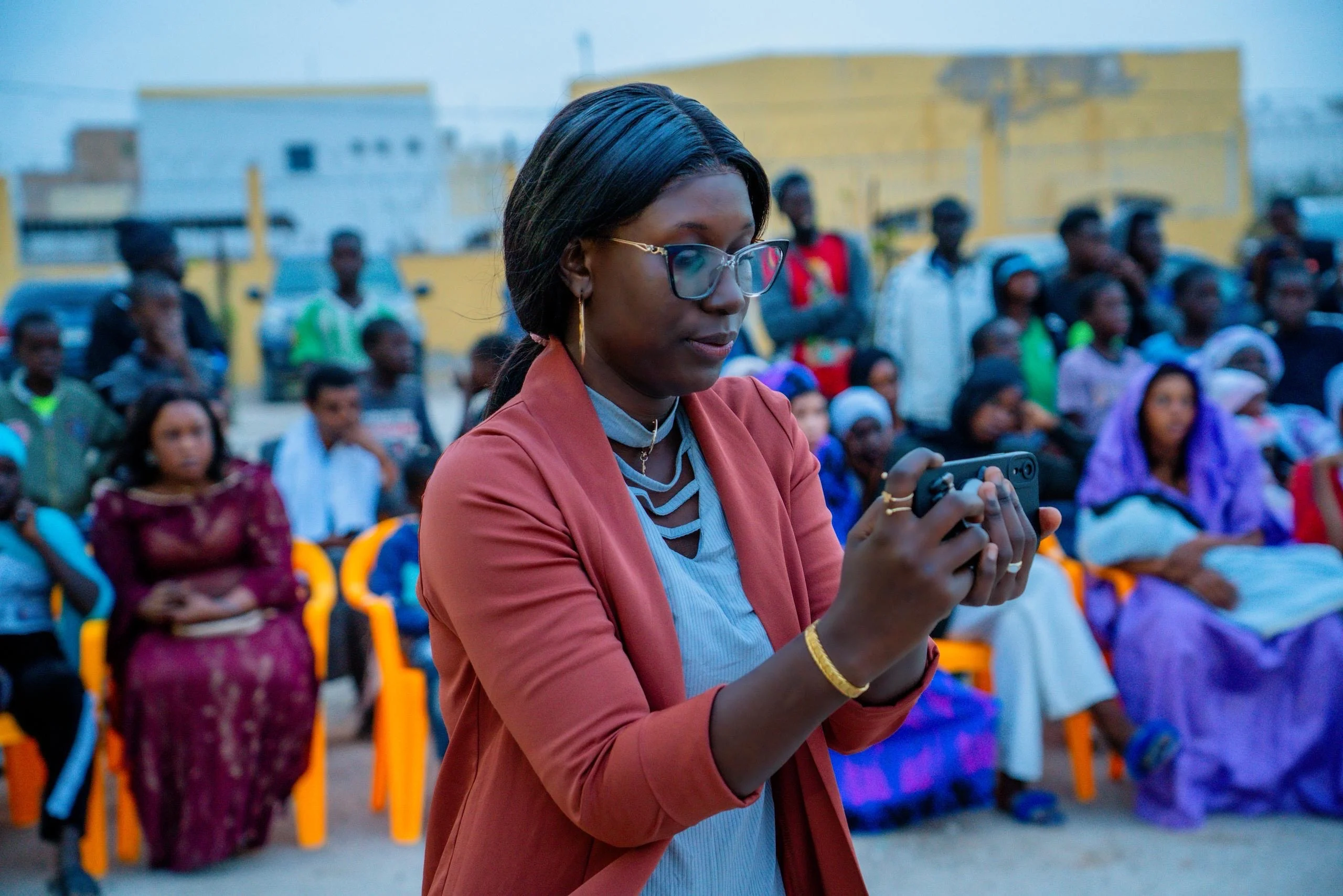 Bâ's journalism prioritises spotlighting issues that have long lived in the shadows, and that need urgent solutions. "How do we make gender-based violence discussable, reportable, and socially unacceptable?" She says.
When people tell me that writing about women’s rights makes me a feminist, I don’t argue with the label.
I say: “If speaking about women’s rights makes me a feminist, then yes, I am one.”
In Mauritania, these issues are deeply connected. When women lack accurate information or legal awareness, they are more exposed to violence and exclusion. When they lack economic autonomy, their options narrow further.
As my reporting developed, I began receiving recognition for this work. Some of my investigations and reports were awarded nationally, including a prize for reporting on family planning, awarded by the Mauritanian Young Journalists’ Club. Later, I received recognition for an investigation into COVID-19 through a fellowship with an investigative journalism network. These acknowledgements mattered, not as validation, but as confirmation that stories about women’s lives were worthy of serious attention.
I chose to specialize in mobile journalism because it allows me to work independently.
I film, record, edit, and publish my own stories using my phone and a tripod. This approach gives me speed and autonomy. I don’t wait for a camera crew, and I don’t depend on expensive equipment to tell a story. I can respond to events as they unfold.
Mobile journalism also shapes how I move in public space. A phone attracts less attention than a large camera, allowing me to blend in easily. At the same time, it carries its own risks. If someone confiscates your phone, they take your footage, your sources, and sometimes your safety. I’ve experienced situations where police attempted to take my device while I was filming. In those moments, decisions happen quickly, guided by experience and instinct rather than planning.
The boundaries of civic space become visible very quickly. For instance, after the June 2024 presidential election, protests spread across several cities and mobile internet access was cut for 22 days. This reality shapes how journalists write, how we choose sources, and how we protect people who speak to us. It also fuels self-censorship because everyone has a line they try not to cross, and those lines shift depending on what the authorities and the public mood will tolerate.
Regardless, I keep returning to the same question…
…how do we make gender-based violence discussable, reportable, and socially unacceptable?
Part of my answer has been collective. I’m a member of the Mauritanian Journalists’ Network on Violence Against Women and Girls, a network of 40 journalists working on gender-based violence and stereotypes. The network was created after OHCHR-supported training and has brought together journalists across formats, including print, radio, television, and podcasts.
During election periods, including the 2023 local elections, we monitored women’s political participation, tracked misinformation linked to gender, and documented how women were included or excluded from political processes. This work matters in a context where women’s political presence is often reduced to numbers — if it is acknowledged at all.
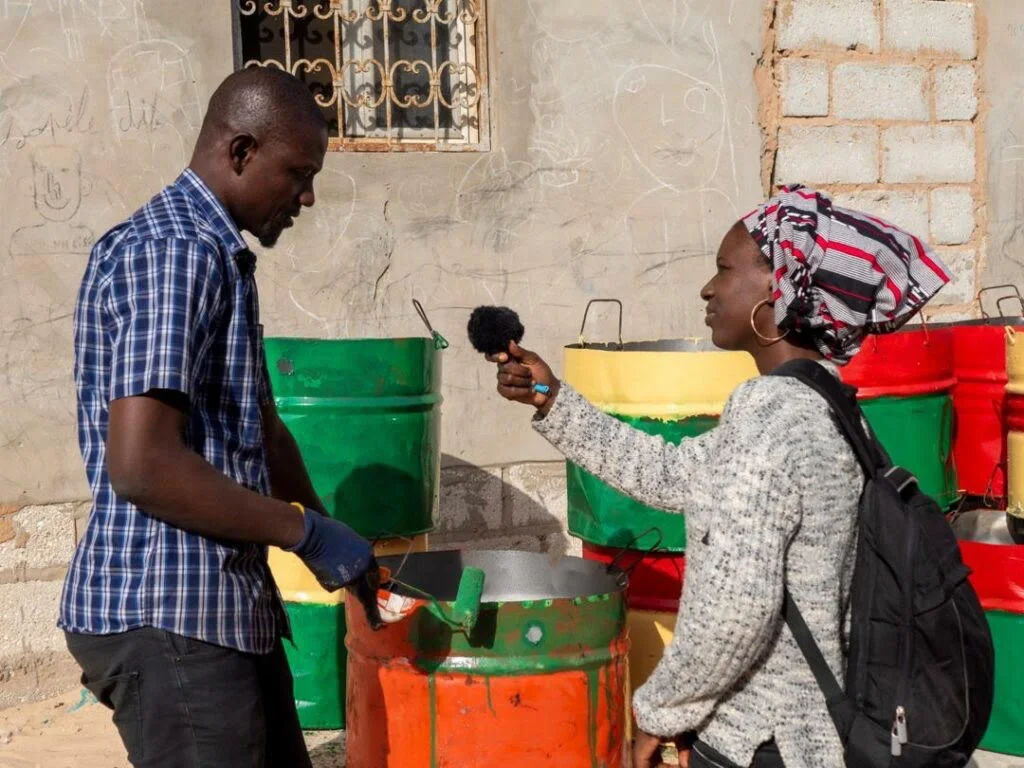
Support from OHCHR has strengthened this work through training on human rights reporting, legal frameworks, and journalist safety. It has also connected our local reporting to a broader international context, reinforcing the idea that freedom of expression and women’s rights are not separate struggles.
Alongside reporting, I’ve increasingly focused on fact-checking. Disinformation circulates rapidly through social media and messaging apps, often mixing partial truths with false claims. I’ve seen how a single unverified rumour can escalate tension, damage reputations, and distract from real harm. Verifying information, questioning sources, and slowing the spread of false claims have become central to my practice.
Supporting journalism in contexts like mine begins with attention.
Reading and sharing credible, local reporting makes these stories harder to erase and helps sustain outlets that work under pressure. Insisting on accountability matters too. When journalists are attacked, it is the public’s right to information that’s being challenged.
In Mauritania, reforms are needed both in law and in practice: stronger protections for press freedom, clear limits on intimidation and abusive prosecutions, genuine access to public information, and safety guarantees for journalists covering protests and public events. When this work is respected, the public gains more than news. People gain the ability to make decisions with reality in view.
And for me, this is the point. Reporting on women’s rights is a measure of citizenship. It shows whether a society treats half its population as full citizens, with bodies and futures that belong to them.
This article, as narrated to Sarah El Gharib, has been edited for clarity.
The 2025-2026 In My Own Words series is part of Global Citizen’s grant-funded content.