A world without independent media is a scary thought: authoritarian governments telling journalists what to publish, powerful actors squashing important investigations, and life-saving information being hidden from the public. And yet, in more than 50% of countries around the world, the conditions for journalism are considered poor, calling into question the future of public interest media as outlets are threatened globally.
Media organizations in low- and middle-income countries that once relied on international cooperation from wealthier nations receive less funding each year, and outlets operating in higher-income countries are facing the same obstacles. Last year, U.S.-based National Public Radio and PBS lost funding that impacted thousands of local outlets across the country, primarily those located in rural areas. Across Europe, governments are tightening the budgets for public media, leaving outlets with no choice but to initiate layoffs, reduce coverage, or even scrap investigations they were known for championing. At the same time, the technological revolution is fundamentally reshaping how millions of people interact with and learn about the world around them.
“Independent media are fundamentally struggling in a new era of platformization, declining revenues, and an altogether unhealthy environment for journalists to operate,” Khadija Patel, the director and journalist-in-residence at the International Fund for Public Interest Media (IFPIM), told Global Citizen. “Before IFPIM, there were no actual organizations that could access that level of understanding and offer solutions for it.”
Launched in 2022, IFPIM was born out of a need to tackle the very real and existential threats public interest media faces today. The fund has already supported 144 independent media outlets in adapting to a changing world, channeling over 86 million USD to organizations that primarily serve lower-income and rural audiences.
Armed with the funds that let them pay journalists, launch investigations, and try new strategies to reach people where they are, independent media outlets can keep local journalism alive. But while the grants provided by IFPIM are sustaining, they don’t eliminate the obstacles posed by reduced advertising, large language models, government oversight, and the many other realities that make publishing news more difficult today than ever before.
Global Citizen had the pleasure of speaking with two outlets that received a grant from IFPIM within the last year about the work they’re doing to keep their audiences engaged and informed, and why local journalism still matters in the age of artificial intelligence (AI).
El Surti: Paraguay
Scrolling through social media, El Surti’s vibrant and illustrative Instagram account stands out amid a sea of Canva-templated infographics. The Paraguayan outlet places a focus on how content speaks to its audience, most of whom are under 30 and spend much of their time online.
“Our expertise is compelling visual journalism, which allows us to connect with young audiences in ways that legacy media have not been able to,” Jazmín Acuña, co-founder and director of strategy at El Surti, told Global Citizen. “We’re trying to make news accessible, easy to understand, and easy to share on platforms where our audience is communicating.”
As a result, El Surti’s staff includes illustrators and designers, alongside reporters and editors, who work together to find the best way to share information with an audience invested in climate change, technology, information and power inequalities in general. It’s this commitment to exploring emerging issues — such as the connection of extreme heat and deforestation to the climate crisis — that has earned readers' trust.
“These topics were not necessarily fully absent from media coverage, but the angles were very limited, the approaches insufficient, or — in the most troubling cases — stories were told from the perspective of the perpetrator,” Acuña said. "Our independence is essential because our journalism is not tied to local and powerful elites."
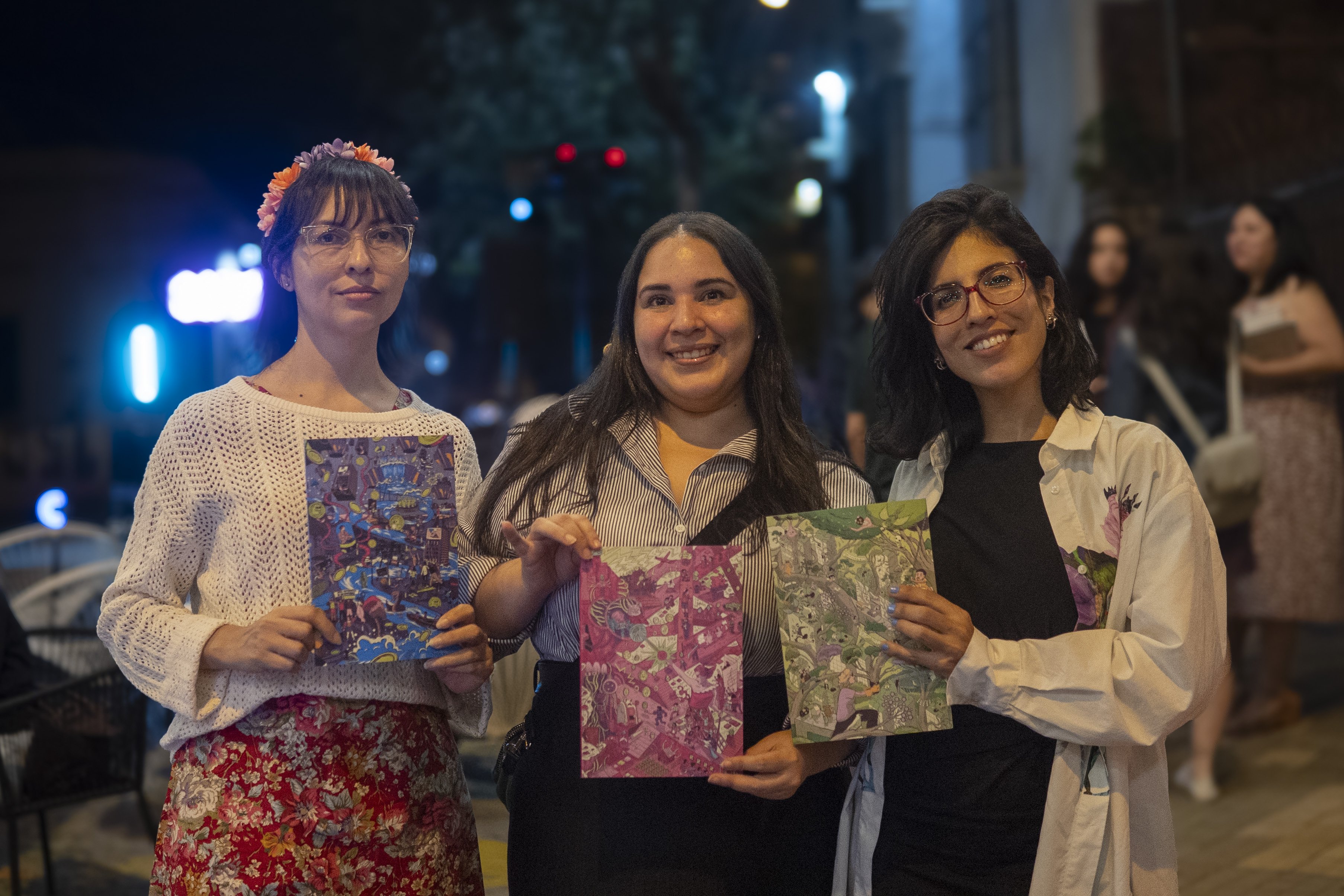 Members of the El Surti team display the outlet's illustrated editions, the visual journalism format that has helped it reach an audience largely under 30. Photo: El Surti
In a region long characterized by corporate monopolies that own a majority of outlets, El Surti takes a holistic view of the topics its peers overlook and encourages action. A recent viral story about how a cryptofarm’s noise pollution affected residents of Villarrica, Paraguay, gathered enough evidence to empower community members to initiate legal action against Bitfarms, the Canadian company responsible. Now, the case will likely become the first trial in Paraguay against a cryptofarm.
Thanks to a grant from IFPIM that started in 2024, El Surti has been able to test new strategies and keep up this type of investigative reporting. The team is also focused on hosting in-person events and rolling out a new subscription model to counteract the effects of changing social media algorithms, which can make it harder for new posts to be discovered by readers.
But with the financial support also comes complex legal challenges, particularly around Paraguay’s restrictive foreign agents law, which civil society organizations and human rights bodies say functions as an anti-NGO law for its excessive funding restrictions on civil society organizations.
“Without IFPIM’s support, our work would be very difficult to carry out because there aren’t many actors [in Paraguay] that support the type of journalism we’re doing,” Acuña said. “We often hear from politicians and authorities that they don’t want us to operate, and the consequence is [that] it will be harder for our audiences to access information. Basically, they’re going after individuals’ right to information.”
The team at El Surti is confident it can withstand the pressure that independent media outlets are facing today, as long as there are supporters willing to stand up for local journalism. In the meantime, they’ll continue asking audiences what they want to know and investigating the topics that shape people’s lives.
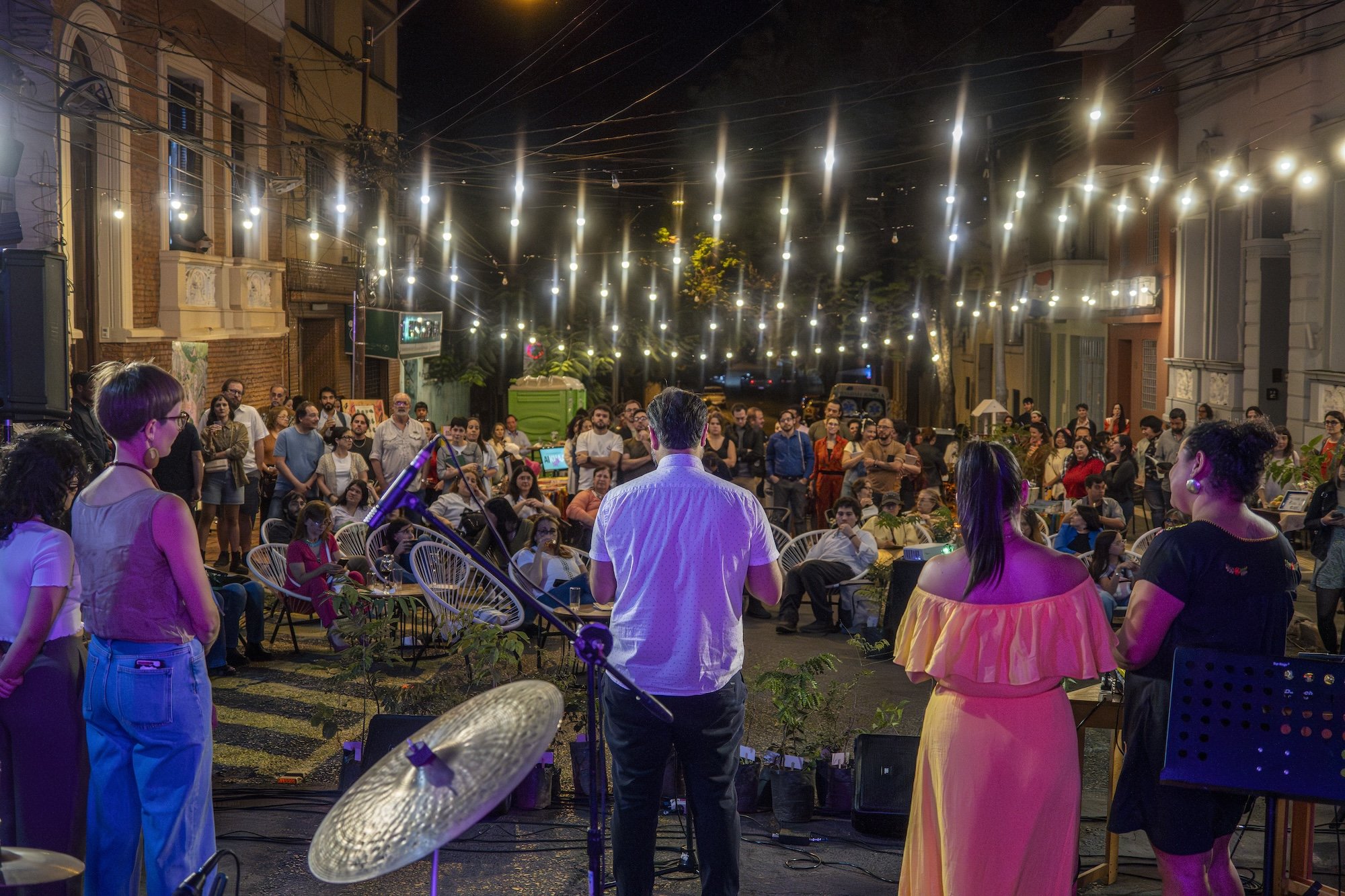 Attendees gather in the street for one of El Surti's in-person events in Asunción, part of the outlet's push to reach readers offline as social media algorithms shift. Photo: El Surti
Food For Mzansi: South Africa
The South African media outlet Food for Mzansi is another unique publication that serves its audience through hyper-local reporting they wouldn’t be able to access elsewhere. This time, the audience is South Africa’s smallholder farmers, a group largely ignored by traditional media despite representing more than 2.4 million households.
Ivor Price and fellow co-founder Kobus Louwrens launched Food for Mzansi in 2018 to empower this very community. They noticed that agricultural reporting was often limited to commodity markets and corporate announcements but failed to offer practical information about growing crops, responding to disease outbreaks, and building resilient businesses.
“Agriculture is about far more than food production; it is about jobs, entrepreneurship, climate resilience, education, health and social justice,” Price, managing director of Food For Mzansi, told Global Citizen. “Many of our readers…come to us because our reporting speaks directly to their realities, whether they’re a young person considering a career in agriculture or a farmer looking for practical information that can improve their business.”
South Africa’s smallhold farmers are primarily based in rural areas of the country. As a result, Food for Mzansi is designed to be an agile organization that meets readers where they are to share what they need to support an agricultural livelihood. Their team used part of the grant offered by IFPIM to continue that essential work.
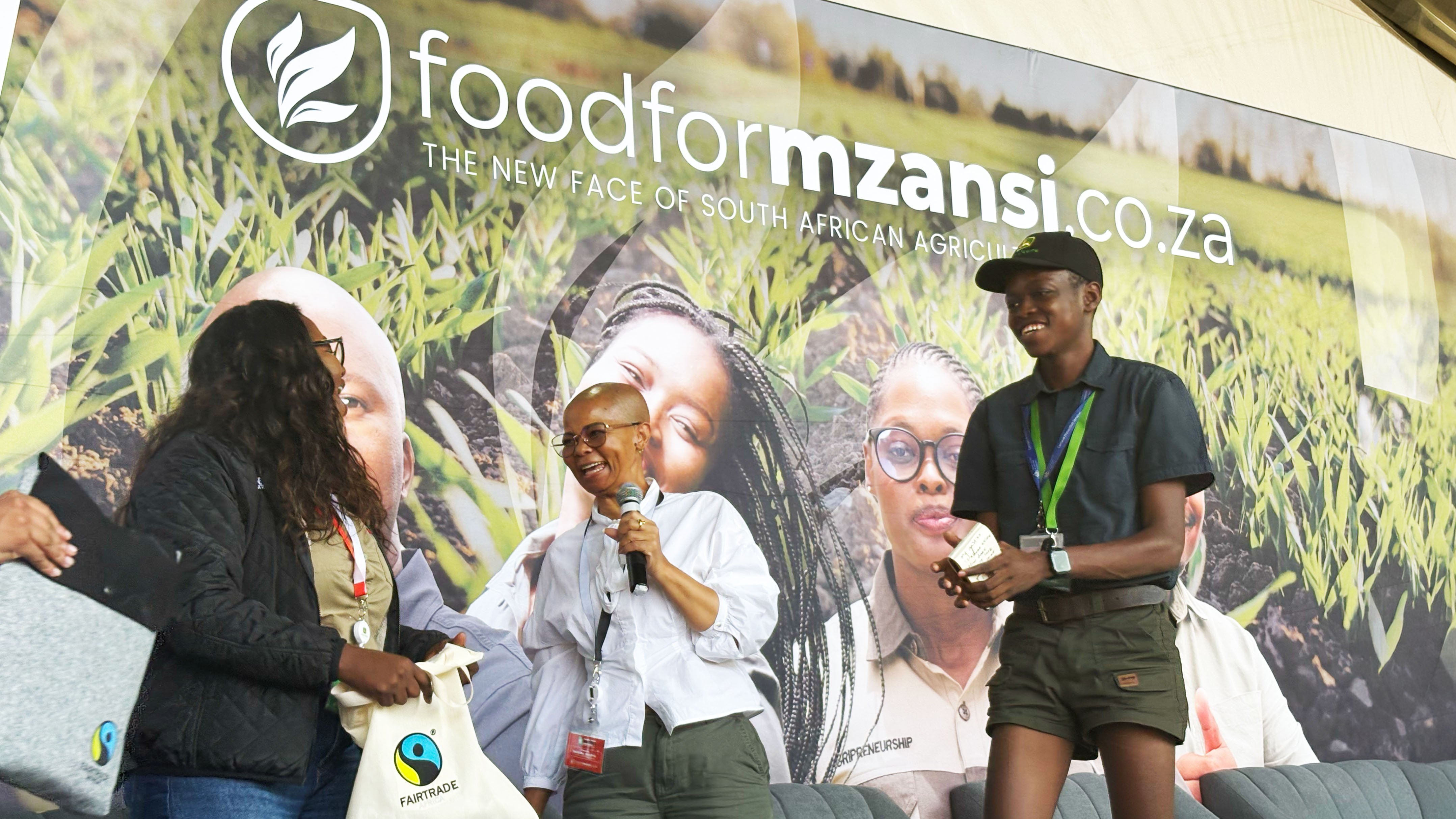 A speaker takes questions on stage at the 2025 Mzansi Young Farmers Indaba, one of the in-person events Food For Mzansi uses to reach farmers in areas with limited internet access. Photo: Food For Mzansi
“Much of rural South Africa still has limited access to reliable internet or traditional news platforms, so we used the support to expand our on-the-ground presence through community events, farmer engagements, and face-to-face knowledge-sharing initiatives,” Price said. “Those conversations helped us build deeper trust with farming communities while ensuring that critical information reached people who are often excluded from mainstream media.”
One of the publication’s strongest examples of impact involves its reporting on livestock diseases. Other media outlets might announce an outbreak, but fail to offer the type of support and insight into how smallhold farmers can protect their livelihoods. In the recent case of South Africa’s severe outbreak of foot-and-mouth disease, Food for Mzansi consistently reports on the topic from every angle, with reporters working with veterinary experts, speaking with industry leaders, and sharing practical strategies for managing risk and protecting farms.
“Our reporting helps farmers better understand biosecurity measures, movement restrictions, and the importance of early reporting,” Price said. “By connecting expert knowledge with everyday realities, our journalism is a trusted source of information during periods of uncertainty.”
Despite serving a unique and essential group in South Africa, Food for Mzansi faces many of the same challenges plaguing independent media globally. Reaching farmers in rural areas leads to higher operating costs, particularly for audiences spread across languages and platforms. The digital publication has invested in diversifying its news formats to include podcasts, video, social media, events, and collaborative conversations via WhatsApp. They’ll continue to adapt because their reporting matters.
“Ultimately, our ambition remains unchanged: to produce journalism that not only reports on agriculture, but actively helps shape the future of farming across Africa,” Price told Global Citizen.
Despite the nimble nature of local journalism outlets today, obstacles add up. Pageviews and referrals from search engines are down as AI summaries cause fewer people to read content on actual news platforms; in addition, social media platforms and video networks are more popular than news websites and apps for accessing news. As a result, advertising dollars, subscriptions, and memberships decrease, all reducing an outlet’s operating revenue.
 An attendee tries out a John Deere tractor at the 2025 Mzansi Young Farmers Indaba, hosted by Food For Mzansi at Lavender Kontrei Market in Pretoria North. Photo: Food For Mzansi
When readers turn to programs that only summarize reporting from journalists, they lose important details that provide nuance to the news. That nuance shapes our view of society and the world at large, and our ability to take action on the issues that matter to us.
In regions where IFPIM operates, local news outlets might be the only source of truth readers have. In Ukraine, grants serve as direct funding to help outlets stay afloat and document the harrowing consequences of war through written, audio, and photographic reporting. In Palestine, the international fund provides financial support to over 200 journalists who have not been able to earn a living even as they continue to report on the conflict.
“The challenges in Brazil are different from those in Colombia,” Patel told Global Citizen. “The fundamental challenge facing news media everywhere is the decline in financing available to keep news media viable.”
Global Citizens everywhere can do their part to stand up for independent media by reading and sharing local journalism. Subscribe to newsletters so that your favorite outlets have consistent readership, and you can stay informed about what’s happening in the world. If you’re able, purchase a membership to help provide consistent revenue to publications. Then, contact your government representatives to increase funding for public interest media so that everyone, everywhere, has access to fact-based reporting.
This explainer is part of Global Citizen’s grant-funded content.