On the night Doja Cat brought Move Afrika to SunBet Arena in Pretoria, Lutendo Madamela wasn't watching from the crowd. The 23-year-old was part of the crew that helped build the stage she performed on, working alongside Gearhouse's technical production team on load-in, rigging, and show setup.
Madamela is one of 10 young South Africans who came through Move Afrika's new Youth Technical Production Pathway, a hands-on training program that took them from a classroom at Gearhouse Academy straight onto the build for one of the continent's biggest live shows. "It was a dream come true for me," she said. "I've been in the production space, but this made it feel real, like I'm finally stepping into the industry I've been working towards."
From Classroom to Concert Build
Move Afrika launched the Youth Technical Production Pathway with Gearhouse Kentse Mphahlwa Academy ahead of the March 2026 Pretoria show, pairing the tour's production needs with a structured entry point into the live events industry. Gearhouse Academy identified three candidates and Global Citizen recruited seven more, all between 18 and 26 years old and based in Johannesburg or Pretoria, with a strong interest in technical or production work.
The 10 selected trainees spent a week in full-day training at the Gearhouse Kentse Mphahlwa Academy, learning the fundamentals of lighting, audio-visual systems, and rigging through a blended curriculum of e-learning and hands-on practice. From there, they moved into the Move Afrika build itself, split across production departments to support load-in, setup, and the live show at SunBet Arena, working alongside Gearhouse's professional crew.
The program closed with a debrief session at the Gearhouse Kentse Mphahlwa Academy, where trainees reflected on the experience and received a Move Afrika x Gearhouse Academy certificate. It's designed as a pre-entry pathway into Gearhouse's existing one-year accredited program through the Kentse Mphahlwa Academy, giving participants a practical first step before formal technical training.
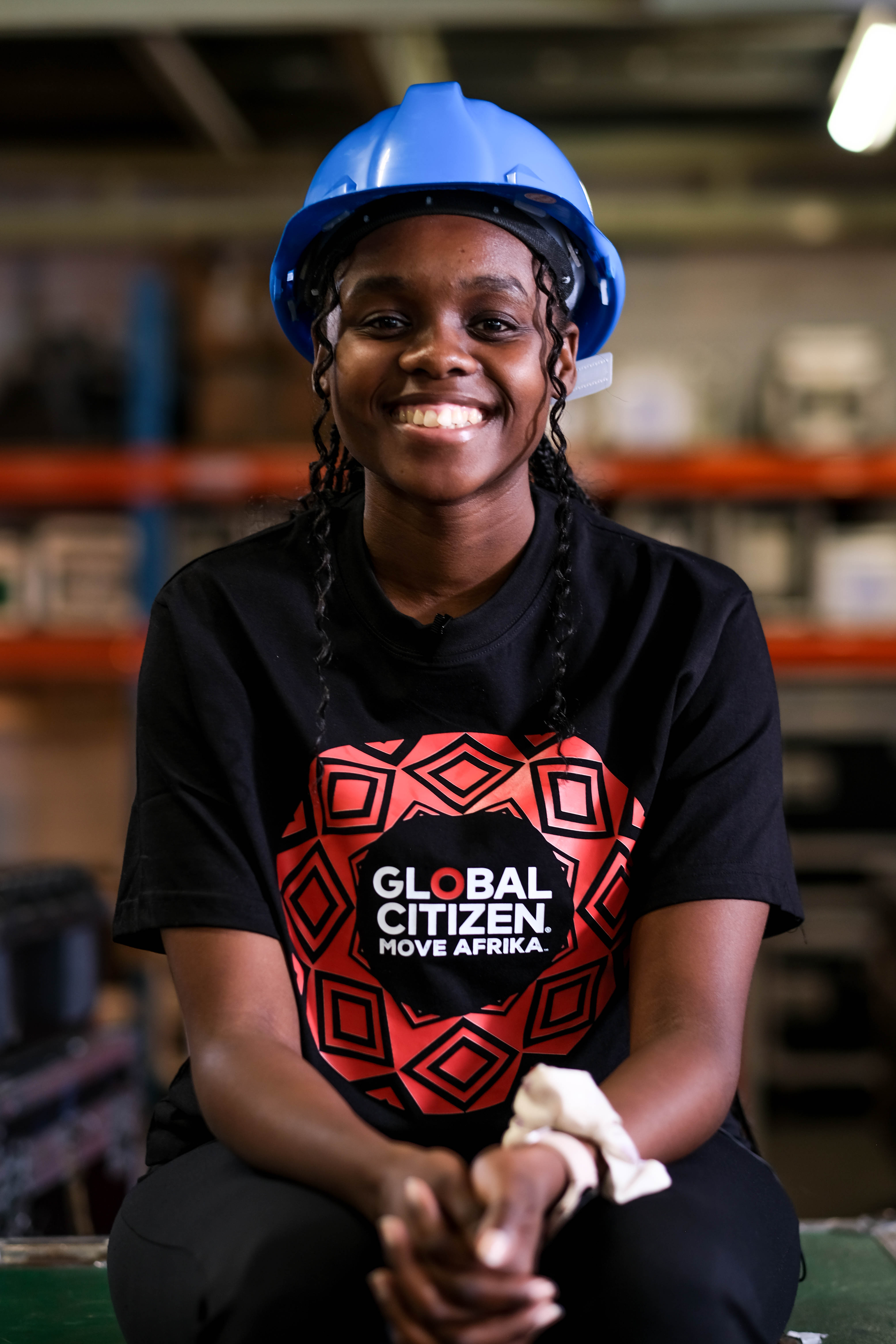
Lulutho Mhlaba wears a hard hat and Global Citizen T-shirt at a technical production facility at Gearhouse.
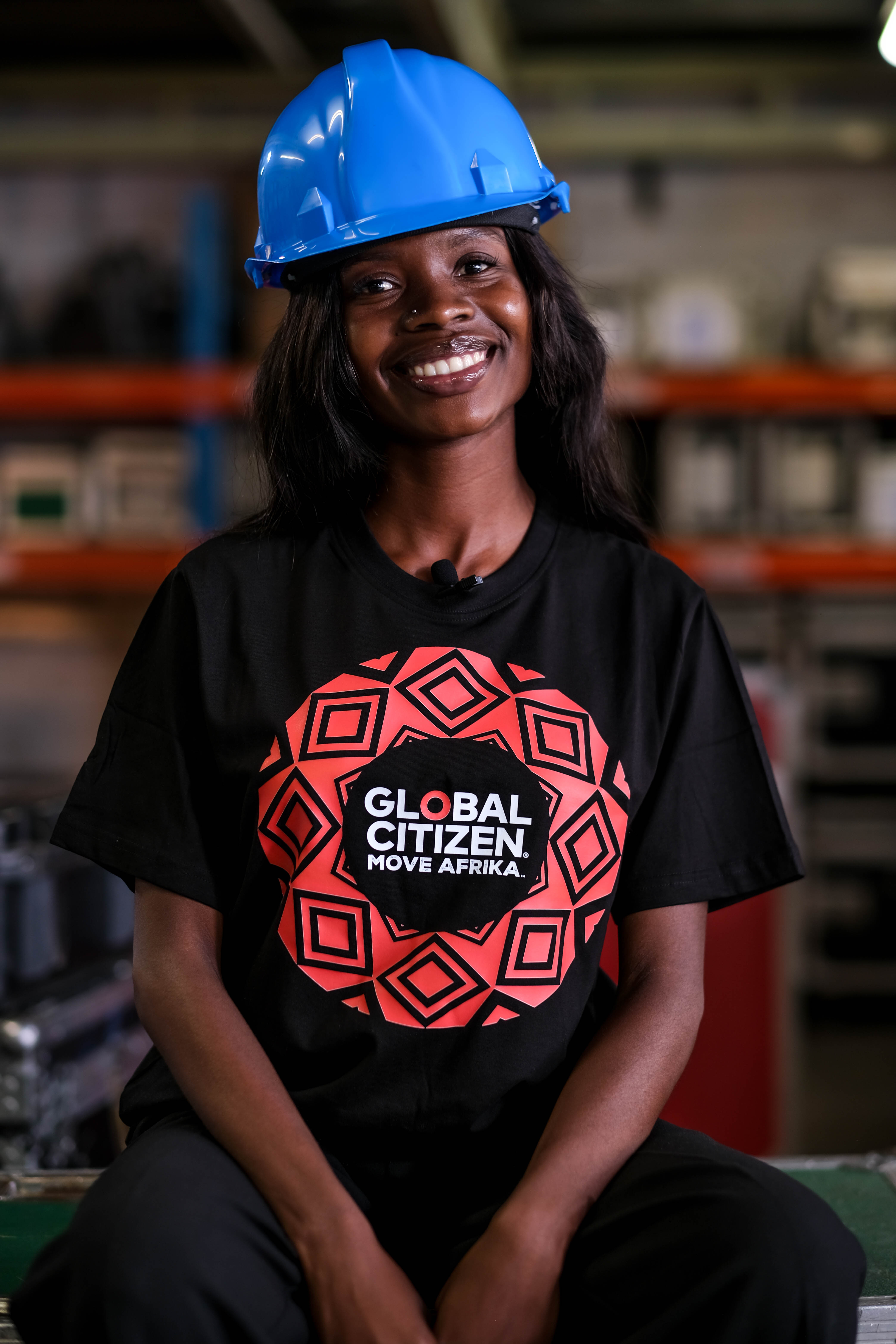
Lutendo Madamela poses at a technical production facility, wearing a hard hat and Global Citizen T-shirt after a day of training.
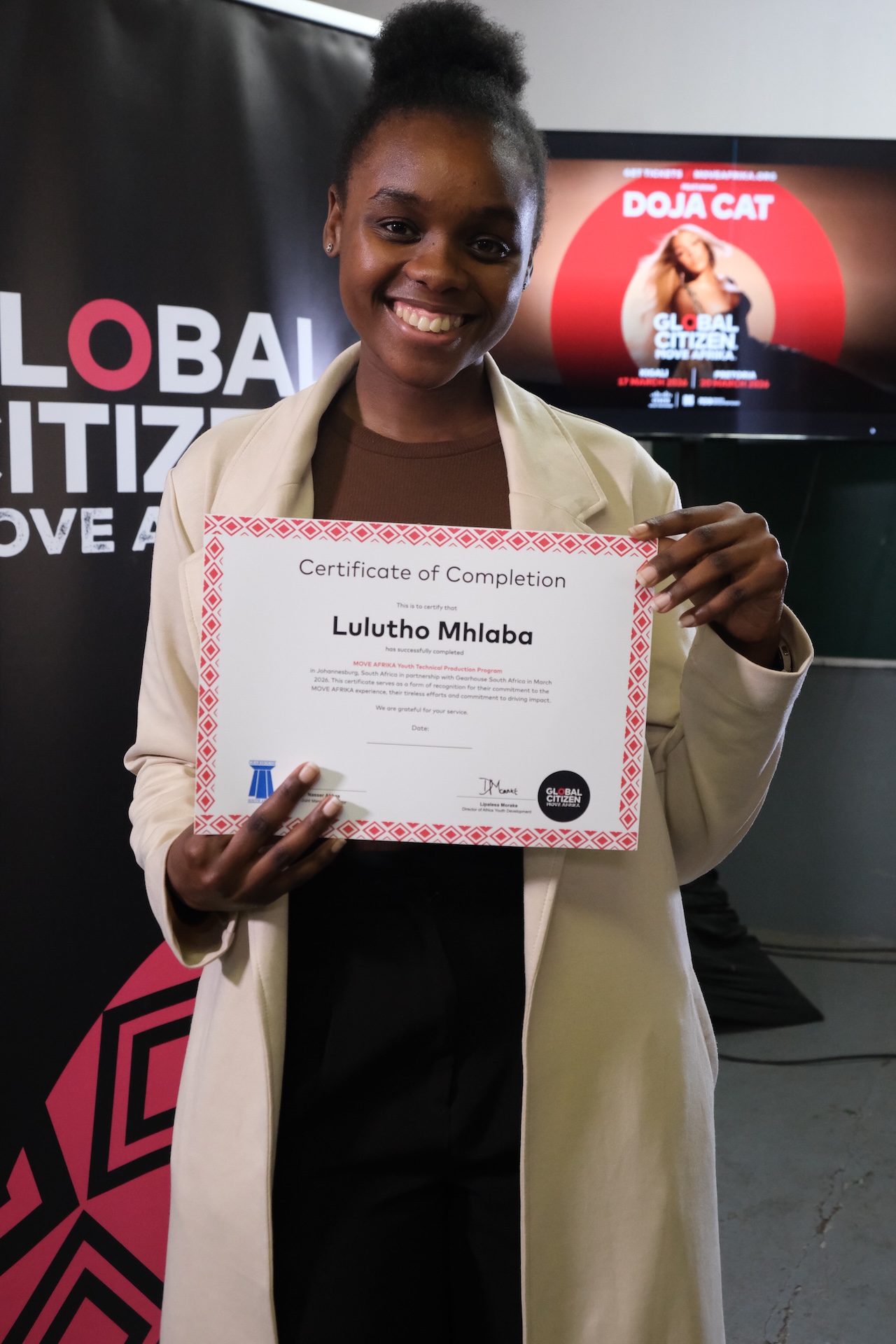
Lulutho Mhlaba celebrates completing the Move Afrika Youth Technical Production Program, delivered in partnership with Gearhouse South Africa in March 2026.
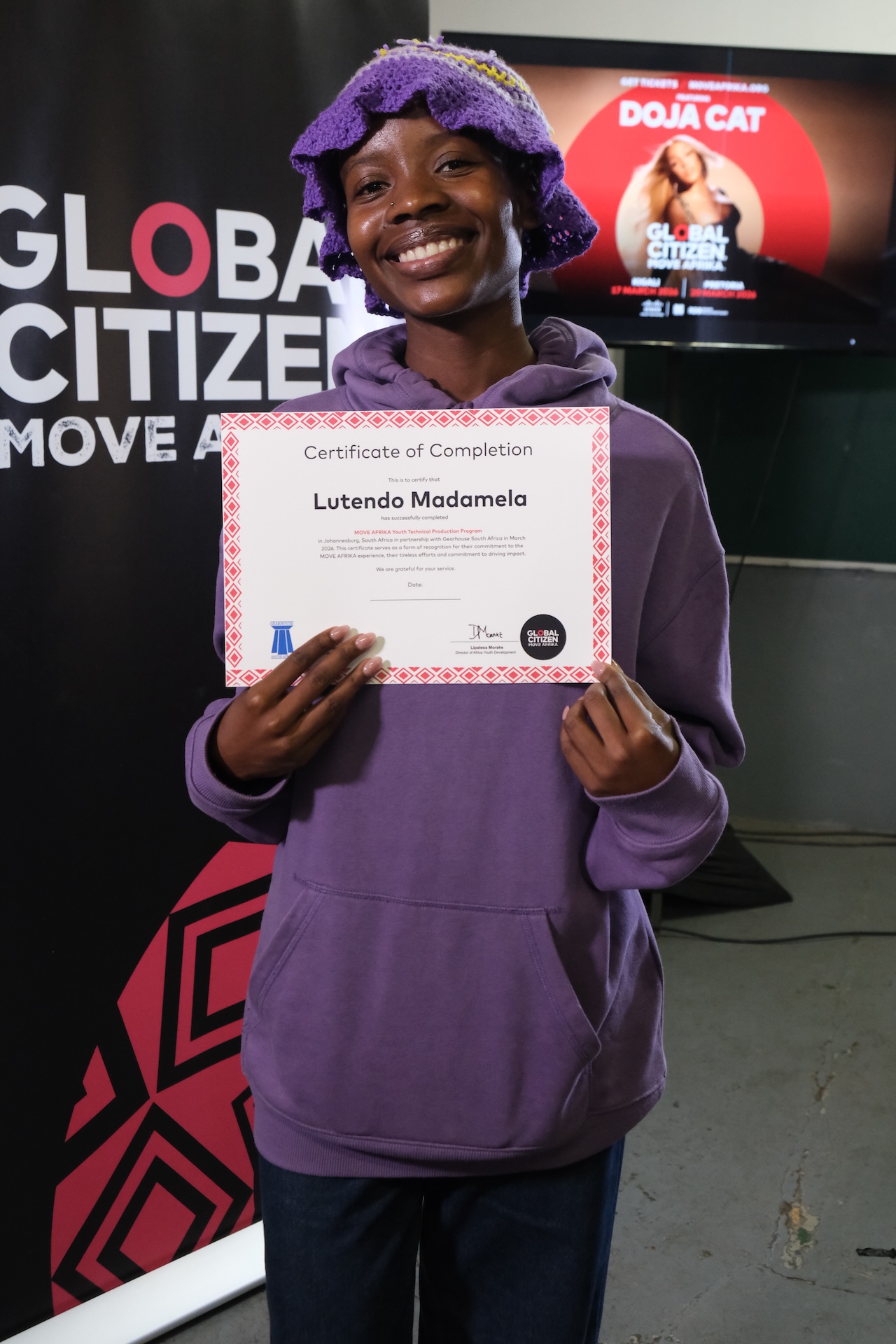
Lutendo Madamela holds a certificate of completion for the Move Afrika Youth Technical Production Program, delivered in partnership with Gearhouse South Africa in March 2026.
What the Build Taught Them
For Madamela, the hardest part wasn't learning new equipment, it was the pace. "There's a lot happening at the same time," she said. "You have to stay focused and get things right because everything is coming together all at once. If one thing is off, it affects everything, even if the audience never sees it."
That precision is the point of the program: giving young crew members real production stakes, not just classroom theory. "Even though I'm behind the scenes, I felt the impact of what I helped create," Madamela said. She sees the training as part of a broader shift in who gets to build Africa's biggest stages. "It shows that young people are capable and ready to work at a high level. It helps shift how the industry sees African talent."
Fellow trainee Lulutho Mhlaba, 21, put it in terms of access. "It's always been about who you know," she said. "But now there's a bridge opening for people who don't have those connections yet." Mhlaba, who rotated across lighting, audio, and rigging during the build, said the structure of the program meant trainees weren't starting from zero on site. "You learn everything theoretically first, then apply it practically. So when you arrive on site, you're not starting from zero."
Building the Pipeline Further
The Pretoria pilot is part of Move Afrika's push to put Africa's own production talent behind its biggest shows. Pretoria's 2026 show ran on 100% local crew and equipment, and Move Afrika has created more than 3,000 job opportunities across Kigali, Lagos, and Pretoria since 2023. The ambition now is to scale the Gearhouse partnership into a recurring pathway ahead of future Move Afrika stops, building a steadier bridge from short-term exposure into accredited technical careers.
For Madamela and Mhlaba, the pilot was a first credit on a resume they're still building. For Move Afrika, it's a working answer to a real gap: the continent's live events industry is growing faster than its pipeline of trained local technicians. Follow Move Afrika's ongoing coverage of the people building the stage, not just the ones performing on it, at moveafrika.org.