The forest, territories treaties, villages, philanthropists, civil society, the Amazon, the Pacific, COP30, and Santa Marta. What brings these perspectives together? What connects these stories and the guests is not only a shared focus on climate issues, but also a recognition that addressing today's challenges requires collaboration across sectors, geographies, and areas of expertise.
Global Citizen NOW: Rio de Janeiro creates a space where leaders from Indigenous communities, government, science, civil society, philanthropy, and international organizations can exchange perspectives and identify opportunities for collaboration.
How Cross-Sector Leadership Can Shape Climate and Economic Priorities
Global Citizen NOW: Rio de Janeiro features leaders from different sectors, generations, and regions who are helping shape conversations on climate and economic priorities. Their perspectives reflect the importance of collaboration across sectors to address increasingly complex global challenges.
We spoke with some of our guests for the event to understand their expectations and learn what message they most want to leave for the Global Citizen NOW: Rio de Janeiro audience. Their experiences highlight how communities, institutions, governments, and organizations are approaching climate and economic challenges from different perspectives. They want to bring concrete proposals, lived experiences, and draw the attention of decision-makers to the urgency of the climate agenda.
From Climate Advocacy in Realengo to Presidential Youth Climate Champion
Marcele Oliveira started her climate advocacy in Realengo, a neighborhood in the western zone of Rio de Janeiro far from the postcard image tourists are used to. Realengo bears the marks of a city divided by its relationship with nature. Urban heat islands form where green areas are absent.
It was there that Oliveira began organizing, campaigning for a green park that, she says, changed the trajectory of her life. "It's now changing the lives of my family, my brothers, my nephews. I really believe public spaces and a relationship with nature can send a strong message about the life we want to live."
Oliveira's experience reflects how local community initiatives can inform national and international climate discussions. That local effort eventually opened doors to global stages. A youth climate leader and cultural producer, Oliveira went on to serve inside the COP Presidency and build a career at the intersection of community organizing, climate action and Global South perspectives. One of her signature projects is the Mutirão platform. Mutirão is a Tupi-Guaraní word from Brazil's indigenous tradition that means a collective effort toward a shared goal. Today, this platform connects more than 300 young people across the country.
"Mutirão is part of our culture. I've done mutirão many times: waking up with neighbors to clean a church, or communities coming together after a flood to build something new," she explained. "When communities move together, everybody moves together. When women move, when children move, when people of African descent and indigenous communities move — we're all in this conversation", explains Oliveira in an interview for Earth Day.
At Global Citizen NOW: Rio de Janeiro, Oliveira wants to use that platform to highlight perspectives that are not always represented at international climate conferences, such as young climate leaders from the outskirts of Brazilian cities, Quilombola communities, and regions far from the global stage. "What we accomplished last year, before and during COP30, is an example of how young people are indeed engaged — because they are the most affected by climate change. We know we can't leave it to the next generation to solve this."
But she is clear-eyed about the barriers that remain. Young climate leaders still face skepticism inside the very conferences they fight to enter. "There is an idea that we cannot sit at a table, discuss complex issues, and make decisions because we are young. But we want to bring new solutions and innovation, and that is essential if we want to address climate impact more effectively."
Her message for the post-COP30 moment is as much about political engagement as it is about climate. "We need to keep young people engaged and aware of their rights, especially considering the elections in our country in October. Keeping people connected to climate justice is one of the great challenges," she concludes.
Scientific Knowledge and Indigenous Knowledge Systems
Another young leader participating in Global Citizen NOW: Rio de Janeiro is the Indigenous leader Samela Sateré Mawé. She carries multiple identities as naturally as the forest carries biodiversity: she is a biologist, climate leader, and mother (as she likes to emphasize). She is also part of ANMIGA (National Articulation of Indigenous Women Warriors of Ancestry), a network of indigenous women leaders from every biome in Brazil who are engaged in territorial management and climate resilience initiatives.
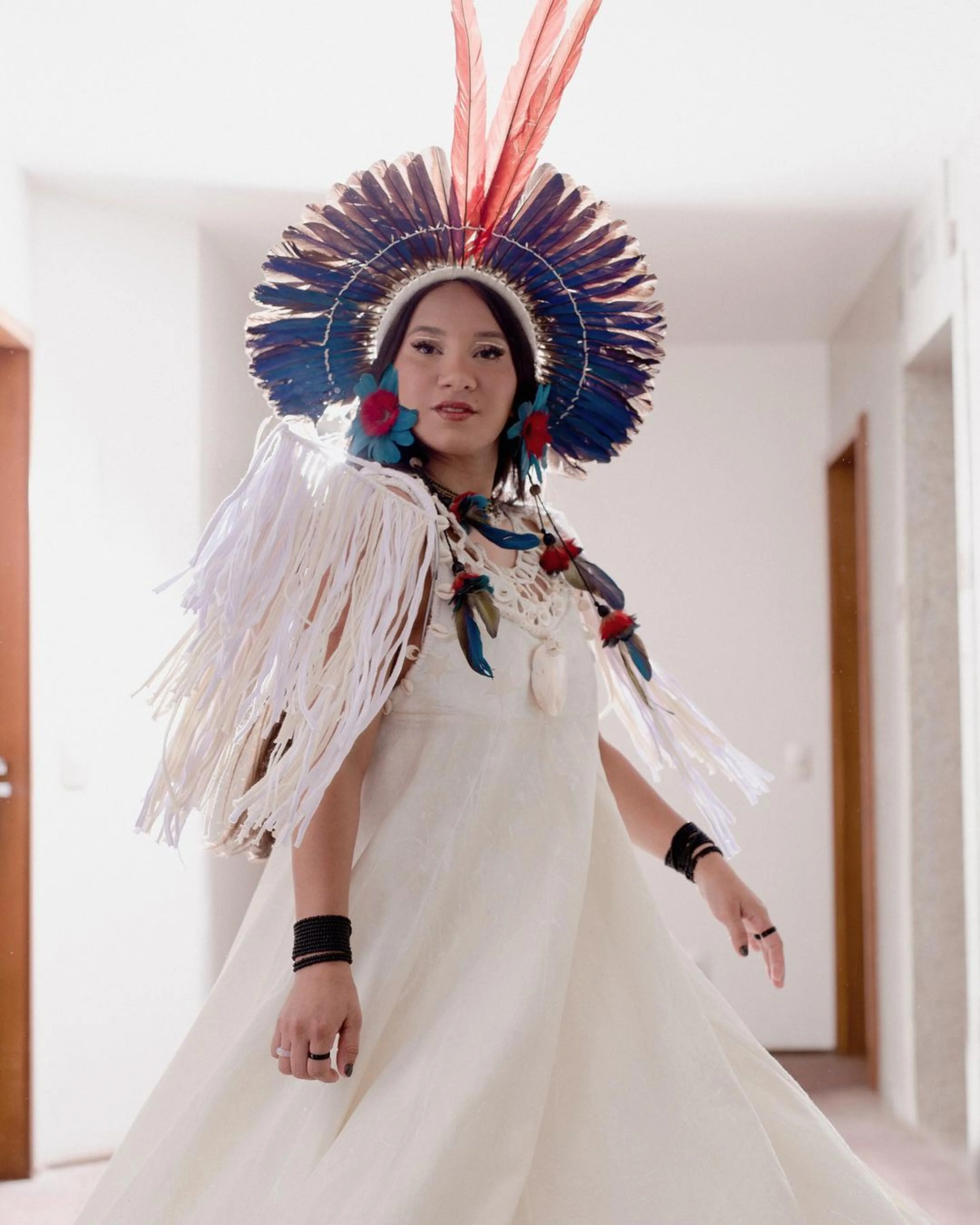 Samela Sateré Mawé is an Indigenous leader and biologist who works on issues related to bioeconomy, territorial management, and climate resilience. Image: Supplied
Satere Mawé emphasizes that investment in the bioeconomy, which has emerged as one of the leading solutions for sustainable development in the Amazon, cannot render invisible the ancestral knowledge of Indigenous Peoples. "We cannot be merely objects of conservation policies. We are holders of a unique scientific knowledge that is not found in academia and that needs recognition and investment," she argues.
Her perspective highlights how Indigenous knowledge systems contribute to discussions that often bring together scientific, policy, and community expertise.
She explains that the bioeconomy is not an academic novelty or a recently invented economic model. It is the way of life her community has practiced for generations, even without necessarily naming it as such. Becoming a biologist simply gave her the "right credentials" to discuss the subject in spaces where indigenous knowledge is not recognized.
"The world still fails to recognize Indigenous Peoples as concrete answers to the climate crisis. And I believe that, as a woman, a mother, and a young person, my struggle is made invisible," she says. Her message is a powerful call to action for everyone: "The answer to halting the climate crisis is us. In our territories, in biodiversity, in Indigenous Peoples and in demarcated indigenous lands."
Expanding Investment Opportunities in the Amazon
Tasso Azevedo is a scientist, social entrepreneur, and coordinator of MapBiomas, a pioneering platform by NGOs, universities, and technology companies that monitors changes in the coverage and use of Brazil's biomes. Using artificial intelligence and satellite imagery, MapBiomas provides annual, detailed data on deforestation, agriculture, and urban expansion, making it an essential tool for understanding the impacts associated with climate change from the Pampa to the Amazon. His work demonstrates how data, technology, policy, and community engagement can intersect to support climate and development goals.
"We need to advance a fundamental conversation about how to tackle climate change and protect nature, especially the Amazon, while at the same time creating economic opportunities and improving the quality of life of the people who live in the region," said Azevedo, who also played an important role in starting the Fundo Amazonia. "Climate and development are often presented as conflicting agendas. In practice, the great challenge is to build solutions that keep the forest standing while generating prosperity, health, education, and opportunities for local populations."
According to him, over the last 40 years, only about 1% of deforestation in the Amazon occurred in areas inhabited by Indigenous Peoples, quilombolas, riverside communities, and extractivists, even though these communities protect approximately one third of the entire forest.
"If we want to protect Amazon effectively, we need to invest in the people who already protect it every day. Forest peoples are not just beneficiaries of conservation policies — they are its main protagonists. That support can come through investments, partnerships, visibility, engagement, and long-term commitment," he explains.
And investing in connectivity — reducing the isolation of forest peoples — is one of the paths forward. He is one of the co-creators of Conexão Povos da Floresta (Forest Peoples Connection), an initiative a network that brings together 50+ organizations, led by COIAB, CONAQ and CNS, that has already connected more than 2,500 communities to high-speed internet and associated services such as telemedicine. Over 200,000 people are already benefiting. By 2030, they want to reach 1 million people in 9,000 communities, opening pathways to expand access to digital services and economic opportunities to one of the regions most affected by digital exclusion in Brazil.
Expanding International Support for Indigenous Communities
Before being appointed Minister of Indigenous Peoples in March of this year, Eloy Terena was already internationally recognized as one of the country's most prominent indigenous leaders. He is a lawyer, researcher, and anthropologist with a postdoctoral degree from the École des Hautes Études en Sciences Sociales in France. Serving as minister is a political act that reaffirms the importance of indigenous people occupying positions of power in Brazil.
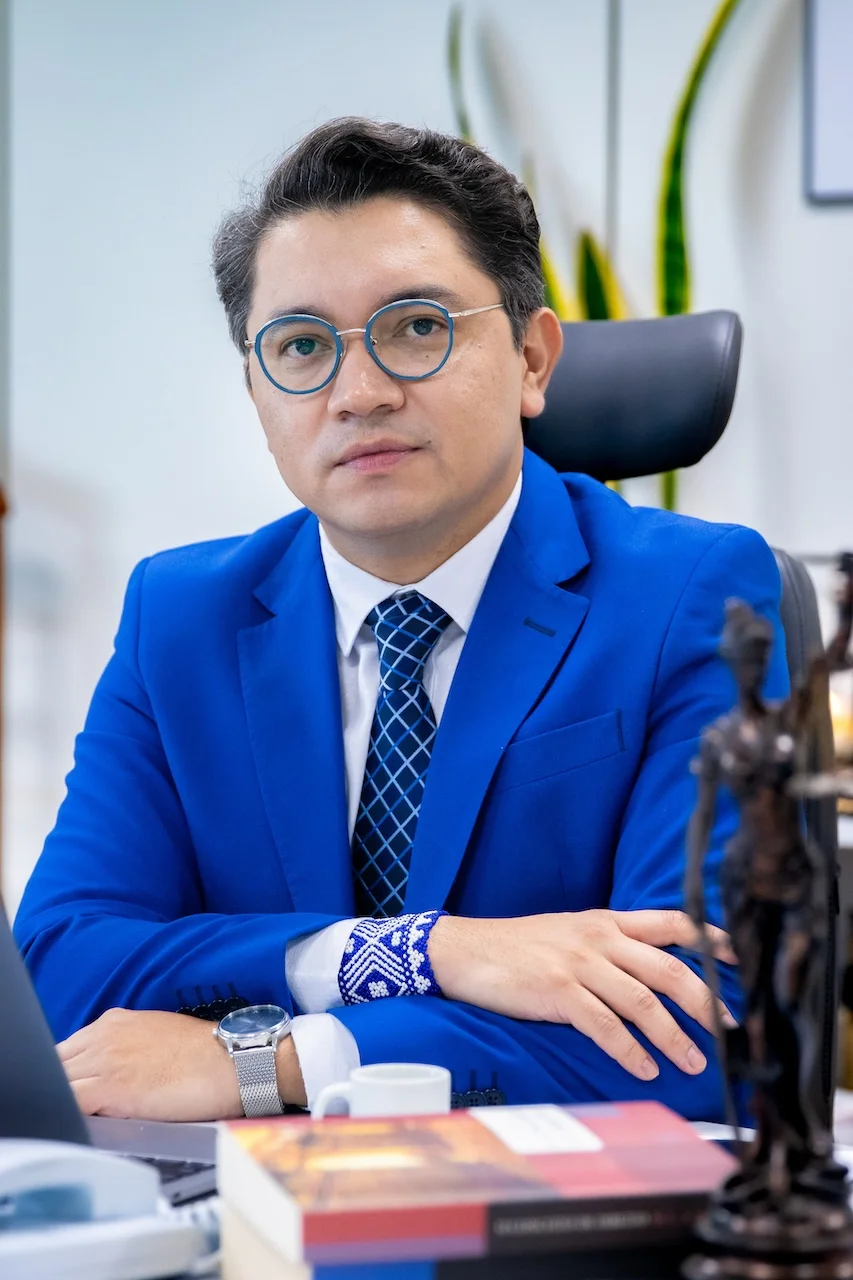 Eloy Terena serves as Brazil’s Minister of Indigenous Peoples and advocates for greater investment in Indigenous communities and territorial management initiatives. Image: Supplied
His participation brings a government perspective to broader conversations that also include community leaders, researchers, and international organizations.
Terena believes that Global Citizen NOW: Rio de Janeiro is a window to highlight the perspectives of more than 390 Indigenous Peoples, drawing attention to the fact that international investment to support indigenous communities directly remains limited. "The Ministry's goal is to facilitate that access through environmental and territorial management projects that develop communities economically without giving up their autonomy or their rights over the lands they have traditionally occupied," he explains.
Another key issue is the demarcation of indigenous lands, one of the key issues of Indigenous Peoples in Brazil. Demarcation is the legal process that recognizes the rights of original peoples (povos originarios) to their traditional territories. According to Instituto Socioambiental (ISA), Indigenous Lands (known as Terras Indigenas) are currently 833 areas, covering an area of 125,904,016 hectares (1,259,040 km²). Brazil has a total land area of 851,196,500 hectares, which means that only 14.8% of the country's territory is officially recognized as indigenous land.
"The demarcation of indigenous lands is crucial for the preservation of fauna and flora and for maintaining the Earth's temperature. But it is also crucial for the survival of indigenous communities, their culture, and their ancestry," said the minister.
The international community can support this cause more effectively by moving from recognition to concrete commitment. "To be considered a global citizen, you don't need to have visited hundreds of countries. What truly matters is understanding that every person, individually, has a role and a level of influence on our planet, because we are all integrated into the ecosystem. This understanding has always been with Indigenous Peoples — and in the face of alarming deforestation data, this cannot be a struggle that belongs only to us," he says.
Discussions on the Transition Away From Fossil Fuels
The end of COP30 in Belém last year may have left some stakeholders seeking stronger commitments on fossil fuel transition policies on the transition plan away from fossil fuels. However, a new process emerged on the final day of negotiations, leading to the First Conference on Transitioning Away from Fossil Fuels in Santa Marta, Colombia, held last April. Alex Rafalowicz, Director at the Fossil Fuel Non-Proliferation Treaty Initiative, one of the organizations responsible for this unprecedented gathering, will provide details on the outcomes, which could influence future discussions of fossil fuel negotiations.
The discussions in Santa Marta illustrate how governments, civil society organizations, Indigenous representatives, researchers, and international institutions are contributing to conversations about the future of energy systems
"For three decades, global climate negotiations focused on managing emissions while ignoring the root cause: the uncontrolled proliferation of oil, gas, and coal extraction," says Rafalowicz.
According to him, Santa Marta changed that. The meeting was the one of the largest international discussions held to date on fossil fuel supply. Governments, Indigenous Peoples, subnational leaders, civil society organizations, academics, youth representatives, trade unions, and community representatives participated in discussions about a new international mechanism to manage a just and equitable transition away from oil, gas, and coal.
The geopolitical dimension is central to Rafalowicz's argument. For him, fossil fuels are not merely an environmental problem, they are the currency of contemporary conflicts. "Fossil fuels have become the currency of war. They finance conflicts, enable geopolitical coercion, and sustain energy imperialism," he said. "As long as the global economy runs on fossil fuels, these conflicts will persist."
The next step in the process that began in Santa Marta will be a second conference, co-organized by Tuvalu and Ireland, in the Pacific in 2027. The choice of Tuvalu is significant, as the island nation faces the threat of rising sea levels. "When Tuvalu hosts the world to discuss a mechanism for the managed decline of fossil fuels, the moral clarity is undeniable," says Rafalowicz. "We are no longer asking whether the world will cooperatively manage the decline of fossil fuels. We are negotiating how."
While the speakers featured at Global Citizen NOW: Rio de Janeiro represent different sectors, geographies, and experiences, they share a common understanding that climate and economic challenges cannot be addressed by any one group alone. By creating opportunities for dialogue across communities, governments, research institutions, philanthropy, and international organizations, the event highlights the role of cross-sector leadership in shaping solutions to complex global challenges.