The Democratic Republic of the Congo is battling the largest Ebola outbreak ever recorded in the country. As of October 11, the Democratic Republic of the Congo (DRC) had recorded 9,066 confirmed cases of Bundibugyo virus disease and 4,381 confirmed deaths, with cases reported across 65 health zones in seven provinces, according to the World Health Organization’s latest outbreak update. Ituri remains one of the epicenters of the largest ever outbreak reported in the country.
As health teams in the DRC continue to respond to the Ebola outbreak, some of the people, laboratories, and surveillance systems which are critical in the response were built for an entirely different purpose — the eradication of polio.
The World Health Organization (WHO) Regional Office for Africa told Global Citizen that polio personnel are supporting active Ebola case detection, contact identification, specimen collection, and laboratory follow-up. They have also supported safe burials, decontamination, community engagement, and emergency coordination.
“It was not as though systems were being built from scratch,” said Mercy Kyeng, an infectious disease expert who also serves as the Epidemic Intelligence Unit Lead at the Africa Centers for Disease Control (CDC).
Kyeng, who supported the Ebola response in the DRC, told Global Citizen that community health workers were already conducting routine surveillance, including through polio programs. During an emergency such as the Ebola outbreak, Kyeng said those existing networks can be trained and expanded to detect warning signs, report suspected cases, and reach households with public health information.
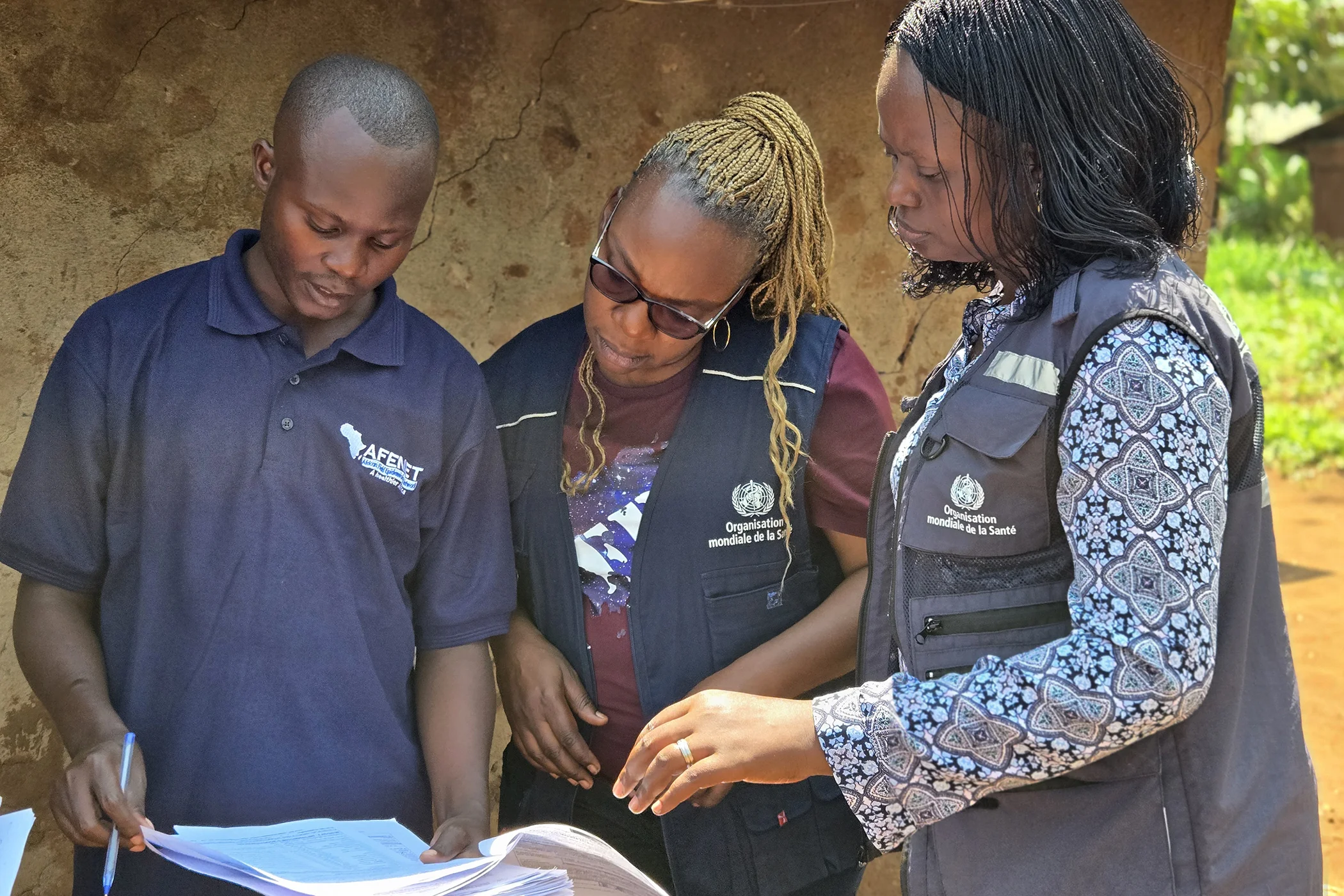 Surveillance is a critical part of the Ebola response in the DRC. In Lita the Ministry of Health, WHO, and partners are working directly with communities to investigate alerts, trace contacts, and prevent infections.
WHO officials interviewed by Global Citizen described the same infrastructure extending from communities to national laboratories.
“Overall, investment in polio has had a beneficial impact on the health system in general,” said Dadja Essoya Landoh, an outbreak response technical officer with the WHO Regional Office for Africa. “Thanks to polio funding, from the central level to the provincial level and health zones, these funds have helped strengthen the coordination of teams [and] implement specific activities such as investigations.”
WHO officials pointed to investments in the DRC’s National Institute of Biomedical Research (INRB), where polio funding helped strengthen laboratory capacity. They said that expertise has also been deployed closer to affected areas, helping decentralize diagnostic capacity during the Ebola response.
WHO officials also told Global Citizen that two polio consultants, working alongside national health authorities, were involved in the early investigations that led to confirmation of the outbreak.
“Without coordination established by the Global Polio Eradication Initiative, we would not have been able to identify the first case as quickly as we did,” stated Simeon Sawadogo, a surveillance officer with the WHO in the DRC. “We could have [detected the] outbreak in June, as opposed to in May, and the response mechanism would have been delayed.”
Currently, healthcare and frontline workers in the DRC are receiving Ervebo, a vaccine used against Ebola virus disease caused by Zaire ebolavirus. As polio infrastructure supports that response, WHO officials interviewed for this story said polio surveillance has continued, with health workers dividing their time between the two emergencies.
Polio surveillance and response continue across the DRC, though some activities have been affected. For example, Landoh shared that a planned vaccination campaign in Ituri was postponed after attacks on health workers. He said the campaign will resume when deemed safe.
Protecting infrastructure beyond polio
This is not the first time personnel and infrastructure developed through polio eradication have supported an Ebola response. In a prior Ebola outbreak in the DRC in 2025, the WHO deployed a team of polio experts to support disease surveillance, logistics, contact tracing, and community engagement. The organization credited the team with helping to end the outbreak.
During Nigeria’s 2014 Ebola outbreak, the country drew heavily on personnel and systems developed through polio eradication. WHO said polio staff supported surveillance and contact tracing, while the Ebola emergency operations centre was modeled on the country’s existing polio structure.
“This integrated approach builds on the polio program’s broader legacy of supporting responses to other health emergencies in the region, from cholera to mpox,” the WHO stated. The organization has also documented how polio systems have been leveraged for other emergencies, including COVID-19.
That overlap is relevant as African countries continue to make progress on polio and consider what happens to the infrastructure built to eradicate the virus. On August 27, African health ministers adopted a 10-year framework for polio transition and sustainability, calling for countries to preserve polio-supported surveillance, laboratory and emergency-response capacity by integrating these systems into national health services.
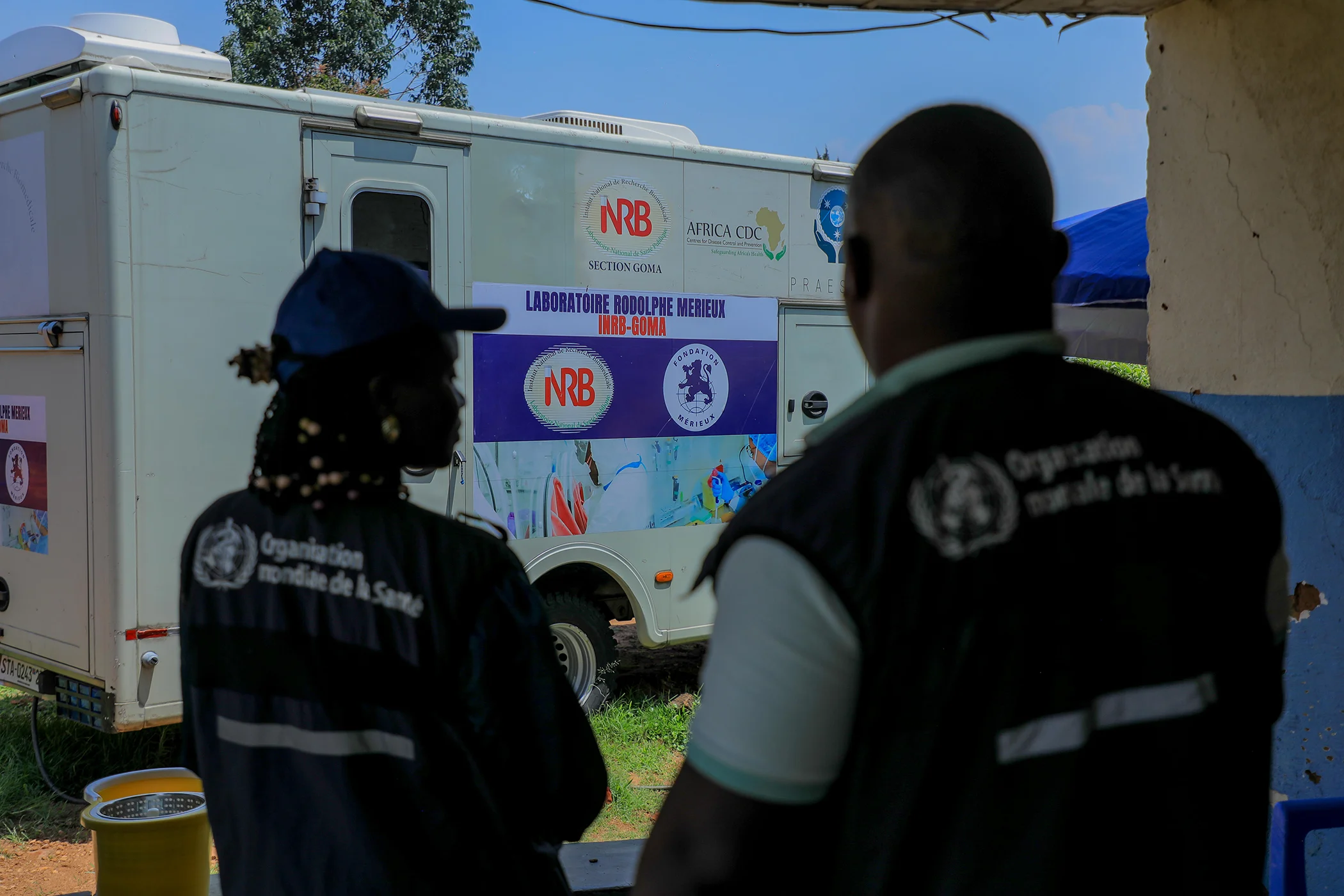 A laboratory operated by the National Institute of Biomedical Research (INRB) is pictured during the September 2026 Ebola response in North Kivu, DRC. WHO officials noted that polio funding helped strengthen the institute’s laboratory capacity.
Beyond laboratories and surveillance systems, preserving community-level infrastructure also means maintaining the networks of health workers and organizations that can quickly come together when a crisis strikes.
“The collaboration in the response has really been great,” Kyeng said. “At the end of the day, the end user [people at the community level] does not know Africa CDC, does not know WHO. In the face of an emergency… as a health worker, you cease to represent [your employer]. You are the hope for the community — that’s all you represent.”
Editor’s Note: This reporting is a part of Global Citizen’s grant-funded content through the Bill & Melinda Gates Foundation.