Before Sarah Legrand became a jewelry designer shaping culture through craft, she was a child with a clear ambition. That dream was put on hold when she entered the world of modeling, but it never disappeared. Eventually, she chose to return to it.
That decision led her to train at the Institut des Arts et Métiers (the Art and Crafts Institute) in Brussels, where she refined her skills and began to define her voice. It was there that K’Tsobe was born, a jewelry brand deeply rooted in Legrand’s identity and heritage. The name itself is a tribute to her maternal clan, the Abatsobe, known as guardians of seeds and keepers of Rwanda’s esoteric codes.
Her inspiration is also shaped by her Belgian-Rwandan identity and her travels. “My inspirations come from the past, from the history of culture,” she says, reflecting on how heritage informs her work.
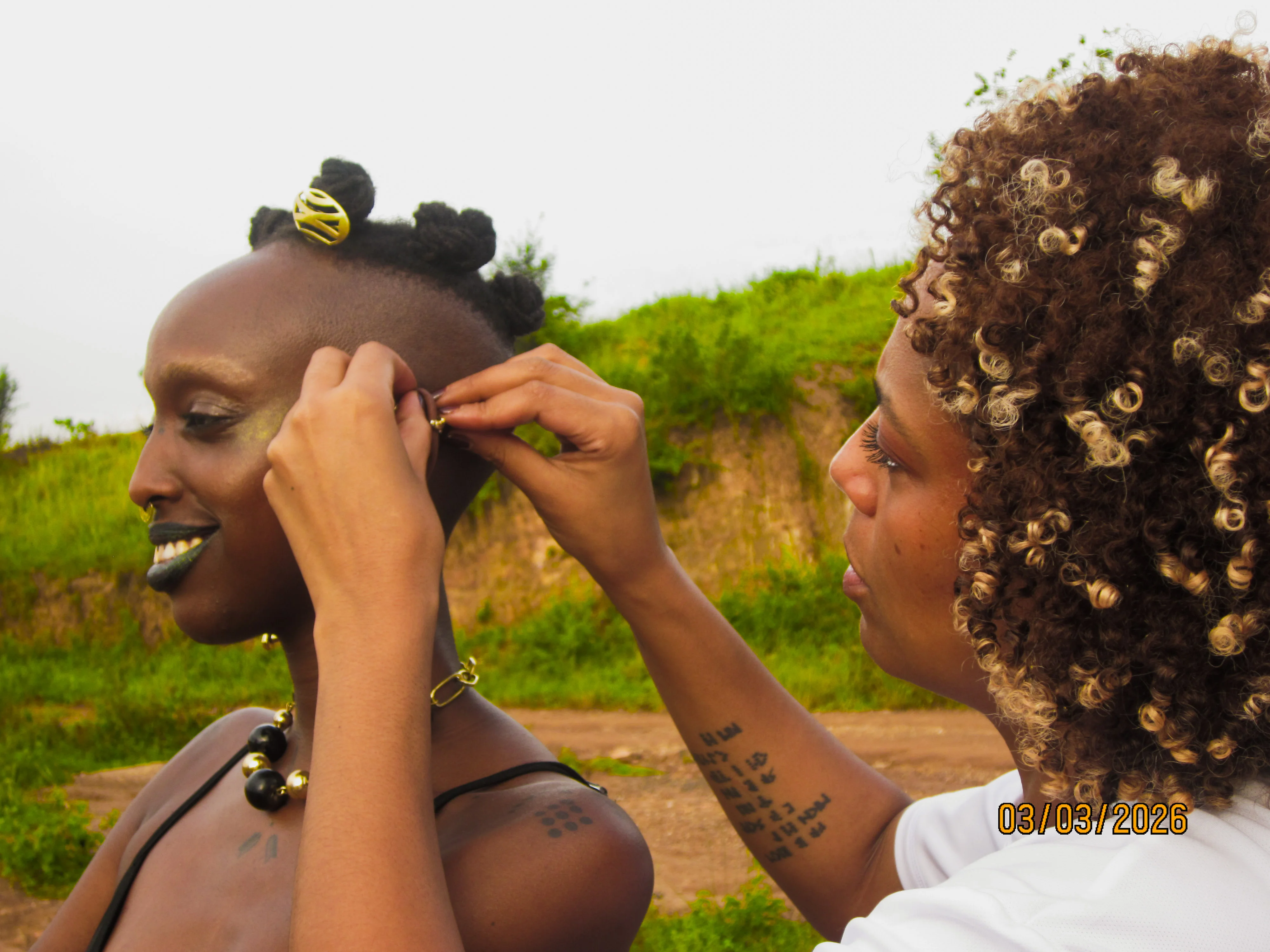 Behind the scenes of a K'Tsobe photoshoot, designer Sarah Legrand styles Binghi (@herartiistry) with pieces inspired by Rwandan culture and crafted using locally sourced materials. Image: Jordan Hidalgo
A Brand Built on Nature and Meaning
K’Tsobe is a brand of timeless jewelry that blends metals like brass, silver, and gold with natural materials such as jacaranda seed shells, wood, and bark. The pieces are architectural, organic, and deeply symbolic.
Legrand’s process begins with emotion. “It often starts with an emotion or the observation of different shapes in nature,” she says. From there, ideas take shape.
Nature is not just an inspiration; it’s her foundation. “Nature is really paramount to me in my inspiration,” she explains, pointing to organic shapes, textures, and contrasts as the basis of her work.
This philosophy also shapes her approach to time. “Trends come and go, but natural materials are elements that are timeless.”
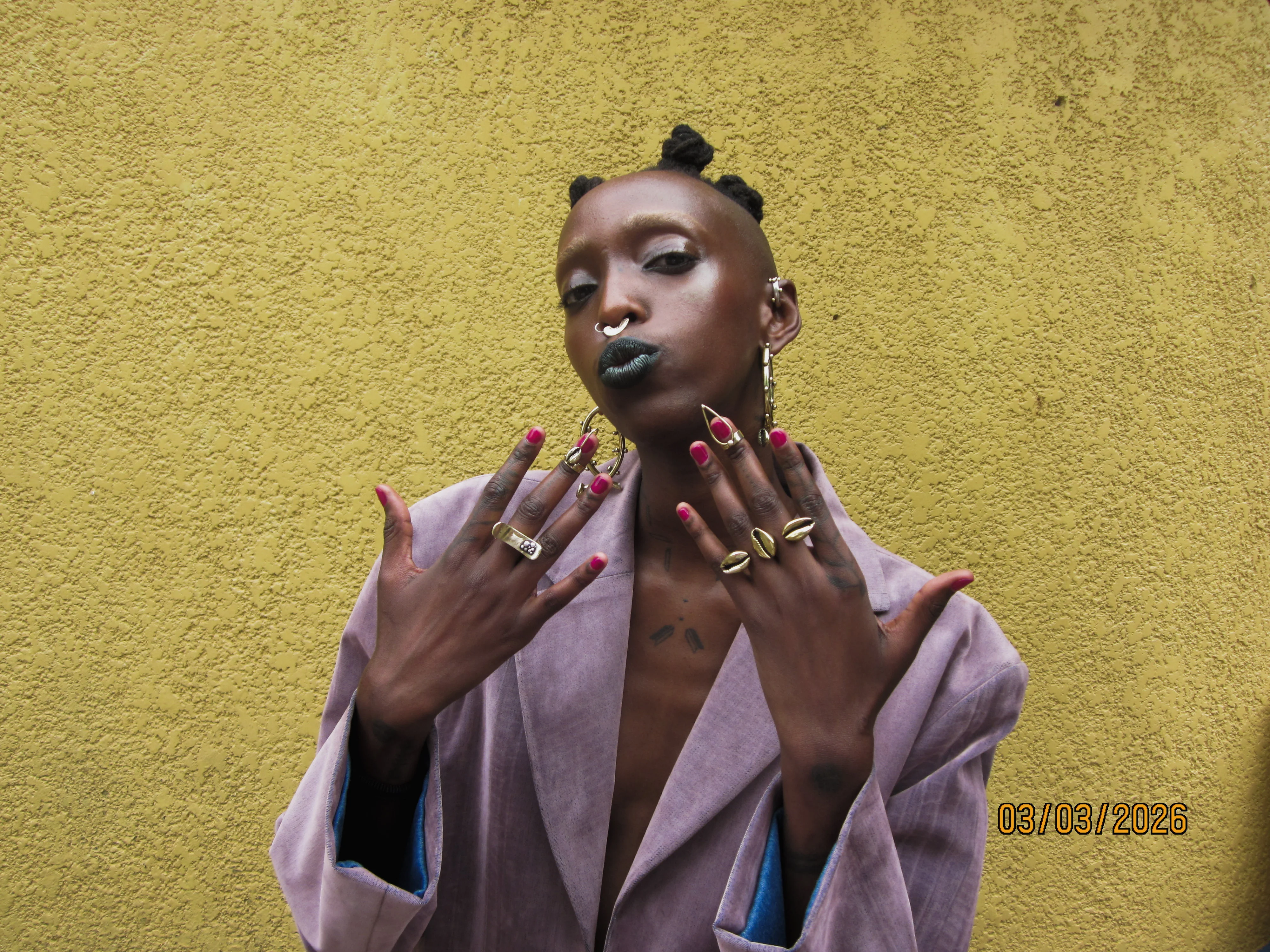 Handcrafted jewelry by Sarah Legrand, founder of K'Tsobe, draws on Rwandan heritage and cultural symbolism, transforming tradition into contemporary wearable art. Image: Jordan Hidalgo; Model: Binghi (@herartiistry)
Symbols That Carry Identity
At the center of Legrand’s work is symbolism.
Drawing from Rwandan and African cultures, Legrand incorporates elements such as cowrie shells, horns, shields, and spears. Each carries meaning rooted in history and identity.
“The cowrie shell is an ancient symbol of prosperity, spirituality, and protection in many African cultures,” she explains.
These symbols are not simply decorative. They are translated into wearable forms that balance cultural depth with contemporary design.
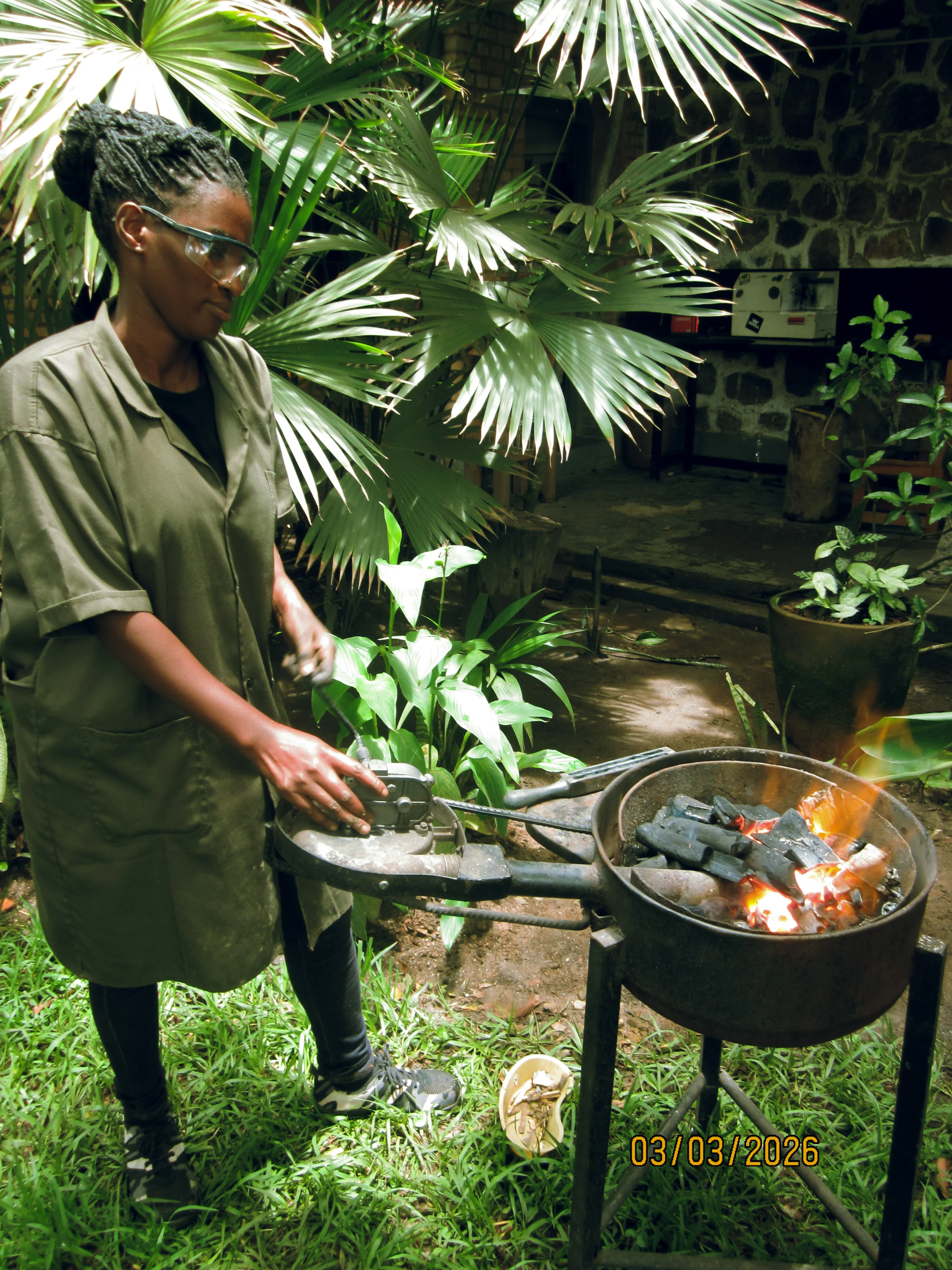 A K'Tsobe artisan works with raw materials during the jewelry-making process. The brand’s handcrafted designs draw on Rwandan heritage, natural materials, and contemporary African creativity. Image: Jordan Hidalgo
Craft, Duality, and Value
Legrand’s work challenges traditional ideas of value. By combining organic materials with precious metals, she places them on equal footing.
“It is to demonstrate that a natural material can be as precious as a noble metal such as gold or silver,” she explains.
This reflects a broader idea of duality that runs through her work. Natural and refined. Masculine and feminine. Tradition and modernity.
Much of her work is handmade, with some pieces created using the lost-wax technique, an ancient process in which a sculpted wax form is melted away and cast in metal. “Working by hand is very important. It brings a soul to the jewelry, and each piece becomes unique,” she says.
She often describes her creations as more than accessories. “I think of my jewelry as mini sculptures,” she adds, reinforcing their artistic and emotional value.
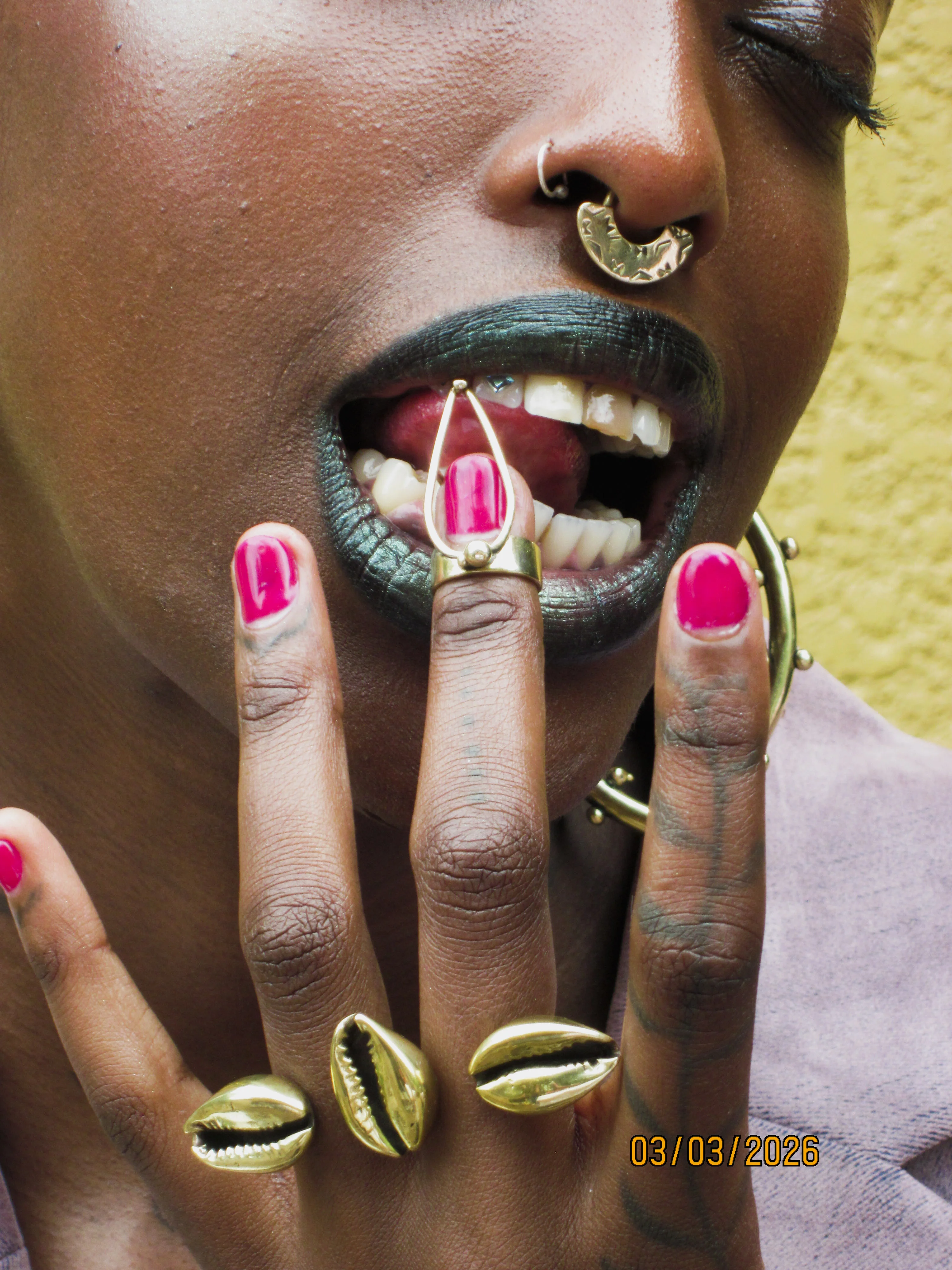 Binghi (@herartiistry) models jewelry designed by Sarah Legrand, founder of K'Tsobe. Her work celebrates African identity, craftsmanship, and self-expression through bold, culturally rooted design. Image: Jordan Hidalgo
Jewelry as Strength and Self-Expression
For Legrand, jewelry is an extension of the person who wears it.
“I would like it when someone wears my jewelry, that they feel unique, that they feel strong and have confidence,” she says.
Her pieces are designed to move with people through their daily lives, revealing identity and expression. She describes the idea of a modern warrior as someone who “moves forward with courage and dignity,” a feeling she hopes her work can evoke.
Many of her designs are unisex, versatile, and adaptable, allowing individuals to create their own meaning in how they wear them.
Move Afrika and a Global Moment
A defining moment in Legrand’s journey came during Move Afrika in 2023.
She was invited to customize Kendrick Lamar’s hat, bringing the essence of K’Tsobe into a powerful musical moment. Her reaction was immediate. “I was very surprised and very honored to have this opportunity,” she recalls.
The collaboration became more than a design project; It was a cultural statement, blending music, identity, and craftsmanship.
Seeing the piece on stage was deeply meaningful. “It was a source of pride to see these symbols worn by an international star,” she says.
From One Piece to Many Possibilities
The impact of Move Afrika was immediate.
“It brought the brand international visibility,” Legrand explains, marking a turning point in her journey.
The performance opened doors to new collaborations and connections with creatives and brands who value the intersection of art, culture, and music. The customized hat became a bridge between worlds.
Legrand is quick to acknowledge the community behind that moment, expressing gratitude to collaborators like Fryingroots and Collective Rwanda, whose support helped bring the project to life.
Staying Rooted While Reaching the World
Despite growing recognition, Legrand remains grounded in her purpose.
“For me, it is essential that the brand is based here in Rwanda,” she says.
Her vision is to grow K’Tsobe globally while staying deeply connected to African roots. She wants the world to understand that Rwanda is “a country rich in culture, creativity and know-how.”
A Story You Can Wear
At its core, K’Tsobe is about more than jewelry.
“Jewelry carries energy, history, and emotional attachment,” Legrand says.
Each piece is designed to live with the wearer, to hold meaning, and be passed on.
Legrand is not just creating objects; she is creating stories. And through her work, those stories are finding their place on the global stage.