Polio vaccination workers don't just deliver two lifesaving drops — sometimes they even name a child. It was afternoon in a remote village in Inhambane province, Mozambique, when a team of three found a newborn in his mother's arms during their door-to-door visits. When it came to filling out his vaccination card, it turned out the one-week-old hadn't been named. "Any suggestions?" his parents asked, laughing.
Little Evanildo, as he came to be called, was one of millions of children vaccinated in Mozambique's national polio campaigns in 2025, which saw healthcare workers traveling by car, motorbike, bicycle, boat and, most often, by foot, to reach every child. For many, this would be a booster dose. But for some children much older than Evanildo, polio vaccinators could offer the first ever opportunity to receive any vaccine.
“For routine immunization, there is a big drive of wanting vaccines, but you have to look at how it works,” Jan-Marcus Hellström, UNICEF polio team lead in Mozambique, told Global Citizen. “If you have to walk for many hours to get to a health center instead of working to put food in front of your children, you might think twice. It isn’t vaccine hesitancy per se – you just have to make it convenient. And what’s convenient with polio [vaccinations] is that we go out to the children.”
Mozambique’s Outbreaks and Under-Immunized Children
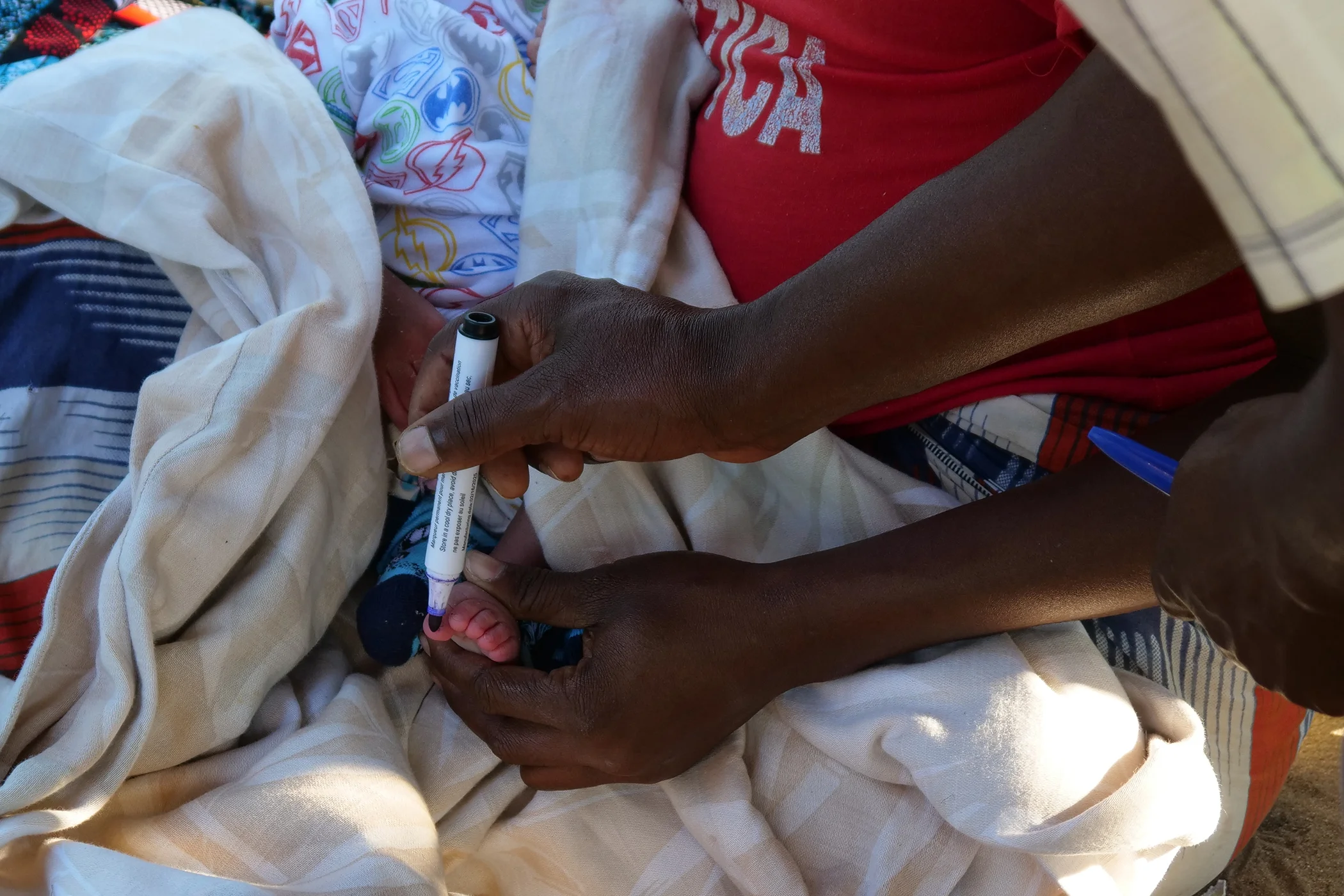 Evanildo, one-week-old, receives his first immunization in his village, due to the door-to-door delivery of polio vaccines. His vaccinator marks his toe with marker pen to show he’s received the vaccine during the campaign.
Maria Mario is one of more than 70,000 vaccination workers who goes door-to-door distributing polio vaccines during campaigns. She works from her base at a healthcare center close to the coast, near Tofo, where she focuses on routine health — from immunization to monitoring household sanitation.
“I'm the one who vaccinates the children here, who knows which child hasn't been vaccinated,” she said. “It's not just vaccinating against polio, but I do it routinely. When a mother comes here with a child who is unvaccinated or not following the schedule, I get upset and then I hug the child.”
Mozambique declared a wild poliovirus outbreak in 2022 — after 30 years free from the disease — after the virus was imported into the country. A highly infectious viral disease often spread through contaminated water and food, poliovirus most often affects children under 5 and can cause paralysis. After the wild poliovirus outbreak was closed in May 2024, vaccination led by the Ministry of Health and Global Polio Eradication Initiative (GPEI) partners has continued against poliovirus strains.
In recent years, Mozambique has been grappling with an under-immunization problem. Disruption from the COVID-19 pandemic, Cyclone Freddy, the aforementioned polio outbreak, and measles and cholera outbreaks saw numbers of unimmunized children rise to 750,000 by late 2023 from 97,000 four years earlier. A nationwide effort was launched to tackle the downturn in vaccination coverage.
“Zero-dose kids are children that have never received a vaccine in their lives,” said Hellström. “They’ve been left out of the system, for various reasons, and are, of course, more vulnerable to diseases.”
Polio vaccines remain part of routine immunization, but during an outbreak, previous vaccination status ceases to matter, with everyone in target age groups receiving vaccines to halt transmission. This means zero-dose children are often discovered through outbreak campaigns, at which point they are prioritized for full immunization.
“It's something that we try to search actively for, because they can also be the kids that become Patient X in an outbreak,” said Hellström. “So they're our priority.”
Meeting Health Needs in the Community
Community health workers like Mario are at the forefront of Mozambique’s immunization mission.
“I don't know how this spirit grew in me, but I feel relieved when I administer vaccines,” she said. “I like to see the children healthy, that’s why I love my field. I do it from the heart, because these immunizations strengthen us.”
During the country’s national polio campaigns in June and July 2025, Mario could be found busily tracking down children without a painted finger — a sign that they have yet to receive the two drops of oral nOPV2 poliovirus vaccination — including returning to schools to locate every eligible child.
“This area is huge, so here it's all about walking – until you feel pain,” she said of vaccination days involving 25,000 steps. “It’s difficult, but I try to do everything so that the children are covered. If I have a hundred percent of my area, then I am very happy about that. Considering there aren’t many refusals for me here, it’s wonderful.”
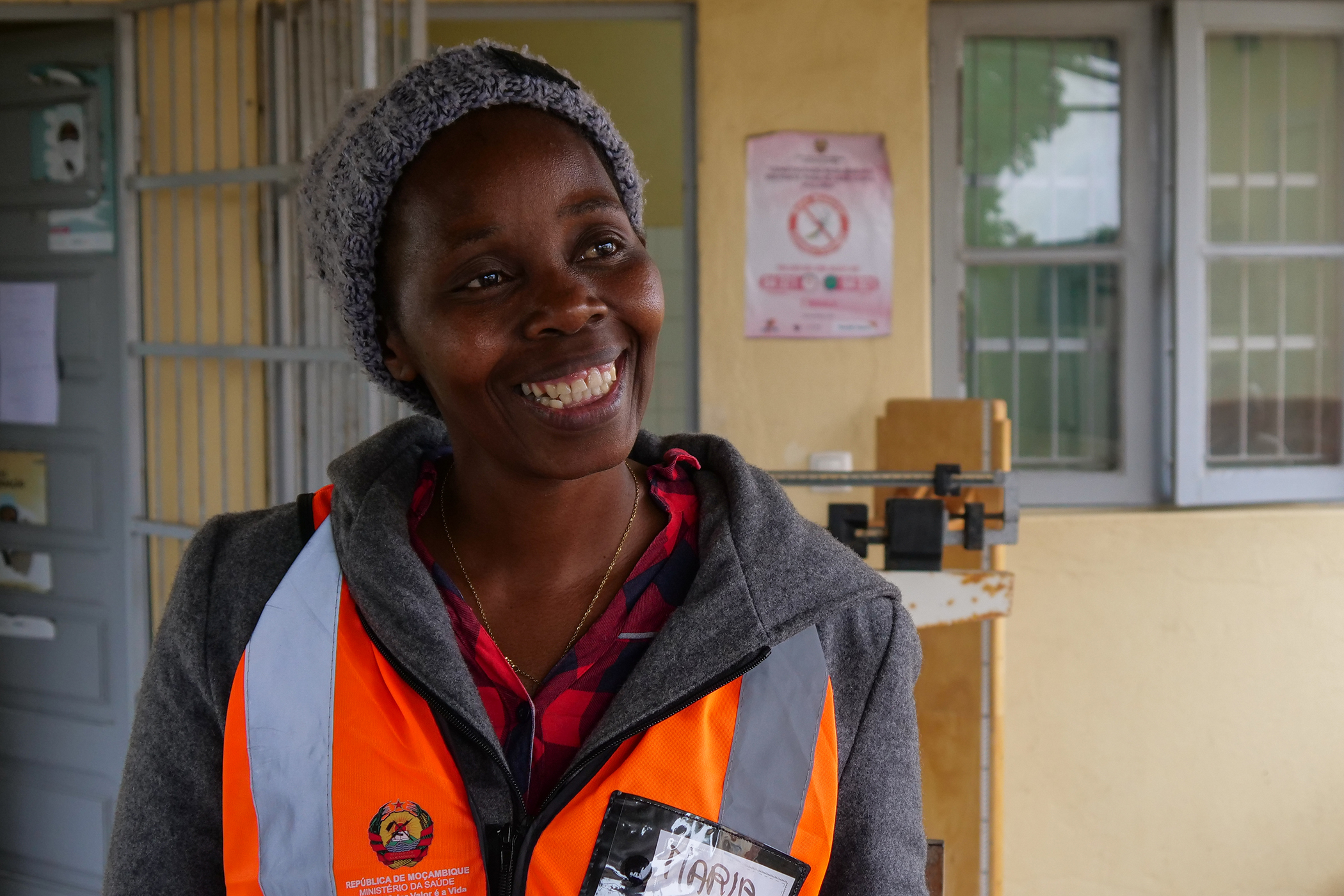
Mozambique Immunizations Image 1
Health technician Maria Mario works with children in Inhambane province, managing routine immunization along with participating in one-off vaccination campaigns.
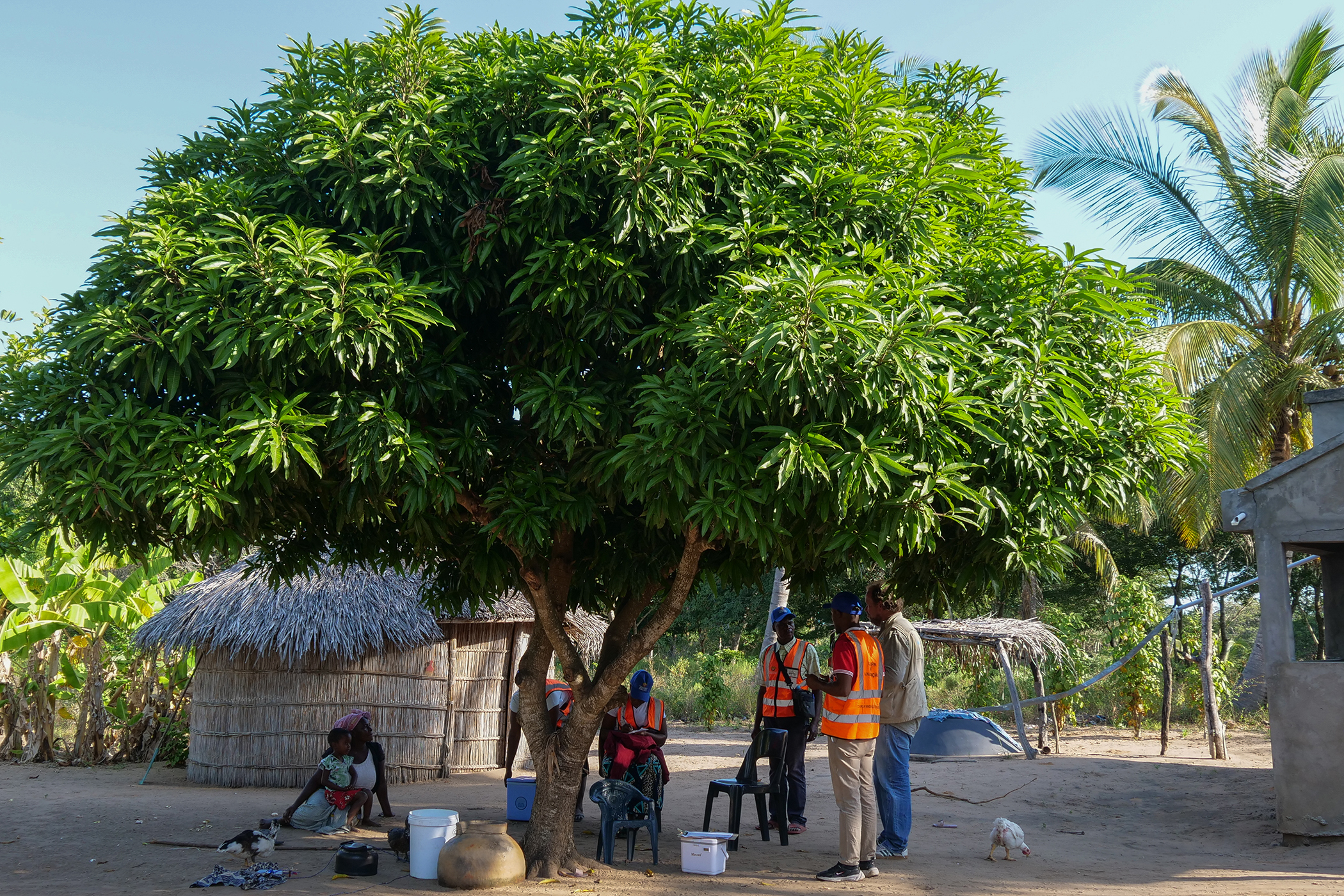
Mozambique Immunizations Image 2
A polio vaccination team finds a family in a clearing in Inharrime district, Mozambique, where a newborn baby is able to get his first vaccine at just a week old.
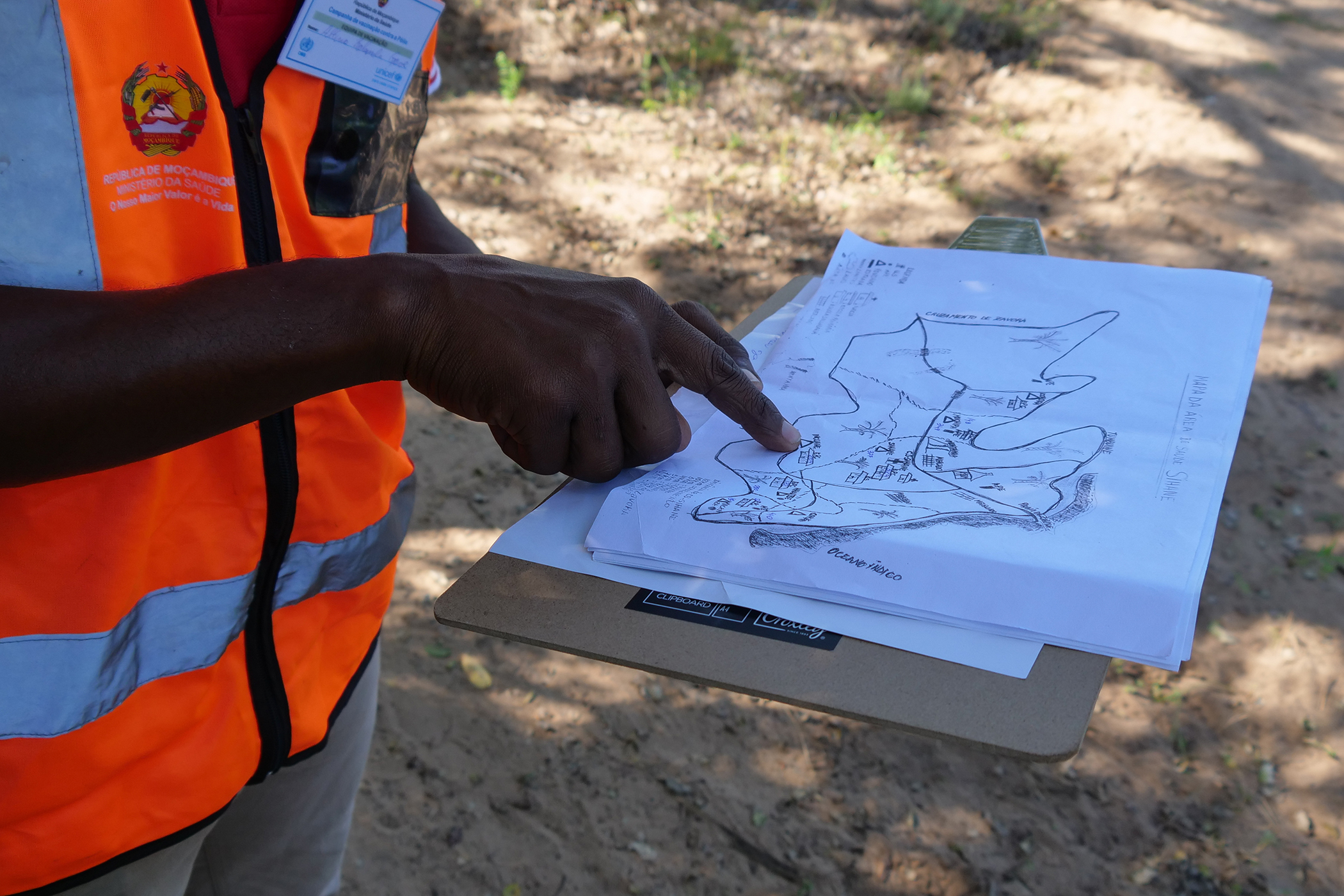
Mozambique Immunizations Image 3
Polio vaccination coordinators follow a hand drawn map of rural villages to ensure they can reach every home – which can sometimes be the first engagement with health services.
Mozambique Immunizations Image 4
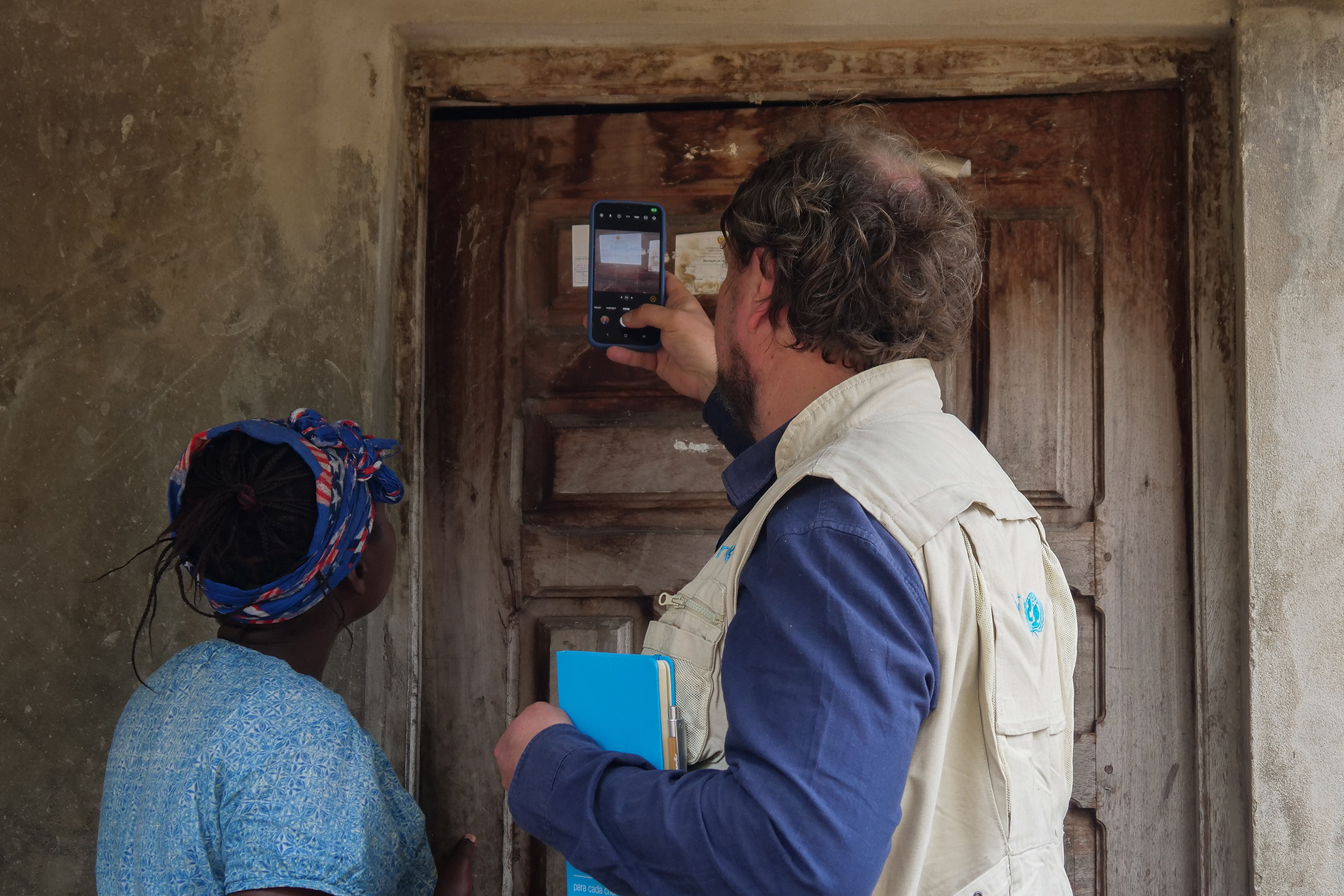
During outbreak response campaign weeks, teams revisit homes to check whether everyone has been vaccinated. Jan-Marcus Hellström, UNICEF polio team lead, checks the sticker left on a front door detailing the household’s vaccination status.
In districts where communities are spread out, the nature of house-to-house vaccination means teams can walk for four hours to reach a couple of children. “People are not static,” Hellström said. “If you’re not at home, or school, or the marketplace, we will find you one way or another, because there are so many teams out there.”
These community interactions offer a unique chance to engage families around healthcare beyond polio, with teams discussing routine immunization schedules on the doorstep. It’s a vital touchpoint for those who aren’t accessing the formal health system. When vaccine managers check on the fixed-post sites offering polio vaccines, they also make sure there are enough vaccines for children to have routine immunizations while they are there, and that the cold chain storage system is working. “So the two are very much hand-in-hand,” said Hellström.
In turn, the closure of Mozambique’s outbreaks, and the broader goal of eradication, rely on closing the immunity gap. “We could have a hundred percent high quality campaign to improve community immunity, but at the same time, individual immunity relies solely on routine immunization,” said Nirakar Panda, then-coordinator for polio outbreak response in Mozambique.
Integrated Vaccination Campaigns
Outbreak responses can additionally be tailored to target regional health issues. Madagascar, although free of wild poliovirus, has faced outbreaks of type 1 variant polio, with 55 children paralyzed by the virus between 2020 and 2023. Vaccination campaigns offered a chance to increase healthcare access in hard-to-reach rural communities.
Additionally, part of the GPEI’s strategy includes focusing on co-delivery of vaccinations in planned campaigns, and coordinating with agencies like GAVI, the vaccine alliance, on strengthening routine immunization.
For instance, in 2024 there was a joint polio and measles campaign targeting zero-dose children and those missing routine vaccinations. Polio teams also distributed vaccinations for lymphatic filariasis, often known as Elephantiasis in 2023 and 2024. In South Sudan schistosomiasis treatment has recently been rolled out alongside polio vaccination, while Nigeria has also distributed measles and rubella vaccines.
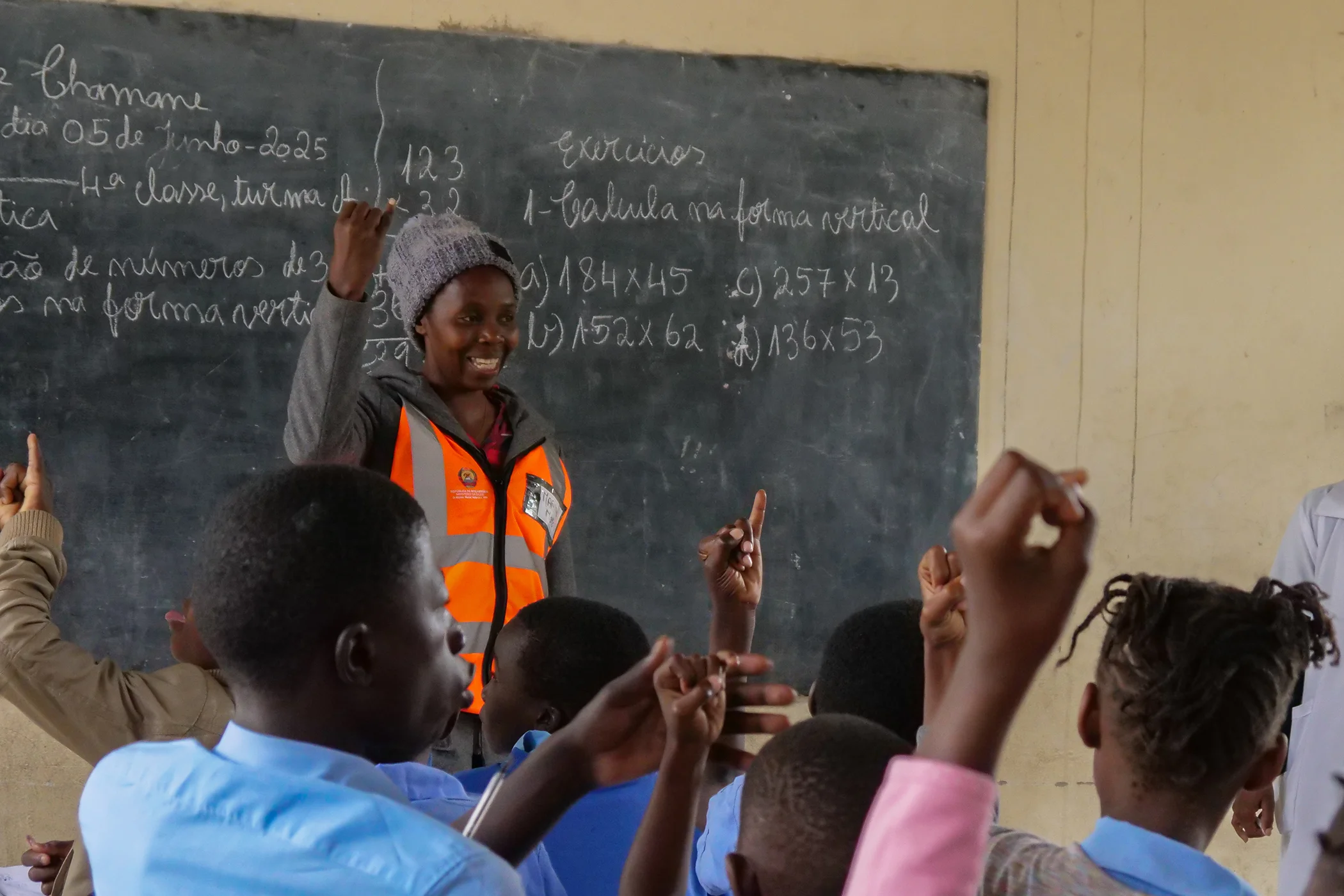 Healthcare worker Maria Mario manages community health in and around her health center and combs the area for any children missing their vaccines, including visiting local schools.
For Mario, however they are delivered, vaccines simply save lives. “We know that the polio vaccine prevents infantile paralysis, so this vaccine protects our children – it’s that simple,” she said. And while outbreaks will always call for targeted responses, routine immunization remains a crucial piece of the puzzle.
“In order to eradicate polio, we need to ensure that routine immunization is picked up all over the world,” said Hellström. “An unvaccinated child, anywhere, is a threat to children everywhere.”
Editor’s Note: This reporting was made possible through the United Nations Foundation 2025 Press Fellowship on Individual Reporting on Polio. It is a part of Global Citizen’s grant-funded content through the Bill & Melinda Gates Foundation.