Margarita Aquino was displaced from her rural community in Bolivia due to the pollution of the land and the water supply caused by local and foreign mining companies. This environmental injustice led women from various communities in Bolivia to create a network in defense of the land, one which works to create awareness of the need to defend human rights and the environment.
Margarita Aquino, 74, is an Indigenous farmer from Bolivia who is the coordinator of the National Network of Women in Defense of Mother Earth (RENAMAT), an organization of Indigenous women from communities that have been contaminated by mining activities. The organization supports women in more than 20 communities and provides support for agricultural activities, such as creating communal orchards to increase productivity and provide food in areas affected by mining activities.
RENAMAT members also visit communities to create awareness and spread information, both about the environmental damage caused by mining, and of women’s rights and the need to unite in defense of mother Earth. The group also actively works on community-led early warning systems in response to climate change and its impacts.
The organization also organizes workshops to educate women and children about their constitutional rights, having also set up an itinerant school called Warmi Yaku, which means ‘Woman of Water’, and which travels to rural communities and Oruro, the nearest large town, to educate people about how to defend their rights and protest against the environmental damage caused to communities, farmland, and water sources by local and multinational mining companies. Here, in her own words, she talks about the work RENAMAT carries out and the importance of Indigenous women being listened to.
I’m an Indigenous Bolivian, I’ve been married for 53 years, and I’ve lived all my life in rural communities and where the injustices suffered led me to become a defender of rights…
Ten years ago a multinational mining company began extraction work here and promised us development. It’s been a mining area since colonial times, but previously mining was carried out by hand and they didn’t use chemicals or advanced technology — so there wasn’t so much pollution. But now they have polluted the water, the soil, the air, and our pastureland. My family and I raised cattle, but with the pollution it became unsustainable and we had to move away. When I got married I went to live on my husband’s land, which is also polluted, and we can only plant when there’s water, when it rains. We have no water for irrigation. We used to have a well from which we could fetch water, but that got polluted by the mining company. The water turned salty. We plant potatoes and quinoa. We used to plant herbs, but where they grow has become polluted and we can’t grow them now.
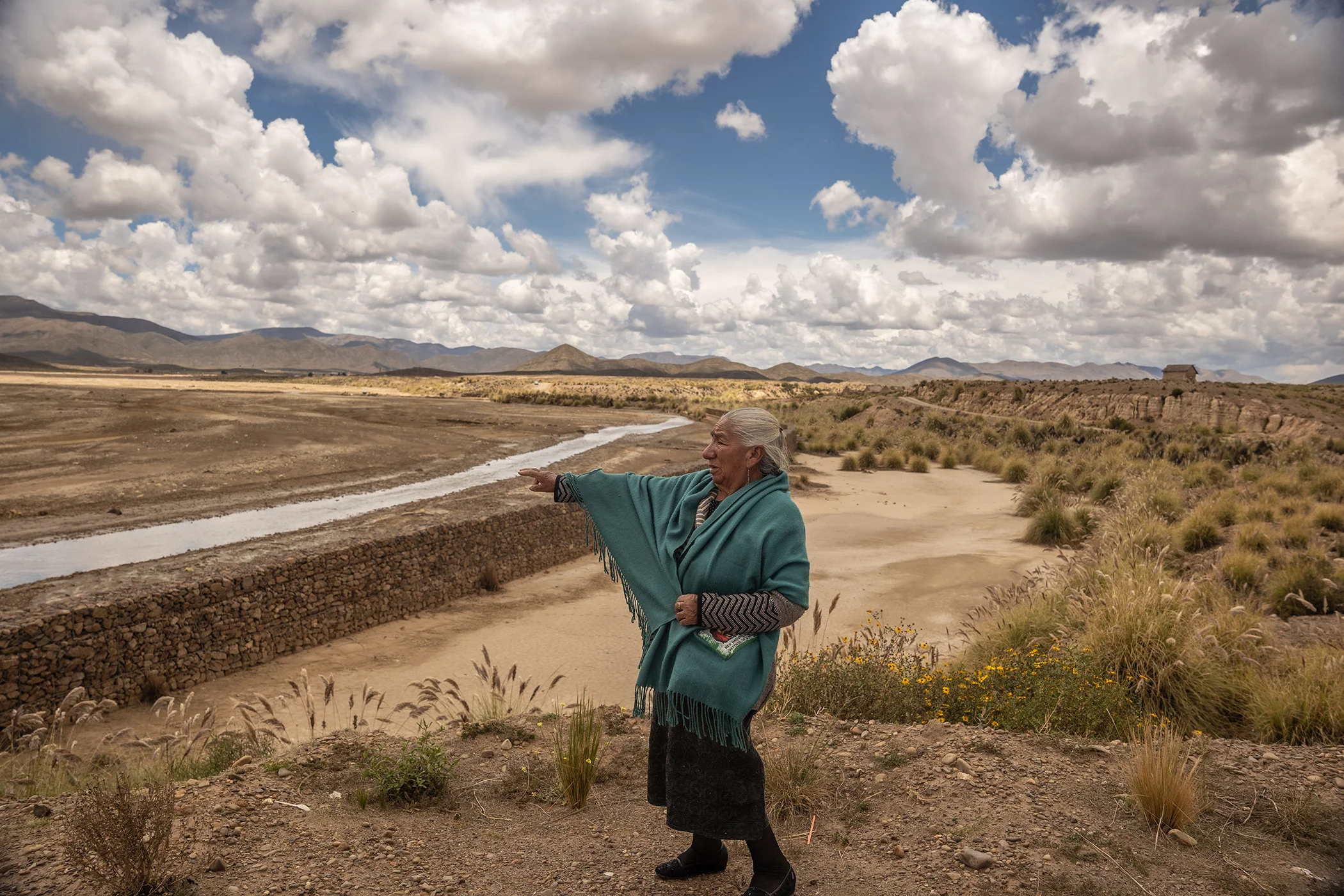 Ms. Margarita Aquino shows the environmental damage caused to the San Juan River located in the community of Sora Sora, municipality of Poopó in Oruro, Bolivia, on Feb 6, 2026. The river is contaminated by toxic waste from mining in the area.
In 2013, the collective CASA invited me and other indigenous women from other communities to train as defenders of mother Earth and for environmental and gender justice, and from there the REMANAT network was born. This has always been a patriarchy, a macho society, and we women always had to look after the animals and feed the children, so we never had the opportunity to train or time to read the Constitution or learn about our rights and laws. But now we have become empowered and learned to read about our rights and how they have been violated by the mining companies. We were able to attend summits and find out that we have the same rights as men, and as a result women from all over Bolivia have got together and discussed how we have had our water and land contaminated. Many of us have had to migrate, to other communities or cities, but we have also united, supporting each other and raising our voices to demand environmental and gender justice.
It’s always been men who have ruled our communities…
…but many women have woken up as we have realized how our lands have been contaminated, that we have to strengthen and support each other, and that united we can do so. Until recently the violation of our rights was normalized. In the Indigenous communities we have the principle of Chacha Warmi (the man-woman duality), but it has always been the men who have made the decisions in our communities, often without taking women’s voices into account.
Until now we didn’t know about how our rights were being violated. We women are the first who feel the contamination, we are in contact with the water and the land, and that’s why we consider women to be the water of the Earth. We have seen the sad reality of how our land has been contaminated, and men don’t see that, they don’t care about the land and the water. So we decided to form an organization, purely made up of women, in defense of the land, of Mother Earth, to struggle against machismo. We want to defend mother Earth and our rights which have been violated. That is how the Red Nacional de Mujeres en Defensa de la Madre Tierra (RENAMAT) formed.
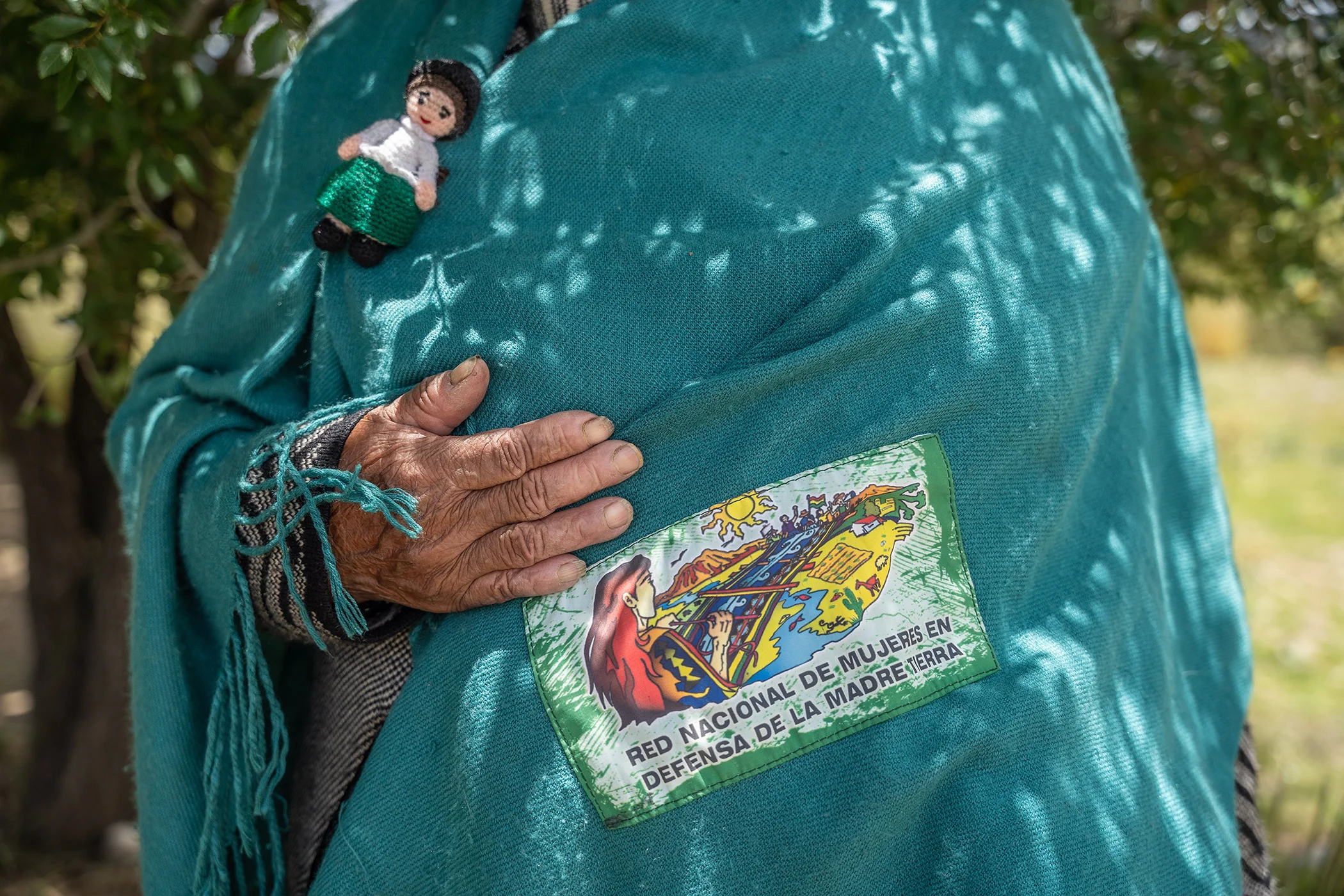 Margarita Aquino shows a badge she wears as Coordinator of RENAMAT (National Network of Women in Defense of Mother Earth), an organization of Andean and Indigenous women dedicated to the defense of Mother Earth. Pictured in Oruro, Bolivia on Feb. 6 2026.
Now we are 20 communities that are united in defense of mother Earth.
As women, we give life, and mother Earth also gives life, and because mother Earth doesn’t have a voice, we are its voice, we identify with it and as women we give life to Mother Earth, we work so that our land is valued, recouping ancestral knowledge so that there are no more displacements of people from their lands. Our achievement is that we have empowered ourselves by identifying the violence against the environment and against women perpetrated by the mining companies and we work to eradicate that, and we are fighting for our rights to be recognized, the right to life, the right to live in a healthy society, the right to consultation, to education, to the economy. And we have identified environmental violence toward women and we have created awareness among our communities. We are strengthening the defense of our communities and our lands and our water, because water is life.
Why do we call it a network? Because It’s the articulation of women as leaders, Indigenous women, women farmers, and we are seeking to build alliances among women to create awareness among communities and in the media so that people see how women’s rights have been violated by the mining companies. I used to have cattle and I lived a tranquil life, but then the multinational mining companies came and left us with hunger and desolation. We had to move an hour’s walk from where we used to live. It’s sad to try and live off the land when you have no water or when the pollution from mining robs us of our natural resources. Many of our sisters in RENAMAT live in communities that are resisting so that mining companies don’t enter their communities, and we are supporting them and strengthening them.
As women, we give life, and mother Earth also gives life, and because mother Earth doesn’t have a voice, we are its voice.
We also have climate change, the climate crisis. Our harvest calendar has changed.
Our ancestors looked at the sky and could tell if there would be rain, or if there was a Leke Leke bird (the Andean lapwing) that would make its nest high up in the branches, and then we knew it would rain, and so we would know when to sow our seeds to have a good harvest. Now those animals don’t appear because of climate change and the pollution, and we are surprised by freezing weather and we lose our harvest.
Women always have one thousand tasks. We are educators, cooks, farmers, and managers. And we are also defenders. But in our role as defenders, participating in protests or acts of resistance we are stigmatized because we defend mother Earth, because we are against the economic interests of those that cause the pollution, and they try to silence us and discredit us because they don’t want our needs or demands to be known. And for that reason we need to empower women so that they don´t feel intimidated by companies and the women can vent their problems, and we travel to other communities to offer workshops and unite our struggles.
At the beginning it was impossible to think that Indigenous women could participate in spaces to educate and make decisions, because we didn’t feel prepared…
…but now, with RENAMAT, we have broken down the barriers to education and we have been able to gain information and demand our rights, to improve our quality of life together with women from different communities, and seeking alternatives so that we can survive. We have involved many women and families. I am the coordinator of RENAMAT, and we make communal decisions. We are 60 women, delegates from different communities, and we plan strategies to overcome the climate crisis and the contamination caused by the mining companies. For more than 30 years we have resisted the mining companies, and we have proved that we can live without mining.
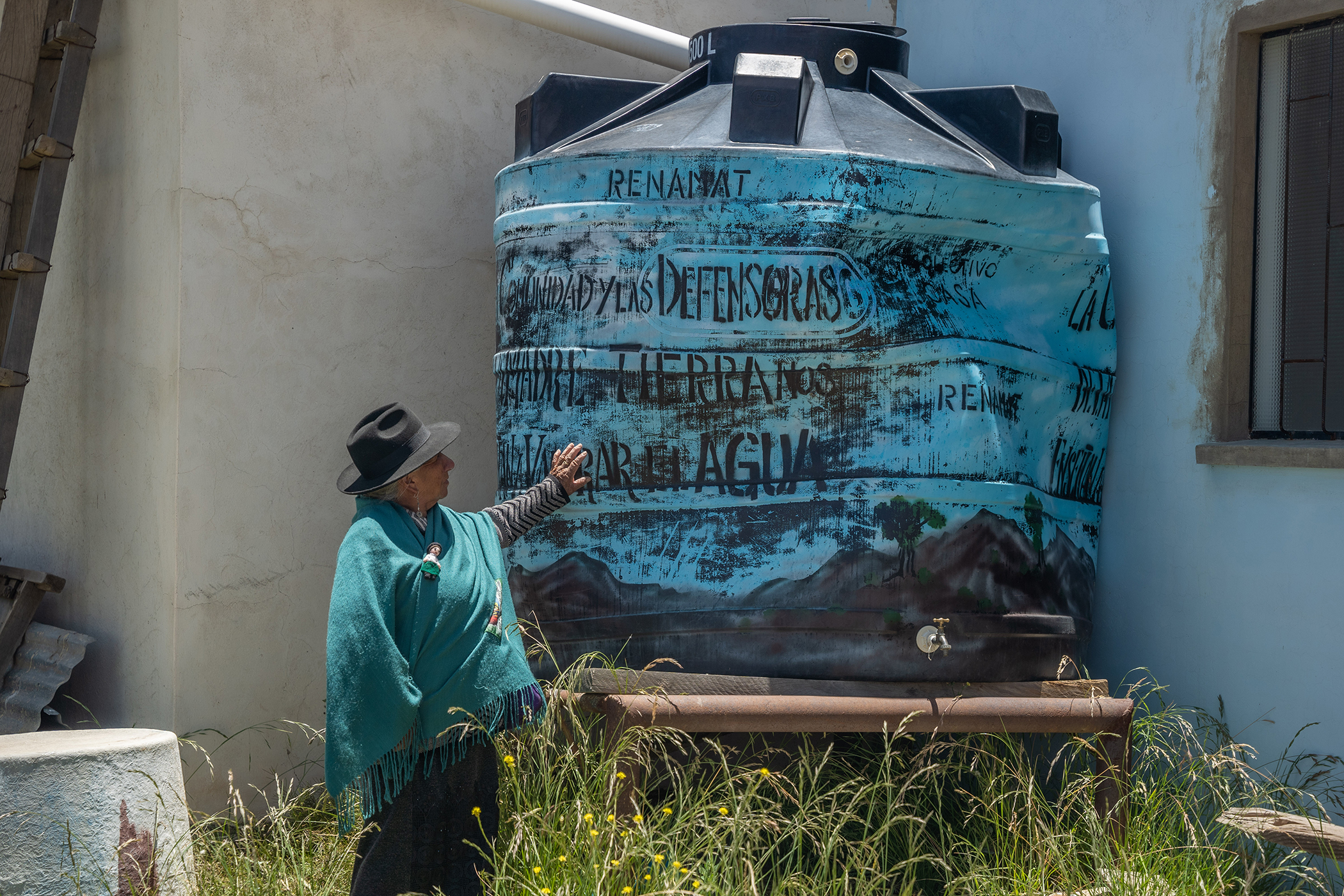
Margarita Aquino
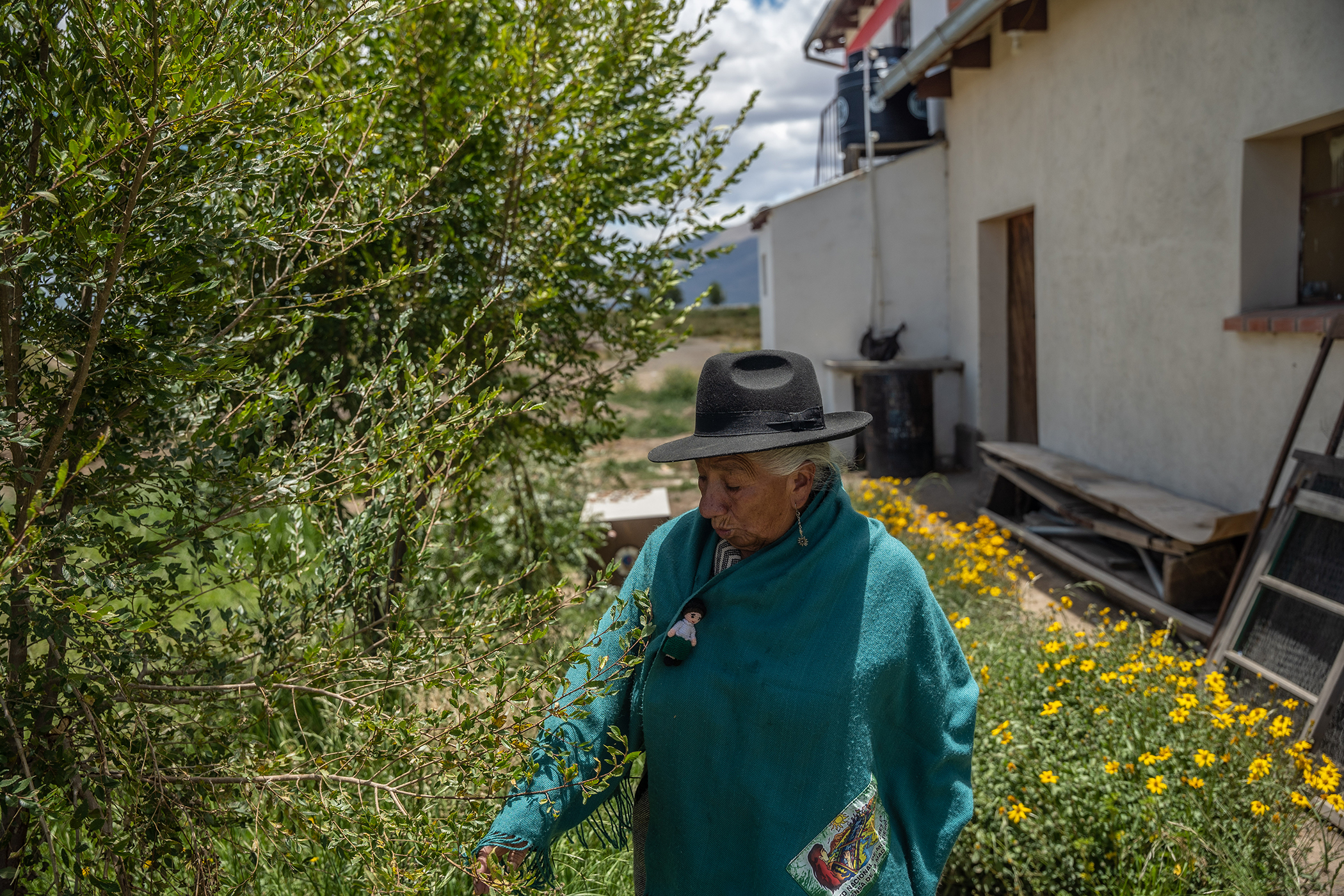
Ms. Margarita Aquino visiting the water harvesting project implemented in collaboration with RENAMAT, at the gates of the community center of Tolapampa, Poopó municipality on Fe. 6, 2026 in Oruro, Bolivia.
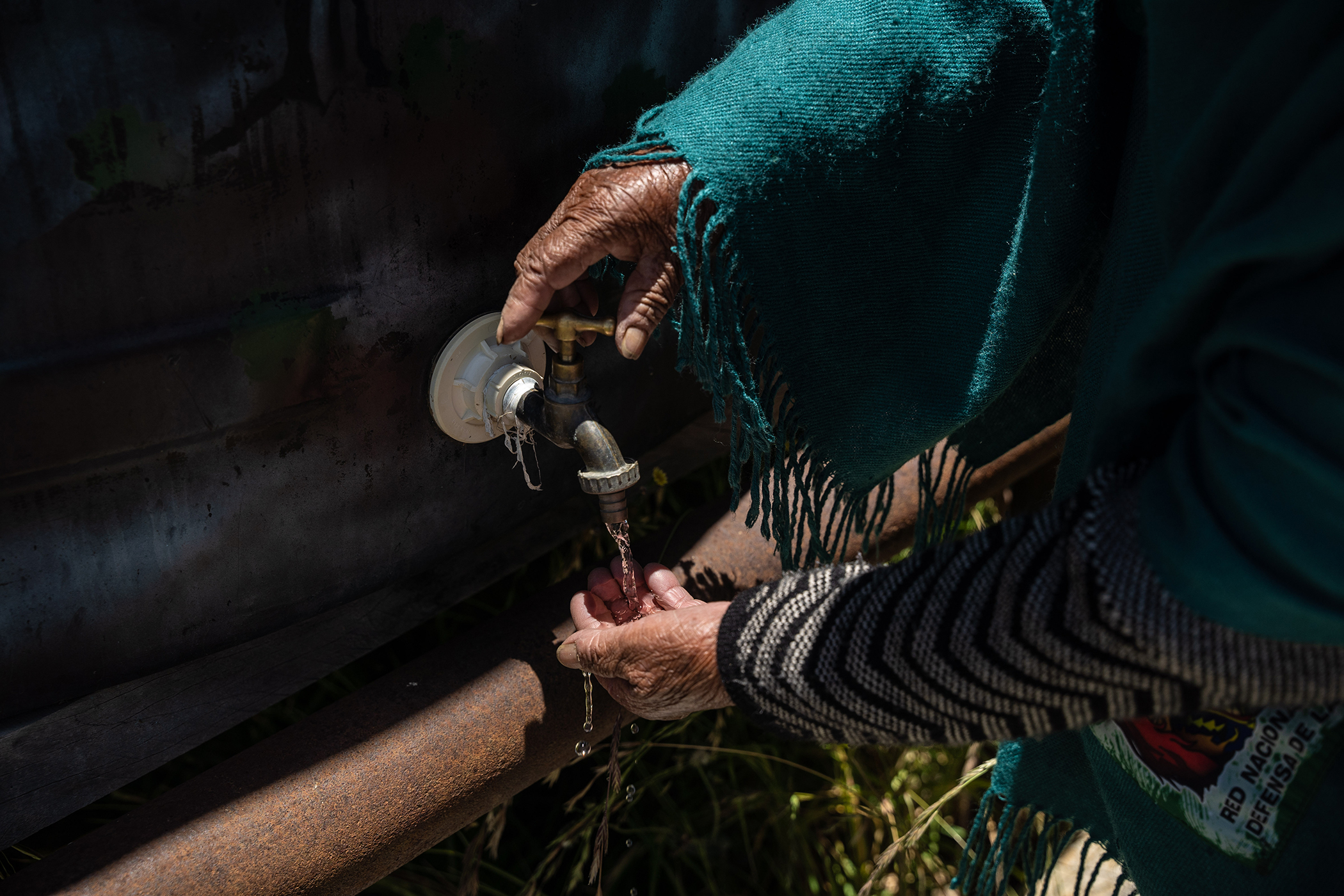
Margarita Aquino
Ms. Margarita Aquino shows the water harvesting project in Tolapampa, Poopó municipality, which is resisting mining in the vicinity and acting to preserve nature and access water.
Margarita Aquino
Ms. Margarita Aquino is photographed near the community center of Tolapampa, Poopó municipality on Feb. 6, 2026 in Oruro, Bolivia.
We are women with many talents and from different areas; some of us make yoghurt, cheese, we plant potatoes and quinoa, we raise cattle and we trade our products. We have defended communities, organized marches and protests, promoted laws to protect water, the Tacagua reservoir, and we have managed to stop mining companies from affecting communities, and we seek to build solidarity among communities.
Women work without a salary. Even though our work is not valued, we are in charge of the household, and we also protect the community. We are the ones that take the animals and our products to sell. Yet our work and the contribution that women make to the community economy is never recognized. Our work as women defending the environment is hard but we do it with our hearts. I no longer have any livestock or healthy land for cultivating and so I try to help other communities to offer them alternatives that allows them to survive and not be destroyed by the pollution from mining.
We eat from the land, and we all work together, we’ve planted a communal orchard so that we can all eat. Carrots, broad beans, onions, potatoes; all grown organically and without chemicals. We value our nutrition and we have to fight against climate change in order to survive.
Governments never think about the Indigenous people and our communities that are affected by mining.
There is an economic, social, and political crisis in this country. During the COVID pandemic the majority of the Indigenous communities were not badly affected because we took care of ourselves with herbal remedies, with ancestral remedies, and which are another very important reason for defending our territories — and RENAMAT aims to recover all of that ancestral knowledge. Our ancestors were very wise, they survived without the help of the government, they were self-sustainable with their own economy.
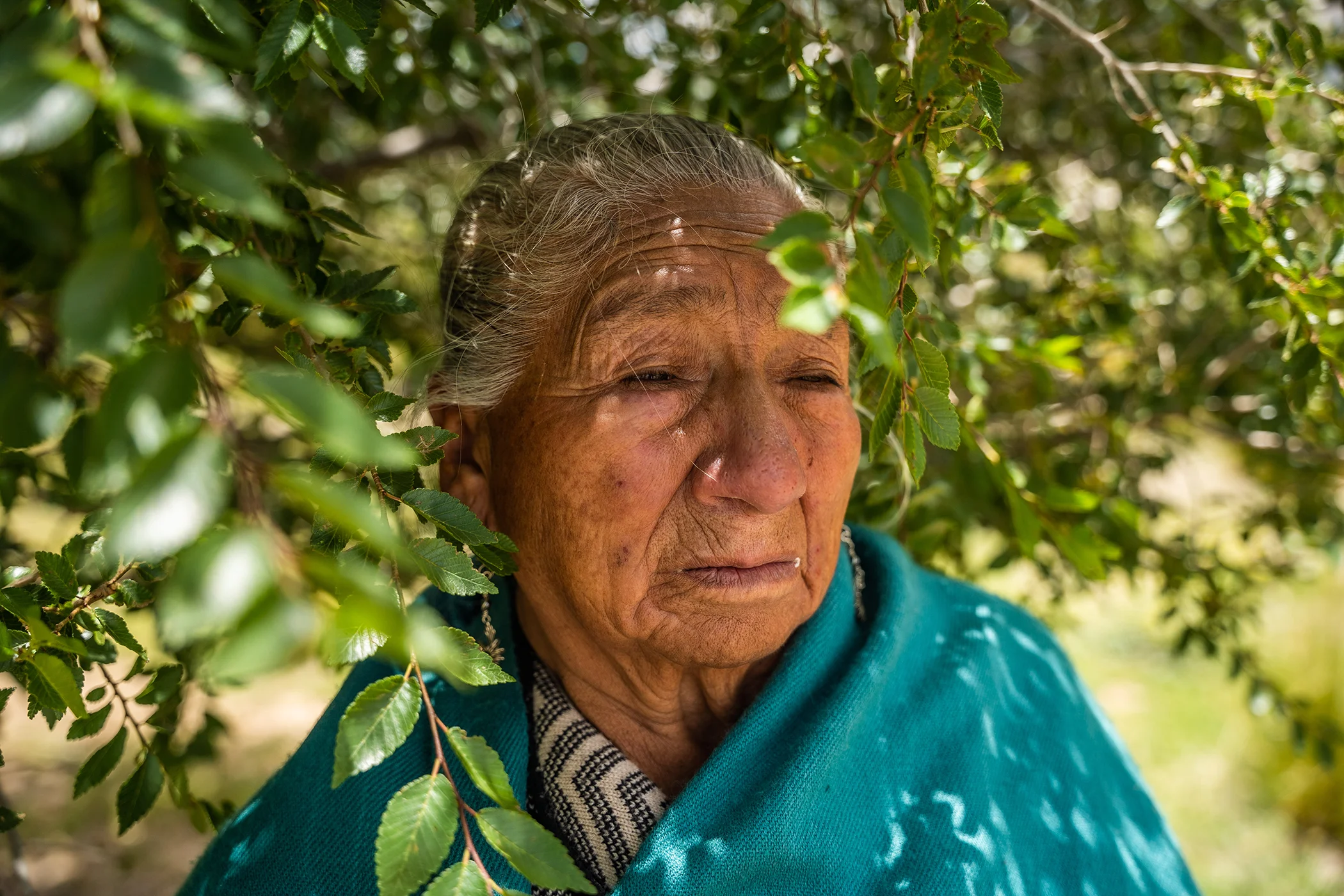 Portrait of Mrs. Margarita Aquino on Feb. 6, 2026 in Oruro, Bolivia.
What continues to happen to Margarita Aquino’s community is not an isolated case, but part of a broader pattern in which extractive industries leave lasting (and sometimes irreversible) environmental and social harm. Indigenous women frequently carry the burden of that damage, while also leading efforts to heal and defend their territories. Stories like Aquino’s need to be amplified, and action to protect the planet must be taken at once.
This article, as narrated to Adam Critchley, has been slightly edited for clarity.
The 2025-2026 In My Own Words series is part of Global Citizen's grant-funded content.