When Anne Wafula Strike and her friends went to play, everyone had a role. If Strike fell, Evie would lift her onto her back. Rhoda would carry her leg braces, and together they would run. The girls played, rolled on the ground, and broke into song.
Decades later, those moments remain central to how Strike remembers growing up with a disability in Kenya. Those friendships offered support in a childhood often marked by exclusion. After contracting polio at age two-and-a-half, Strike remembers crawling at home, trying to catch up to her sisters who were walking, and wondering why she could not do the same.
Community members said her disability was a bad omen, forcing her family to flee their village of Mihuu in western Kenya in the 1970s and relocate to Nairobi, she recalled. There, Strike grew up believing anything was possible, largely thanks to her father, who instilled unshakeable confidence in her. “My father never saw me as different. I think the only difference my father recognized was that I could not use my legs. My limbs were affected by polio. But my father used to say, ‘You've got a brain, and I don’t see anything wrong with that.’”
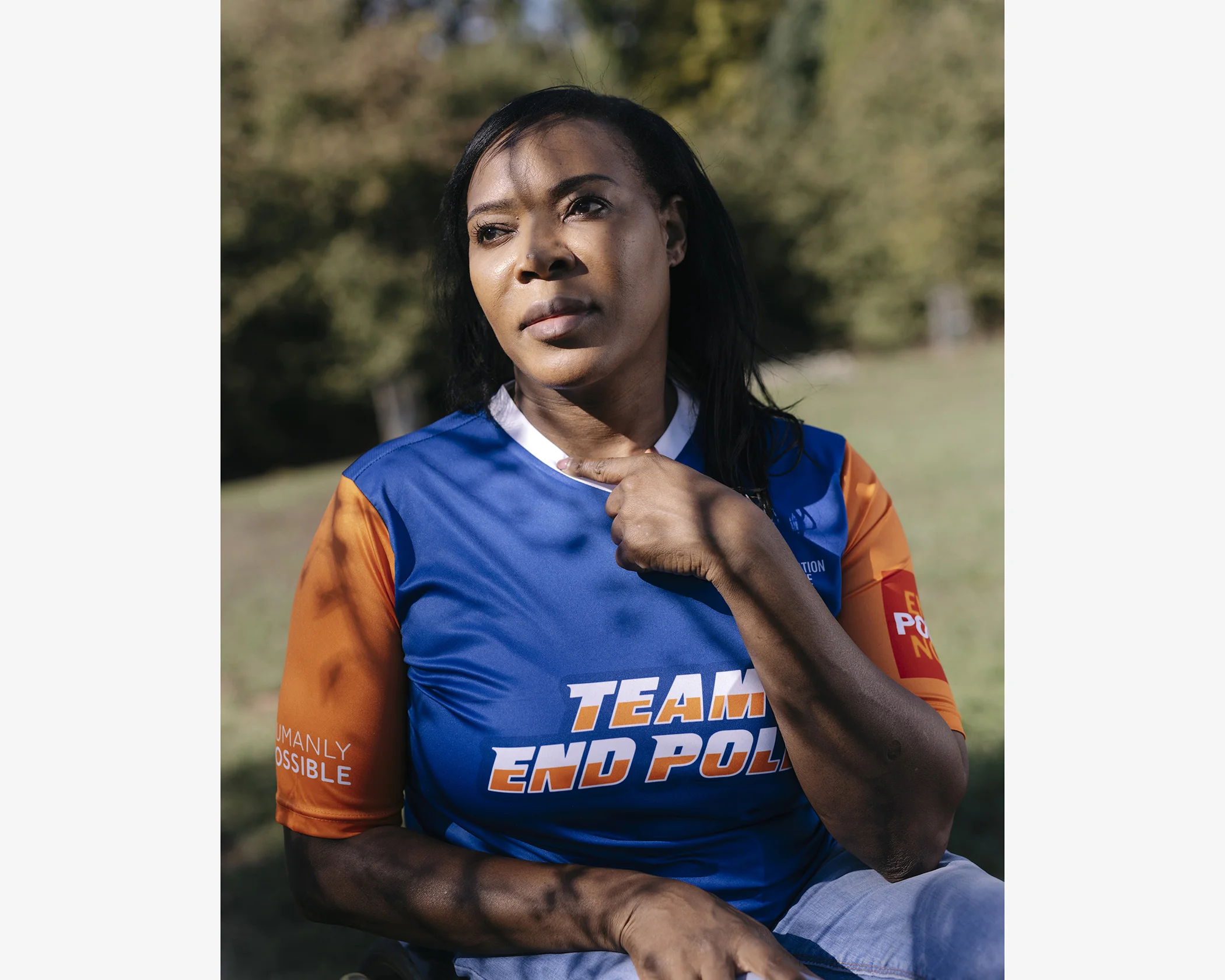 Anne Wafula Strike, a British Paralympic wheelchair racer and polio advocate, photographed in her home town of Harlow, England on Sept. 21, 2026.
Strike excelled academically and developed deep bonds with her schoolmates. To this day, she sings the praises of Helen, Cathy, Sarah, Abigail, and Winnie, whose friendship carried her through her teenage years. Organized sports though were always out of reach, Strike said. During physical education lessons, Strike was on the sidelines, watching her peers compete.
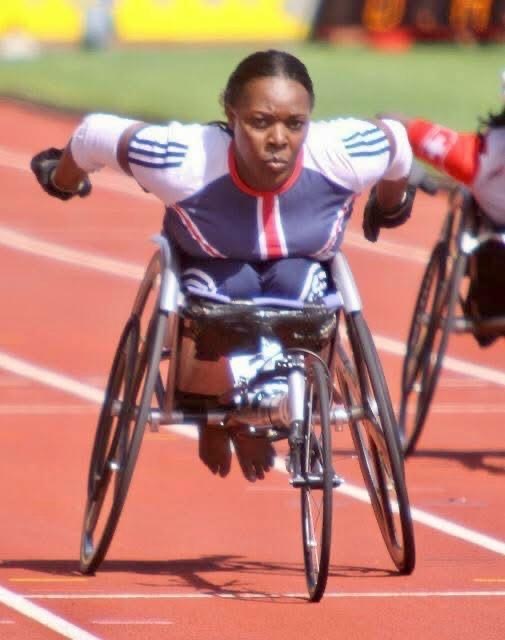
Years later, after moving to the UK and giving birth, Strike joined a gym to get in shape. There, an athletics coach noticed her upper-body strength and suggested Strike pursue disability sport. Out of curiosity, she did. She started with wheelchair racing, and only two years later, she represented Kenya at the Athens Summer Paralympics in 2004.
Being in the limelight gave Strike an international platform to speak about disability, poverty, and exclusion, and how they intersect.
“One thing I’m excited about is constantly making sure that polio is on the agenda, and the polio vaccine is on the agenda, because you know what? Polio causes disability, and disability can actually breed poverty,” she said.
Today, the Paralympian and disability rights advocate is vocal about the issues that matter most to her, which lie at the intersection of her identities.
“I am Black, I am a woman, and I’m disabled — so it’s three challenges. But to me, I ask, how do I use these challenges to really ensure that other people’s challenges are listened to?”
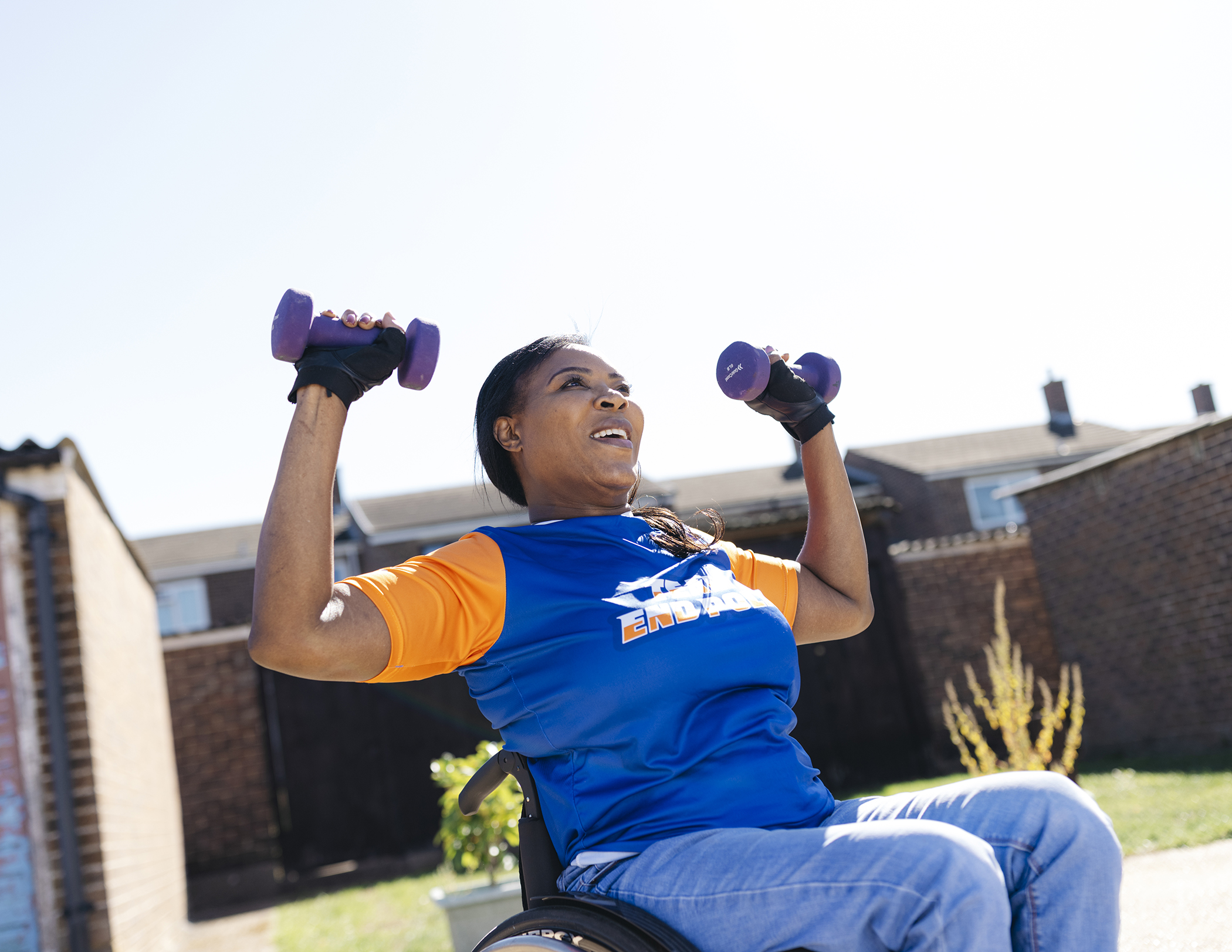
Anne Wafula Strike
Anne Wafula Strike is photographed in Harlow, England, on Sept. 21, 2026. After moving to the UK, Strike joined a gym where a coach noticed her upper-body strength and encouraged her to try wheelchair racing.
Anne Wafula Strike
Just two years later, Strike represented Kenya at the Athens Paralympics.
Anne Wafula Strike
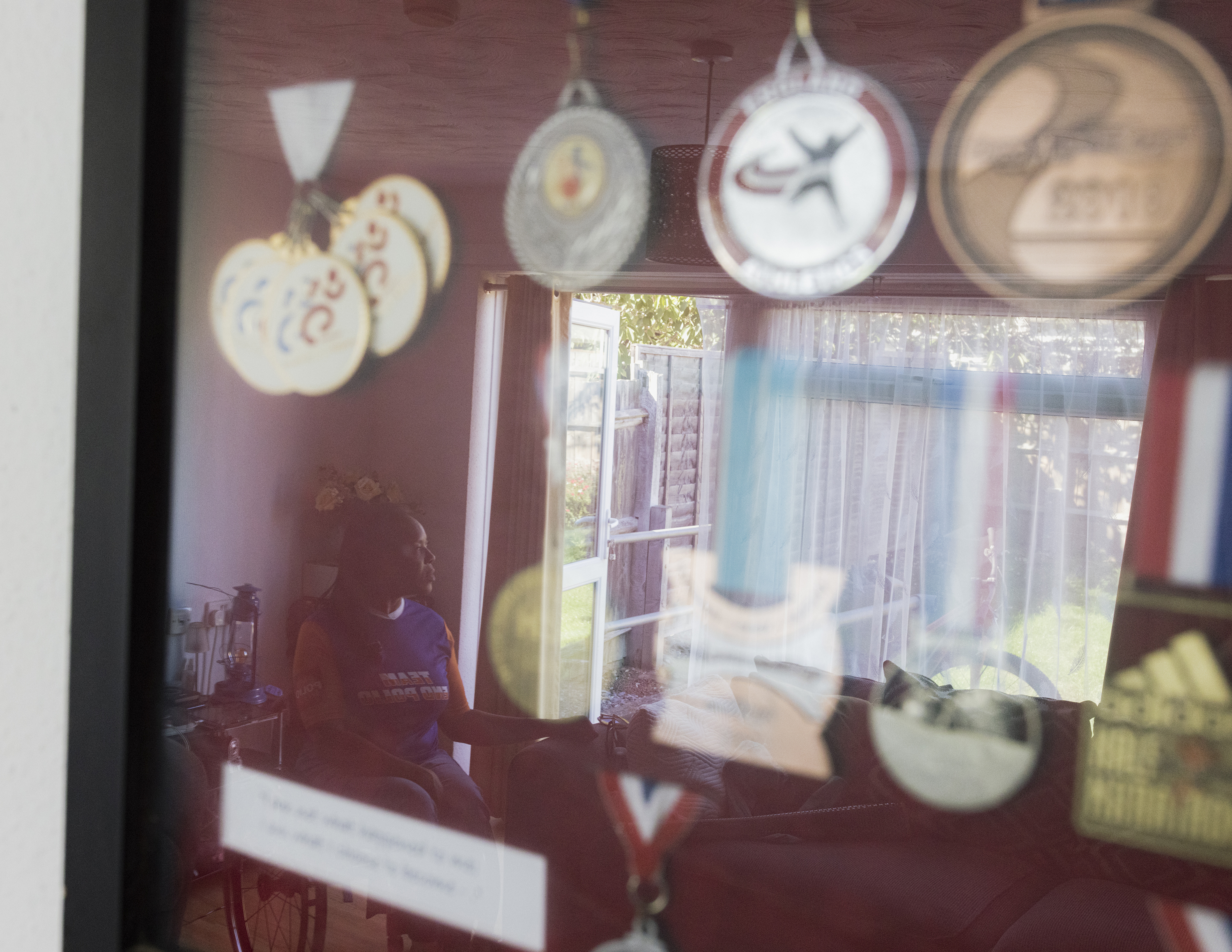
A collection of medals and memorabilia from Anne Wafula Strike’s career as a wheelchair racer and Paralympian is photographed at her hometown of Harlow, England on Sept. 21, 2026.
Strike’s nonprofit, the Olympia Wafula Foundation, supports people with disabilities in countries including Kenya, Malawi, and Nepal. She also raises awareness about disability, polio, and vaccination issues. In 2025, she took part in Team End Polio’s Strava Challenge in the UK which invited people to walk, run, cycle, swim, or roll and collectively logged over 40 million minutes of activity on Strava in support of polio eradication. In 2026, the campaign, which is live on Strava, launched in Canada and Germany, with a goal of reaching 60 million minutes.
As the campaign relaunches, Strike continues to champion the cause.
“We are so close to ending polio — to making this history,” she said.
According to the World Health Organization, cases caused by wild poliovirus have fallen by more than 99% since 1988. The virus spreads mainly through the fecal-oral route through contaminated water or food. The virus can invade the nervous system and cause irreversible paralysis. Vaccination, given in multiple doses, can provide lifelong protection.
At a time when vaccine misinformation and disinformation are on the rise, Strike makes a point to respond to hesitant parents with empathy.
“Honestly, these parents want the best for their children. Every parent would want the best for their child,” she said. Strike encourages parents to discuss their fears with health practitioners, whom she urges to listen to what families have heard about vaccines and explain the science in accessible terms.
On a recent visit to Kenya, Strike joined fellow polio survivors for a game of wheelchair basketball. But it was the conversations off the court that stayed with her. Some participants told Strike about their challenges accessing employment. Others described being refused gynecological care because providers questioned why disabled women would need it. Those conversations left Strike, already a passionate advocate, more determined than ever to push for change in Kenya and around the world. Her own experiences of tokenism in the UK, she said, show how widespread disability exclusion is.
“I urge all disabled people to say, ‘We don’t want the breadcrumbs. We want to sit at the table and share the cake. We want to have an input because we are part of the solution that you are looking for,'” she said. “I refuse to be tokenized. If I go into a room, I ensure that my voice is counted.”
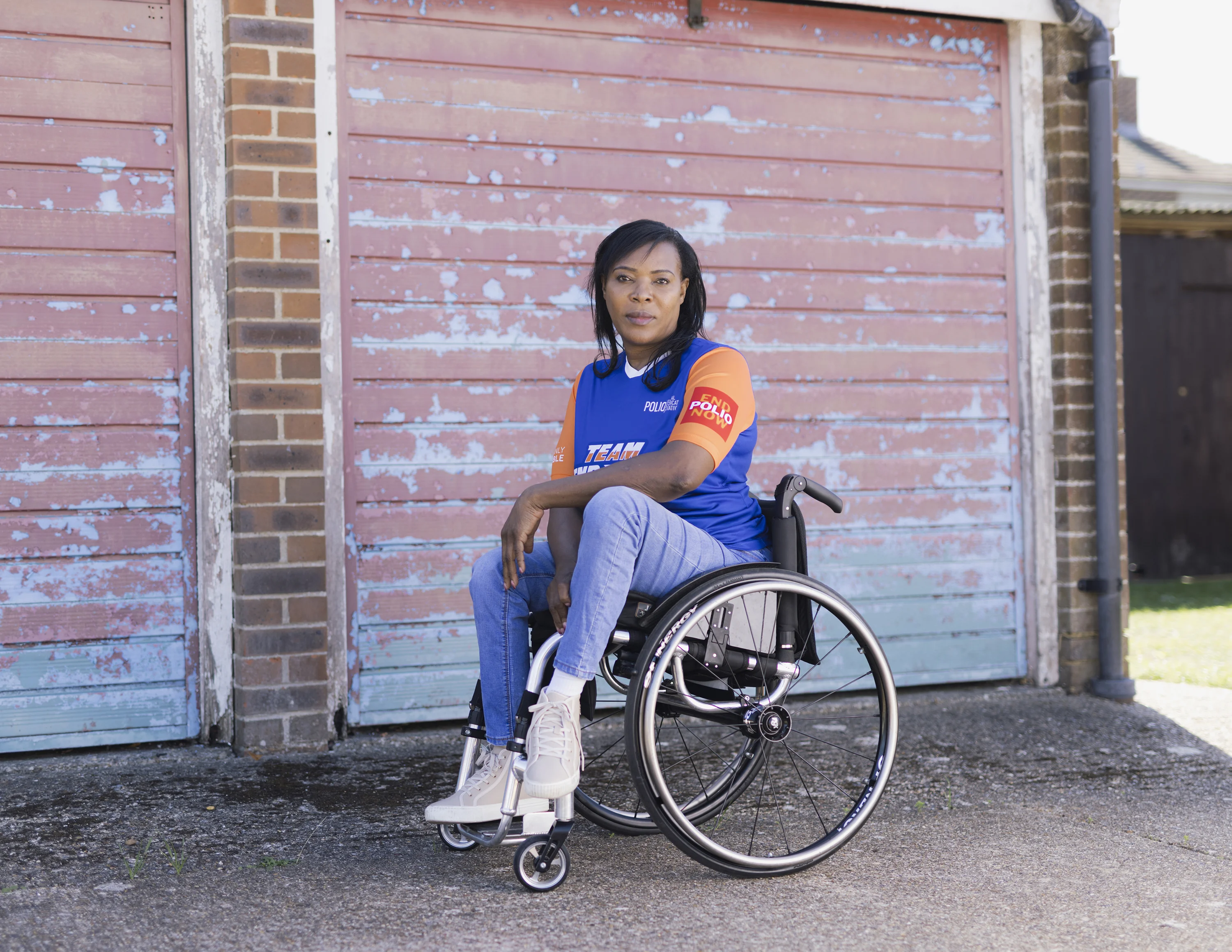 Anne Wafula Strike is photographed in her home town of Harlow, England on Sept. 21, 2026. Today, the Paralympian and disability rights advocate is vocal about the issues that matter most to her, which lie at the intersection of her identities.
The World's Best Shot is a profile series dedicated to sharing the stories of vaccine advocates around the world.
Editor’s Note: This article is part of a content series that was made possible with funding from the Bill and Melinda Gates Foundation.