He describes himself on LinkedIn as a “post-harvest ninja.” That’s how dedicated he is to reducing the losses farmers face without access to proper storage.
Dysmus Kisilu is a man of few words. But what he is passionate about is food security and for that, he will fight.
The Global Citizen Prize winner grew up in rural Kenya where his interest in solving agricultural challenges began.
“I grew up watching my grandmother farm. She worked hard every single season and still lost nearly half of what she grew before it reached the market — not because she was doing anything wrong, but because there was no cold storage anywhere near her. Middlemen knew that and paid her almost nothing. That stayed with me,” he says.
“When I got the chance to study Renewable Energy at the University of California, Davis — through a programme linked to President [Barack] Obama — I didn't go there to build a career abroad. I went, I learned, I came home. I took what I'd studied and turned it into Solar Freeze: a solar-powered cold storage platform that now serves over 300,000 smallholder farmers across Kenya.”
Kisilu is in his late twenties and leads a team whose average is also around the same age.
“We built this in the communities we grew up in.”
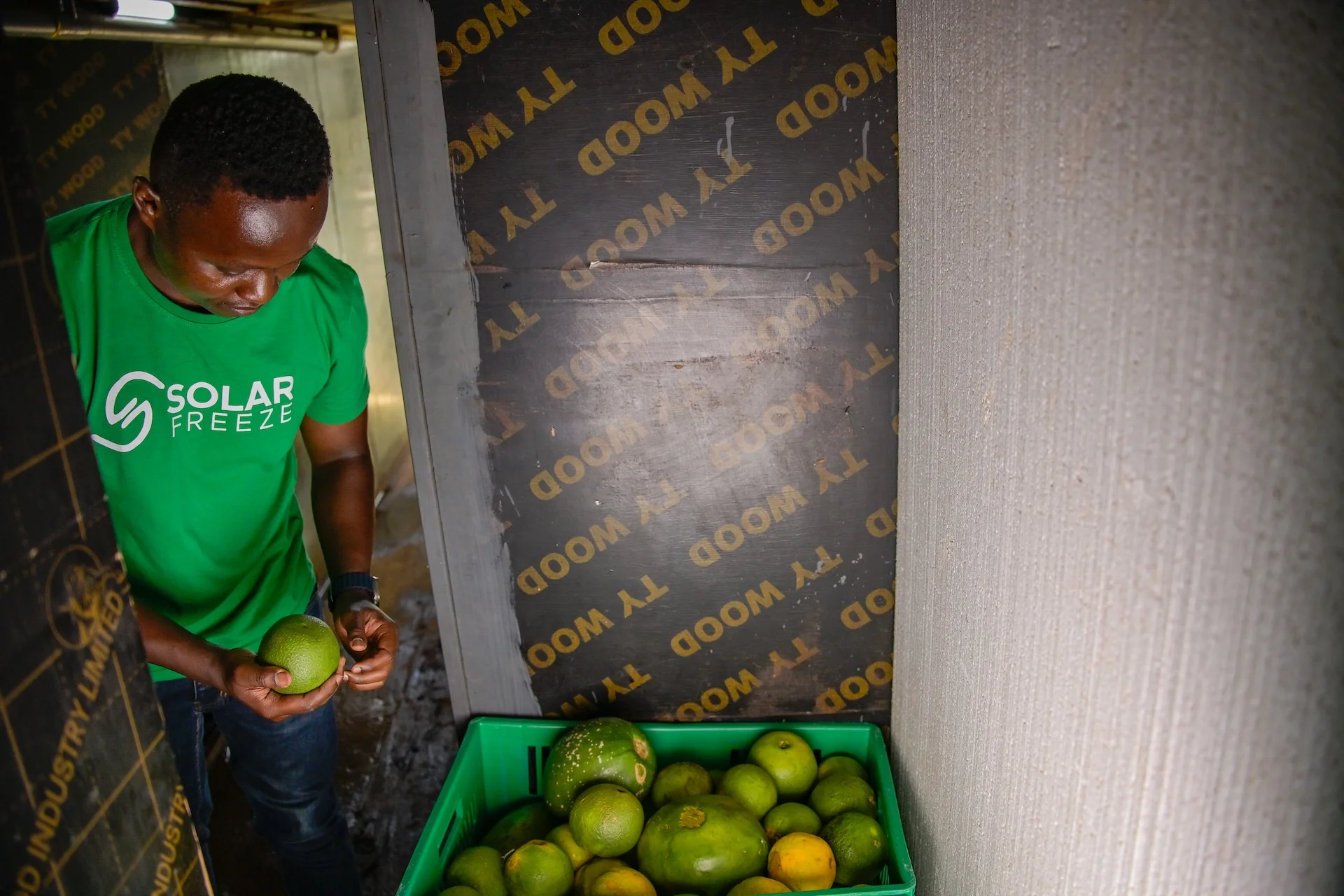 Dysmus Kisilu inspects freshly harvested fruit inside a Solar Freeze cold storage facility, helping farmers keep produce fresh for longer and reduce post-harvest losses. Image: Patrick Shomba for Global Citizen
Getting Started
The high cost of equipment and spotty electricity are some of the barriers that Kisilu witnessed first-hand.
Cold storage is an essential part of modern agricultural supply chains, but it is not easily accessible in rural areas.
That’s where the entrepreneur, the co-founder and CEO of Solar Freeze, comes in.
He says he felt compelled to find a solution.
“Honestly, I didn't set out to be an advocate — I set out to solve a problem. But you cannot watch 300,000 farming families lose income they worked an entire season to earn and stay quiet about the systems that allow it to keep happening. Post-harvest loss is one of the most solvable problems in global agriculture and one of the least funded. Somebody has to say that loudly and keep saying it until the money and the attention show up.”
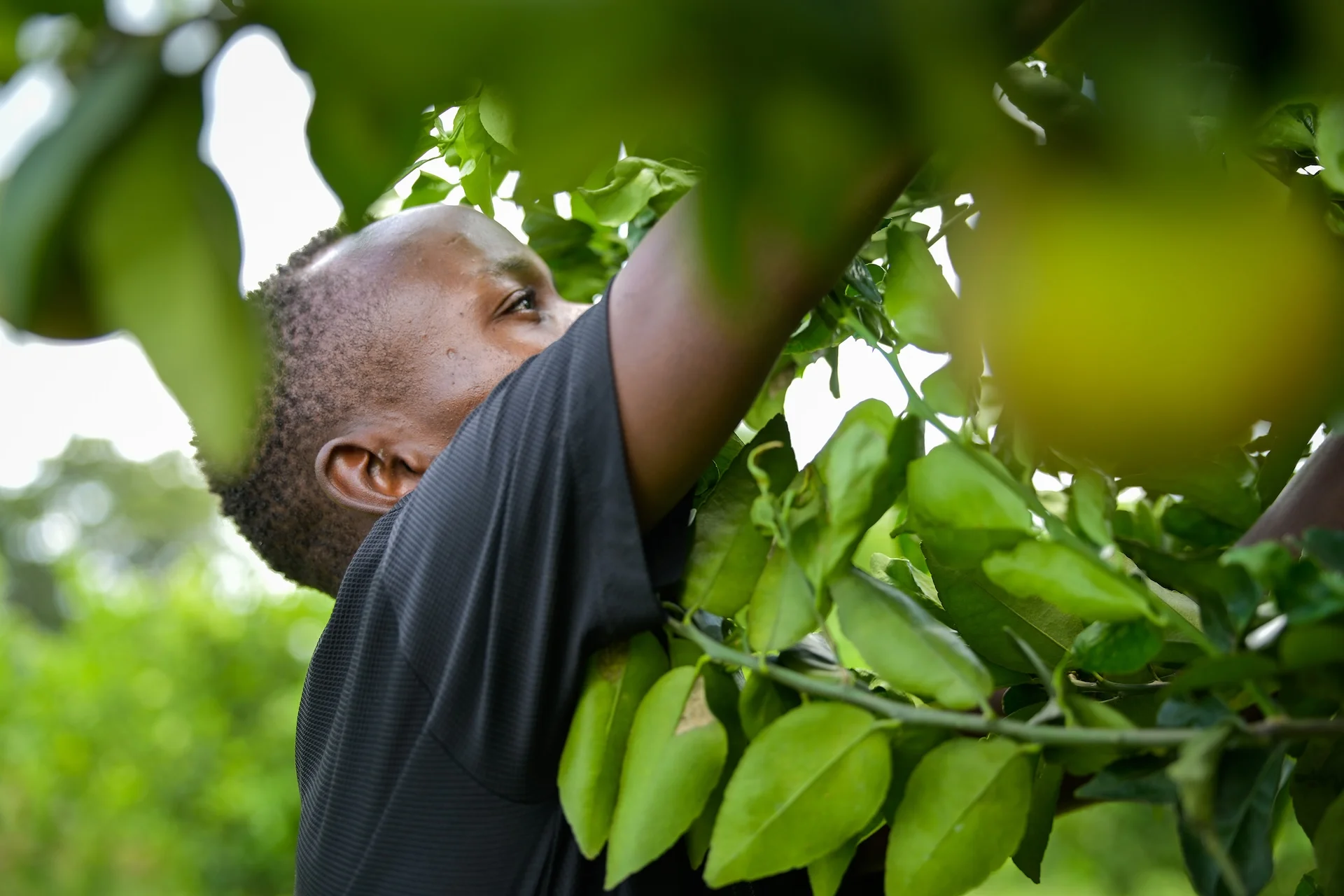 A farm worker harvests citrus destined for storage at a Solar Freeze facility, where cold storage helps extend shelf life and reduce food waste. Image: Patrick Shomba for Global Citizen
Building a Solution
Kisilu explains what they do.
“Solar Freeze puts modular, solar-powered cold storage hubs directly into rural communities that have never had access to refrigeration — no grid required, no upfront cost for farmers. We extend the shelf life of fresh produce from 1–2 days to 2–3 weeks, which changes everything. A farmer who used to sell in desperation on harvest day can now wait, negotiate, and sell when the price is fair,” he says.
“We've gesnerated $45 million in cumulative farmer earnings, prevented 150 tonnes of food waste every month, and demonstrated up to 90% reduction in post-harvest losses for the farmers we serve. The platform also includes AI-driven market intelligence, mobile money PAYGO access, and five embedded financial tools that unlock credit and insurance for farmers who have never been able to access either.”
Progress and Remaining Challenges
Kisilu says farmers inspire him every day. He says they are the reason he remains committed to improving food security.
“Always the farmers. I think about a woman named Mary — one of the first farmers to use Solar Freeze. She was about to sell her entire tomato harvest to a middleman at the roadside because she had no choice. We asked her to wait, she stored her produce, and three weeks later she sold directly to a Nairobi supermarket at four times the price. She paid her children's school fees with that money for the first time in two seasons. When I'm tired, I think about Mary. There are 300,000 people like her counting on this to keep working.”
But he says significant work remains, and scaling takes time. That’s the hardest part of growing an organization like Solar Freeze.
“We have proven that this works. The data is there, the audited accounts are there, the farmer outcomes are there. But scaling infrastructure across rural Africa requires capital, and capital moves slowly. Watching farmers in communities we haven't reached yet continue to lose harvests that we already know how to save — that is genuinely hard to sit with.”
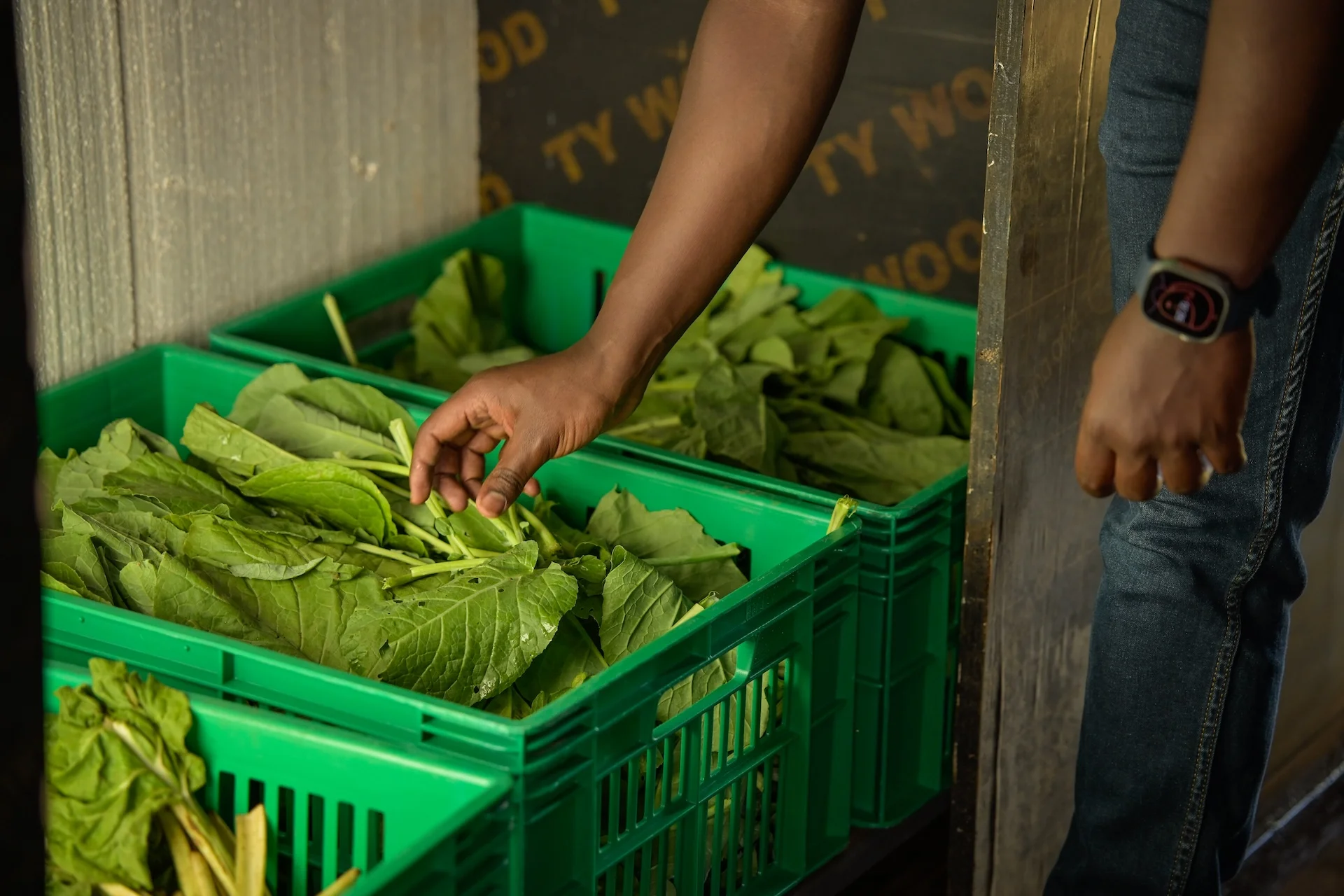 Freshly harvested leafy greens are stored inside a Solar Freeze cold storage facility, helping smallholder farmers keep produce fresh for longer, reduce food waste, and increase their earning potential. Image: Patrick Shomba for Global Citizen
Expanding His Impact
Strengthening food security in today’s climate is no small feat. Kisilu believes that winning the Global Citizen Prize for Clean Energy gives him a bigger platform to not only share his work, but to create space for other innovators.
“It means the story gets told. Solar Freeze has some remarkable recognition — Duke, UCLA, Echoing Green, the Gates Foundation — but it still exists largely within the world of social entrepreneurship. The Global Citizen platform reaches people who have never heard of us, and that visibility matters. It matters for the farmers whose lives are behind these numbers. And it matters for every young African innovator who needs to see that you can build something serious, from home, for your own community, and the world will notice,” he says.
With the prize, he gets a cash injection but most importantly, he gets year-round support from Global Citizen to amplify his work.
Kisilu wants to use that year strategically.
“[By the end] I want to have reached the communities we haven't reached yet. A year from now, I want more farmers to have cold storage they can actually afford, more young women running hubs in their own towns, and more people — funders, governments, other entrepreneurs — taking post-harvest loss seriously as a climate and economic justice issue. If Global Citizen's platform helps move any of those things forward, that is everything.”