From the outside, functioning schools often look ordinary. Young children lined up at a gate, teachers taking attendance, and the simple rhythm of a school day. But in places where crisis has disrupted almost every other part of daily life, that ordinary rhythm can offer safety, stability, and hope.
In Kutupalong, Bangladesh, Rohingya children displaced by violence in Myanmar are learning through play. In Hostomel, Ukraine, Primary School No. 1 reopened this year after Russian shelling destroyed it. And in Vanuatu, students drill for the earthquakes and cyclones that make their country one of the world's most disaster-prone.
War, displacement, hunger, and climate disasters can interrupt schooling overnight. When a crisis happens, students are cut off from the very routines and support systems that help them feel secure, while prolonged exposure to instability can leave psychological effects that persist for years.
For children living through crisis, the loss of education can shape far more than the years they spend out of school. Nearly 35% of the world's out-of-school children are out specifically because of conflict or crisis, and Education Cannot Wait (ECW), the United Nations global fund for education in emergencies, estimates that almost 258 million school-age children and adolescents are affected by crises worldwide today, 21 million more than just 18 months ago.
The stakes extend into adulthood. The World Bank estimates that each additional year of schooling raises a person's earnings by up to 10%, while completing secondary education can double a girl's income for life, according to UNESCO. The organization also estimates that if every adult on earth completed just two more years of school, nearly 60 million people could escape poverty.
For children whose education has already been interrupted, those lost years can mean fewer opportunities long after the crisis ends. ECW works with governments and partners to help prevent that loss from becoming permanent, supporting children to return to school, catch up on missed learning, and continue their education through conflict, displacement, and disaster.
Here’s a look at how ECW is helping children continue learning.
Venezuelan Child Refugees in Colombia Take Missed Classes To Catch Up on Life in a New Country
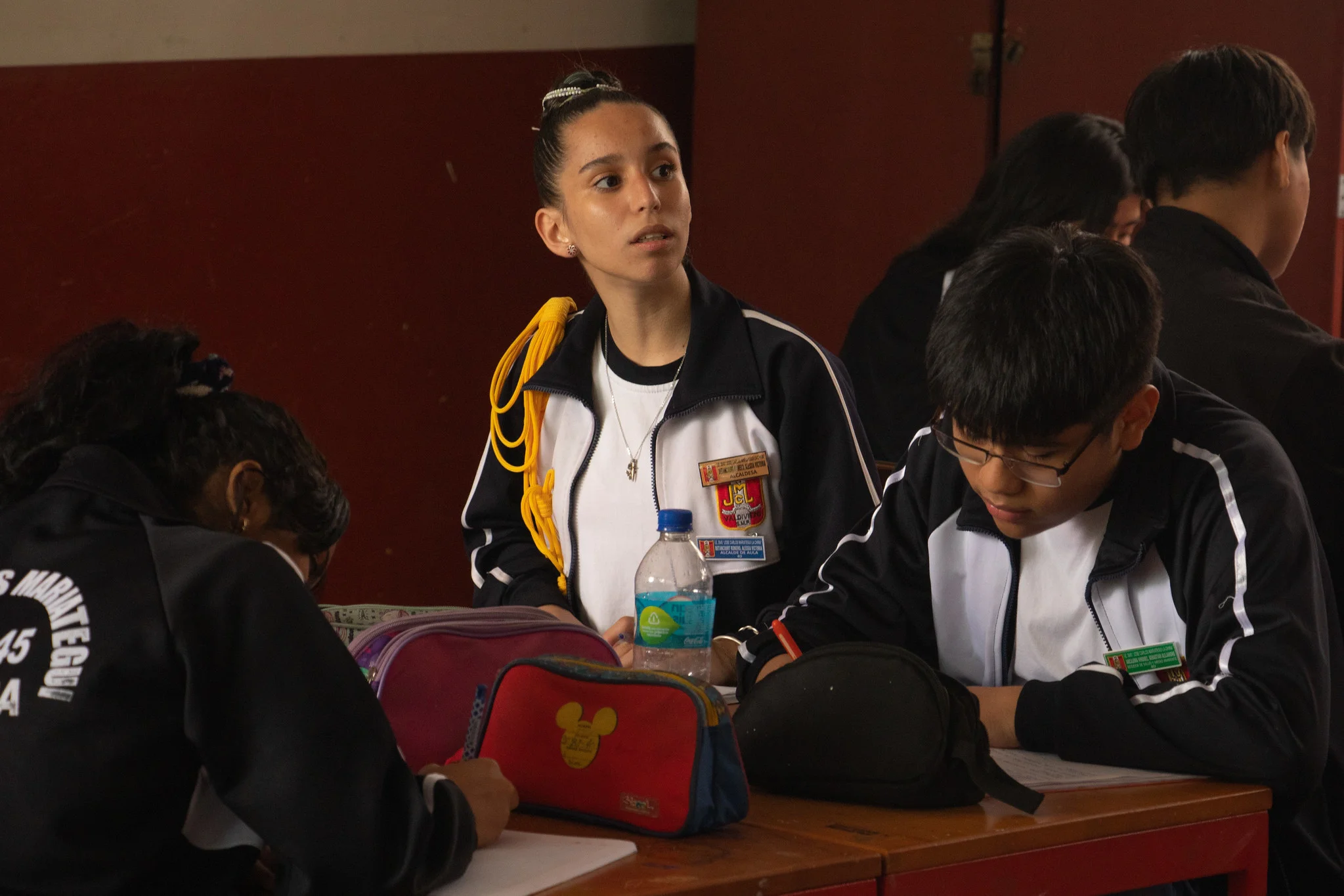 Alessia works on a lesson at an ECW-supported learning facility in Cúcuta, Colombia. She was forced to flee conflict in Venezuela and is now receiving education support from ECW partners in Colombia.
Colombia hosts nearly 2.86 million Venezuelan refugees and migrants, more than any other country in the region. Its open-door policy allows displaced children to enroll in public schools regardless of their legal status, but access remains a challenge.
As of 2024, an estimated 787,000 children were still out of school across the country. According to ECW, school enrollment for Venezuelan children also drops sharply as they age, from 57% at the primary level to 22% by lower secondary school. Keeping them in school as they grow older is therefore critical, both to protect them from exploitation and to help them build a life in their new country.
Camila, a Venezuelan refugee who moved with her family to Cali, Colombia, says schooling has given her a chance to fit in and find stability. After relocating with her two siblings, father, and grandmother from the northeastern state of Anzoátegui, Venezuela, she enrolled in school. Her institution receives support from Save the Children, UNICEF, and ECW through the Fundación de Chile program.
"In Venezuela, many teachers stopped working to look for another source of income," said Camila's father. "The few who stayed had to do magic to provide a better education for the children." In Cali, Camila now attends school regularly, catching up on missed classes from her time spent traveling. She enjoys science, math, and spending time with her friends.
In 2026, Colombia ranked second worldwide for the highest number of internally displaced persons, trailing only Sudan. As climate risks and compounding political and economic challenges drive displacement across the region, access to education for students on the move remains more critical than ever.
Colombia has been home to ECW-backed education programs since 2019, aimed at getting Venezuelan refugee and migrant children back into classrooms and catching them up on core academic skills, while safe and without discrimination. The initiative sits within a larger regional strategy that is also helping displaced communities in Brazil, Ecuador, Peru and Venezuela respond to the crisis. Launched in 2024, the second ECW-funded Multi-Year Resilience Programme in Colombia aims to support 184,000 children across 15 municipalities across the country, with a focus on access to education, classroom safety, gender equality, and disability inclusion.
Across the Sahel, Keeping a School Open Can Be an Act of Defiance
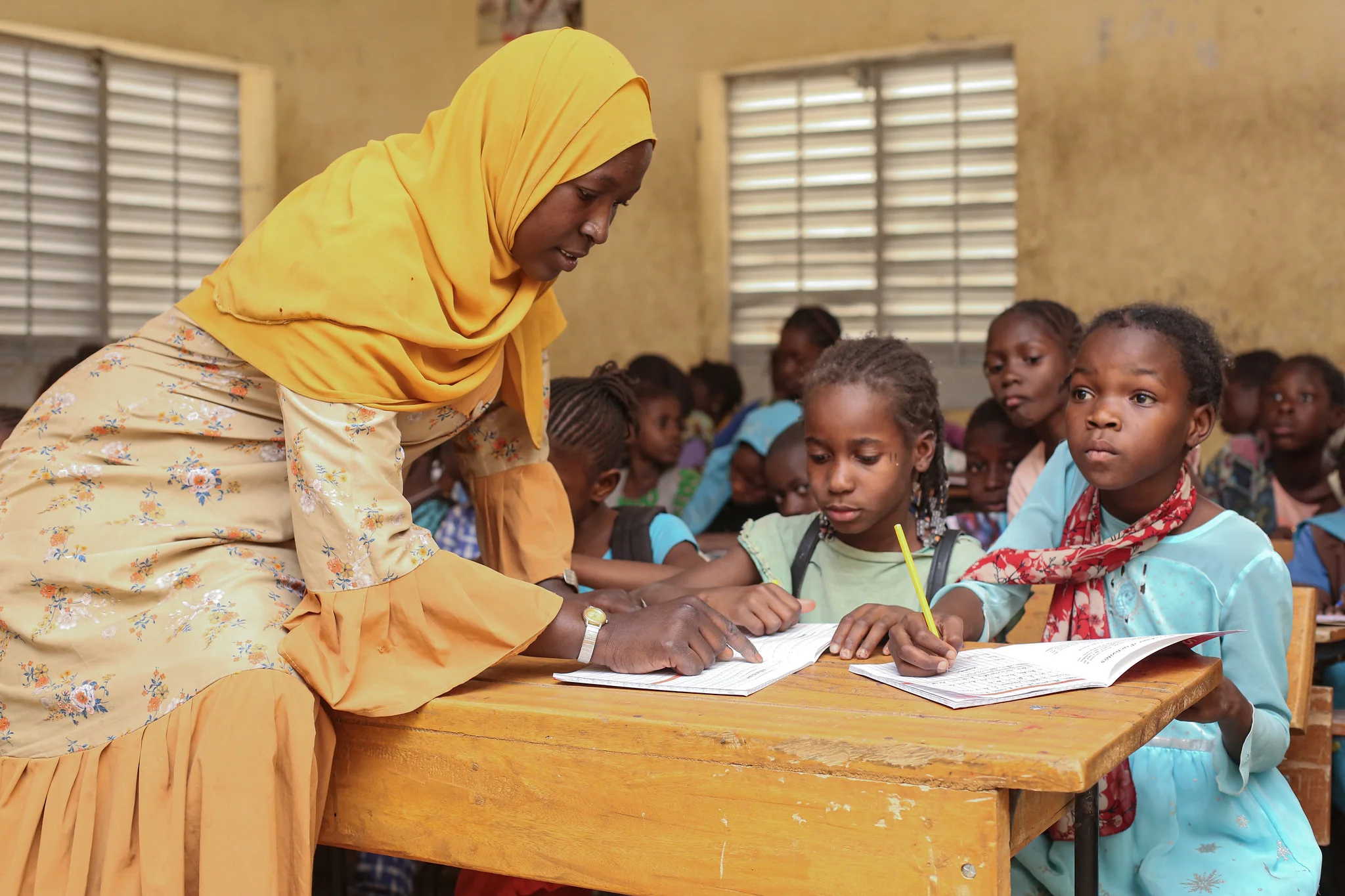 Teacher Imamaya Traoré works with students at Mahamane Fondougoumo School in Timbuktu, Mali. Through the “Reading Corner” initiative, supported by ECW and UNICEF, children are building literacy skills and getting the support they need to stay in school.
The Sahel stretches in Africa from the Sahara Desert to the north to the humid tropical savannas to the south. For the more than 100 million people who call it home, displacement is being driven by violence, insecurity, and the devastating effects of climate change, with 80% of migrants being women and children, according to the UN.
In Burkina Faso, Mali, and Niger, armed groups have deliberately targeted schools, killing school personnel, destroying facilities, and threatening entire communities to close down schools. ECW reports that more than 2.6 million children are out of school in Burkina Faso alone, with another 1.7 million at risk of dropping out completely. In Mali, more than half of the nation's students are out of the classroom, leaving them more exposed to recruitment by armed forces, child marriage, and forced labor.
For children displaced by that violence, finding a new school does not necessarily mean their education is secure. In 2020, ECW reported on the story of Oumar, a student from Mali who first found a classroom at Mentao refugee camp in Burkina Faso after fleeing violence in Mali in 2012. As conflict spread, his teachers stopped coming to work, then left the area, forcing his family to move twice more to find schooling. COVID-19 struck and shut classrooms again, stopping any hope of a regular education, but Oumar fought for his dream of finishing school through each disruption,
For years, ECW has supported efforts across the Sahel to put the international Safe Schools Declaration (SSD) into practice, helping governments protect students, teachers, and school buildings from armed conflict so children like Oumar can continue learning. A 2024 report released by partners including ECW found evidence that these efforts were helping schools continue operating despite difficult circumstances, while also highlighting the need for further funding. In some cases, schools across the Sahel increased their resilience to conflict by upwards of 20%, helping more children remain in education despite the instability around them.
In the Pacific, Climate-Resilient Schools Help Children Return After Disaster
In April 2026, tropical cyclone Maila damaged more than 80 schools in the Solomon Islands, with several people reported missing and large-scale destruction across the region. Choiseul Province was among the hardest hit, with dozens of schools sustaining damage, including classrooms flattened entirely in villages such as Sasamunga and Saqigae. This wasn't an isolated event. Six years earlier, in 2020, Cyclone Harold tore through Pentecost Island in Vanuatu, destroying Melsisi College, a school home to more than 400 students.Category 4 and 5 cyclones continue to strike the region almost every year.
In Papua New Guinea, a devastating 2018 earthquake added to the destruction already facing communities affected by armed conflict, leaving thousands of students without access to education and many still grappling with the trauma in its aftermath. This destruction is part of a regional trend of climate change disrupting children's access to education across the 14 countries that make up the Pacific Islands region — a stretch of ocean sitting squarely on the Ring of Fire, the volatile geographic band running from Chile to Tonga that accounts for 90% of the world's earthquakes and 75% of its active volcanoes.
Across the region, ministries of education must consider not only where schools can be safely rebuilt, but what children need to return, as a classroom can be physically restored long before students feel ready to walk back into it.
In Papua New Guinea, ECW supported partners in building temporary learning spaces and training teachers to address students' psychosocial needs, while funding First Emergency Response efforts across the country. That support includes helping teachers work with children who have experienced trauma, alongside restoring the basics that make returning possible in the first place, from clean water to functioning toilets to learning spaces that families trust are safe.
In Yemen, Hiring Female Teachers Helps Get Girls Back to School
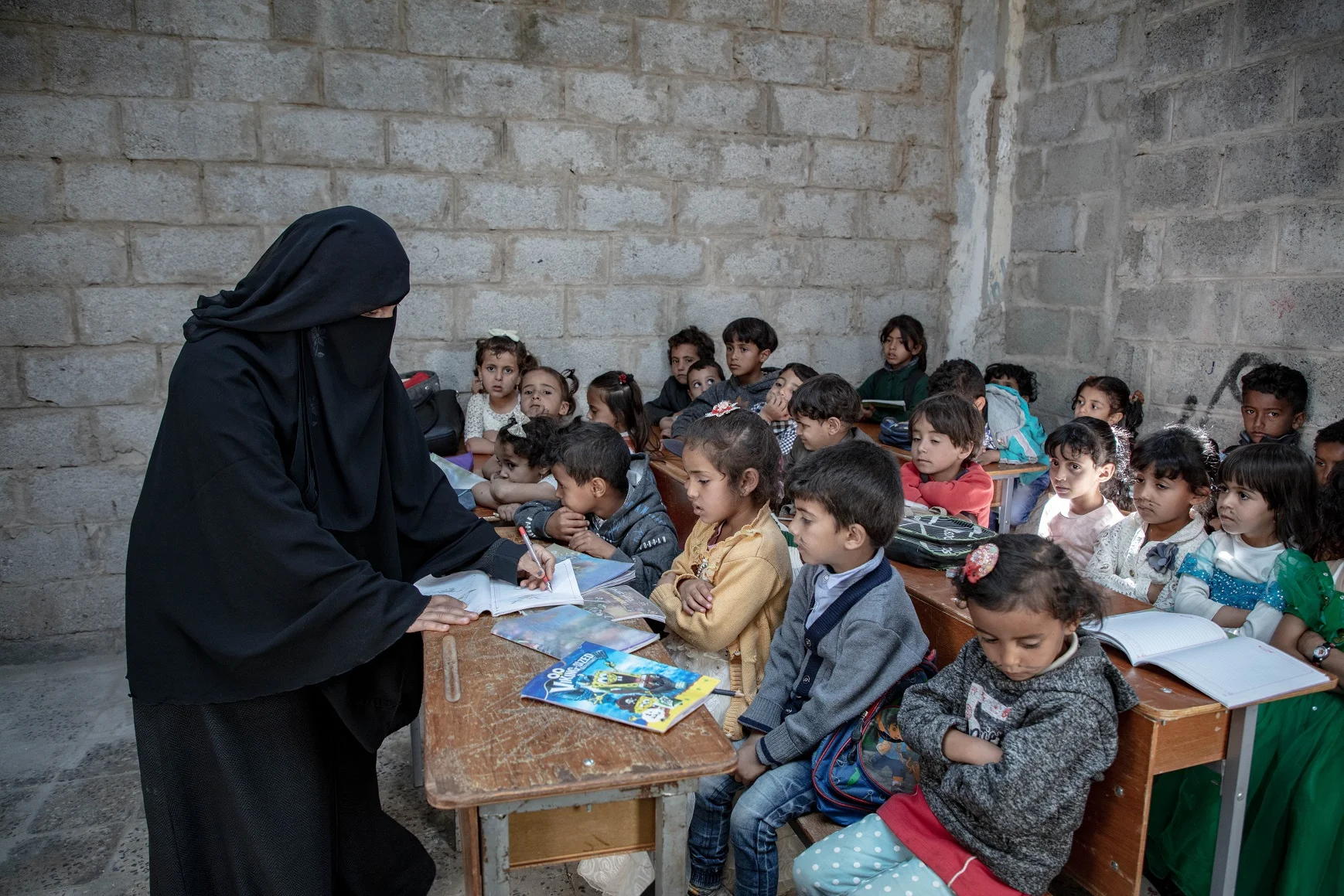 A teacher in Yemen stands in her classroom, helping children keep learning despite years of conflict. Education in emergencies provides children safety, stability, and hope for the future.
In the Middle East and North Africa, prolonged conflict has kept millions of children away from classrooms for years at a time. According to a 2025 UNICEF analysis, at least 30 million children in the region are out of school, roughly one in three children across 12 countries, most of them fragile or conflict-affected. In Syria, more than 7,000 schools have been damaged or destroyed, leaving nearly 2 million children out of school, with almost 3 million more shut out across the country and its neighbors. In Yemen, of 7 million school-aged children, more than 2 million are already out of school, and one in five schools can no longer be used because they've been destroyed or repurposed to shelter displaced families.
With so many facilities damaged or unavailable, restoring access to education requires both immediate support and longer-term investment in the systems children depend on.
ECW has funded Multi-Year Resilience Programmes and First Emergency Response grants in Syria since 2017, working to keep classrooms open even as attacks on schools continue to disrupt learning. In the Yemeni governorates of Hajjah, Al Hudaydah, and Taizz, ECW and partners have focused on rebuilding schools damaged by years of mortar shelling and armed occupation.
Getting children back into classrooms also means addressing the barriers that keep girls from getting an education. ECW and its partners have recruited female volunteer teachers to help encourage girls to enroll, while providing incentive payments and training teachers to identify and support students who are struggling.
During Times of Crisis, School Equals Stability and a Chance to Build a Future Beyond Conflict
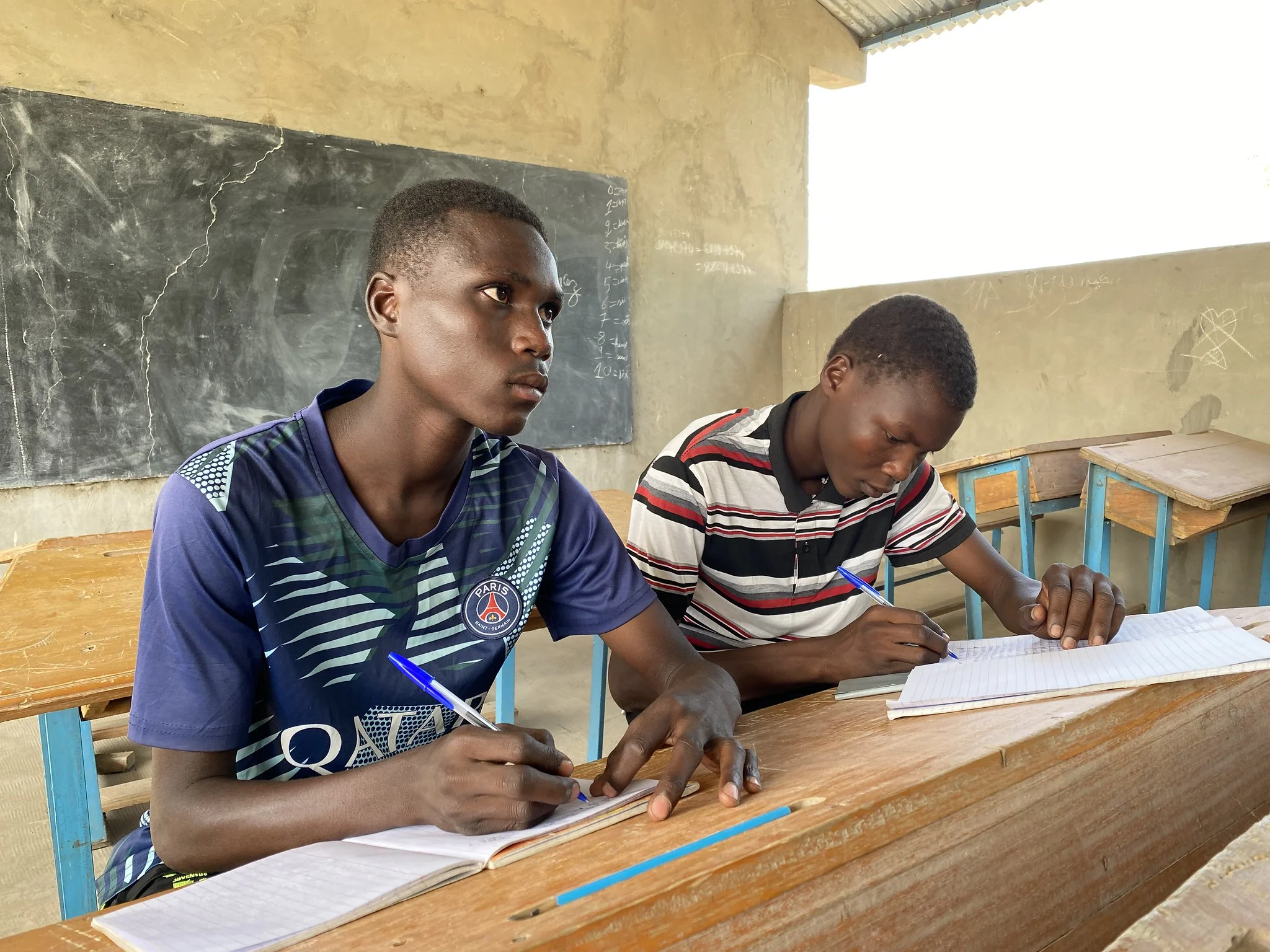 Students attend class at a learning center in Chad’s Lake Province. Supported by ECW and run by UNICEF, the center helps children who might otherwise miss out on an education.
Access to education is a right for every child. In a crisis, school can provide stability through a routine, contact with trusted adults, and a way for children to keep developing while the world around them is disrupted. Staying in school also helps prevent months of disruption from turning into years of lost learning. Children are already finding ways to keep learning through crisis. The challenge is making sure the resources exist to meet them where they are.
Sustained funding helps make that possible. ECW’s investments across Colombia, the Sahel, the Pacific, Yemen, and other crisis-affected settings show what that support can look like in practice through the restoration of classrooms, the training of teachers, support for girls returning to school, and efforts to make education systems better able to withstand the next emergency.
As conflict, displacement, heatwaves, fires, and floods push more children out of school, the need for that support continues to grow. Without it, a temporary disruption can become a much longer interruption to a child’s education.
Global Citizens can call on governments in Spain, Norway, Denmark, and Japan to fund schools for children in crisis and help ensure ECW and its partners have the resources to keep children learning through conflict, displacement, and disaster. Take action today through the Global Citizen app or on our website.
Editor’s Note: This reporting is a part of Global Citizen’s grant-funded content.