Mai Khoi is a Philadelphia-based Vietnamese musician and composer whose work blends jazz with Vietnamese musical traditions. In Vietnam, civic space is considered closed, meaning people face severe restrictions on freedoms such as expression, assembly, and association, particularly when they criticize the government.
After years of censorship, surveillance, and threats connected to her music and activism, Mai Khoi was forced to leave the country. She had also run for public office and was awarded the Václav Havel International Prize for Creative Dissent. Here, she shares how advocating for artistic freedom reshaped her life, and how the Artistic Freedom Initiative (AFI) supported her as she rebuilt her life and activism career in exile.
I love freedom, and I love to create, so I fight for artistic freedom and freedom of expression.
I have been an artist since I was 6 years old, when I wrote my first song. It was about my hometown, Cam Ranh. It's called Cam Ranh Que Toi and was inspired by the beauty of my hometown's white sand beaches.
My father was a music teacher and taught me how to play guitar, sing, and compose. Music has always been what I wanted to do.
My work touches on all kinds of issues in our lives, such as injustice, police brutality, colonialism, racism, gender inequality, climate change and wildfires, genocide, war, and the ways people ignore or look away from them.
These issues have shaped my life, first in Vietnam and now in the US. My heart shrinks every time I hear about an injustice in the news, or learn that writers, artists, or journalists have been killed or thrown into jail. So I write music and perform with the hope that it might help someone or inspire them to contribute to positive change in the world.
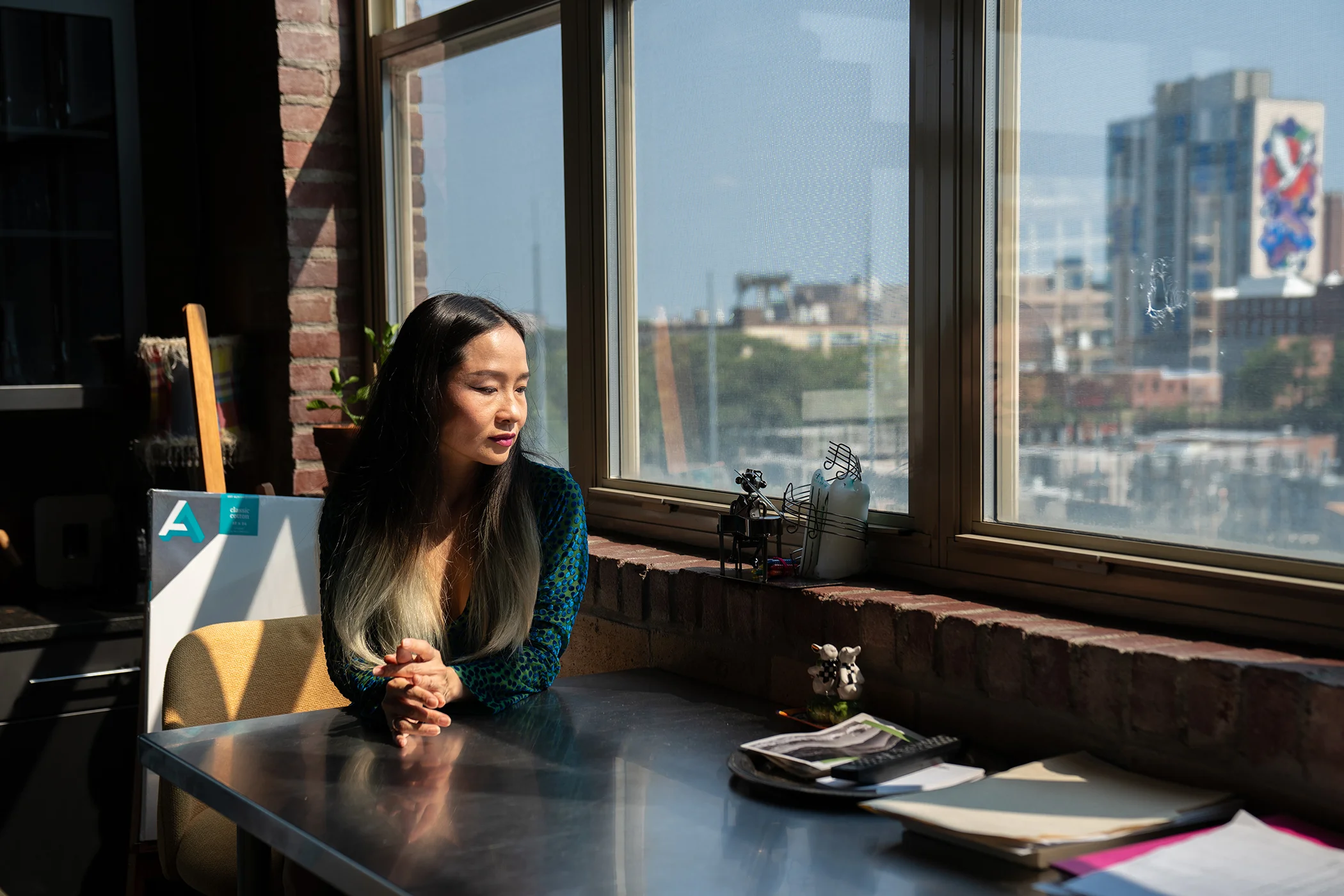 Mai Khôi poses for a portrait in Philadelphia, Pa., on August 12, 2026. After years of censorship, surveillance, and threats connected to her music and activism, Mai Khoi was forced to leave Vietnam.
When I was 20, I became frustrated with the censorship system in Vietnam…
…so I became an activist, and I released my first album. Before that, I had watched my father struggle with censorship, too, but thought it would be easier to succeed if I censored myself. So I did.
But even when I was trying to censor myself, I couldn't please all of the censors because everyone had their own opinion and their own way of exercising that power, from small towns to major cities and at the national level.
I never felt happy about what I was creating.
I had to cut a song from my first album because a censor demanded it before the album could be released. I had to change clothes right before my performance following the request of a censor. I had to change my lyrics so I could perform on TV.
Things like this happened again and again, and the anger inside me kept building. Then, during a dress rehearsal in 2014, five censors were watching me perform. They were filming, reading my lyrics, walking around backstage, and taking bribes from the organizer. In the middle of my song, one of them suddenly stood up and shouted: “Stop! Stop immediately! Get changed, or I will ban you from singing forever!”
From that moment, I decided I would no longer give them the chance to censor me. I started self-publishing my work and organizing my own concerts without asking permission from the government. In 2016, I started a community of artists who committed to creating without censoring themselves and organized underground concerts and exhibitions.
Two poets, Bùi Chát and Lý Đợi, from a movement called “Open Mouth,” really encouraged and inspired me.
When I was frustrated with the censorship system, I started talking to them and spending more time with them. Their work and ideas gave me another way of thinking about what resistance through art could look like.
In 2016, they encouraged me to nominate myself for Vietnam's National Assembly to create change from within the system.
My nomination sparked a huge debate. It eventually led to my meeting with former US President Barack Obama in Hanoi that same year, and it was around this time that I became known publicly as an activist and dissident artist. My candidacy was ultimately rejected through a process I considered unfair and non-transparent. Police raided my concerts. I have been banned from performing in public and on national media since 2016. I was under surveillance 24/7. I was evicted from my home, detained and interrogated by the police. I was threatened with jail time. My friends, band members, and our family members were threatened by the police because they were playing music with me. Show organizers were threatened because they wanted to invite me to perform at their venues.
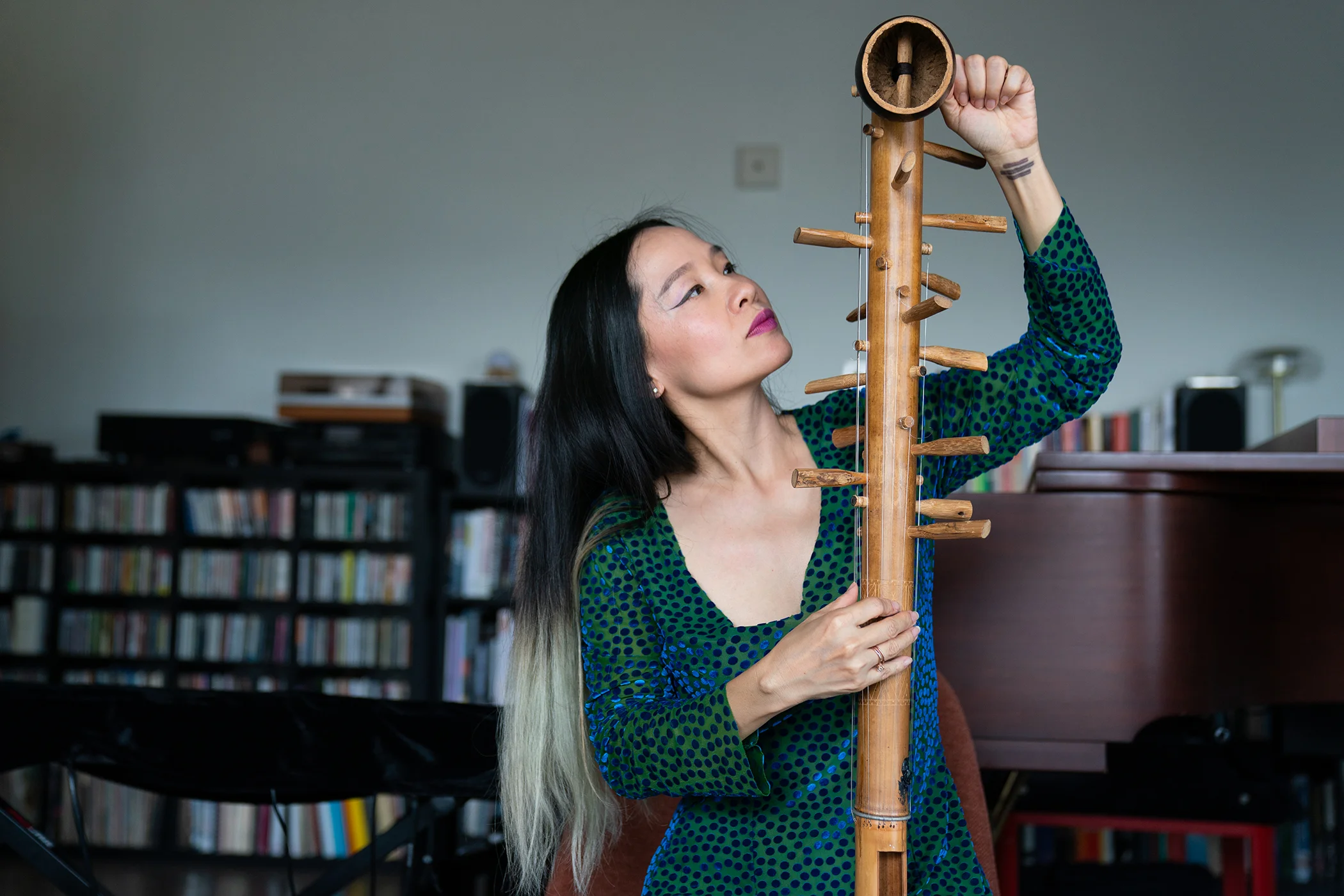 Mai Khôi, tunes a ‘Dinh Goong’ instrument in her home in Philadelphia, PA on Aug. 12, 2026.
Through working with AFI, I have learned more about the world of artists who share the same vision and situation as me.
AFI provided me with a safe place and legal support at the beginning of my life in exile, giving me the stability I needed to live and work. They introduced me to other organizations and people who focus on helping artists like me. They also connected me with music venues and festival organizers and helped bring new audiences to my shows. They have always treated me with professionalism, support, and respect. I think the most crucial part of working with AFI is getting the trust and openness that artists always need to create freely.
I hope my art could encourage other people to create their own art…
… and dare to stand up for freedom. Because when they see how my art has changed since I gained greater artistic freedom, I hope they see what that freedom makes possible.
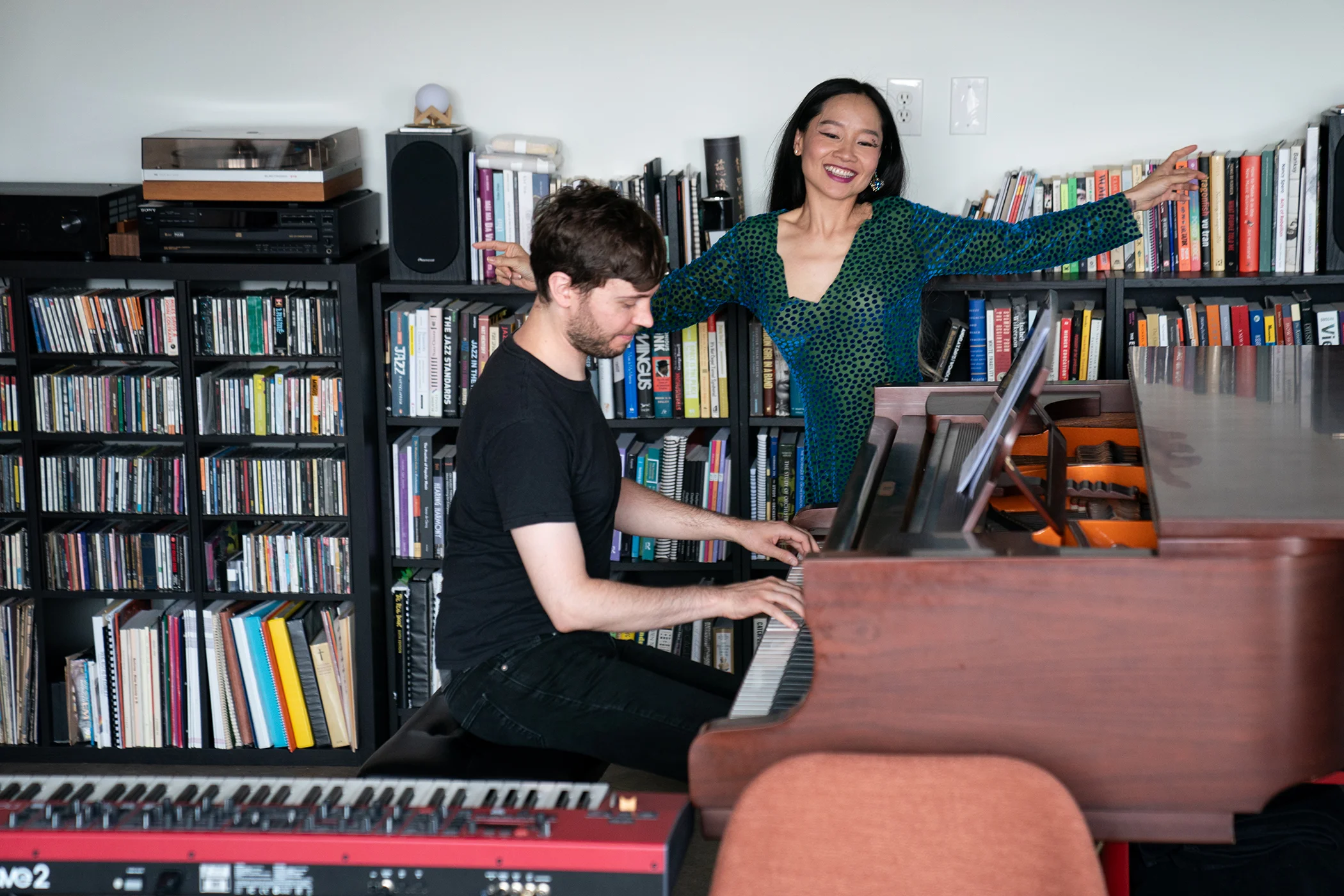 Mai Khôi and her husband Mark Micchelli perform a portion of their new show “The Immigrant Vegetable + Bad Activist” in their home in Philadelphia, Pa., on Aug. 12, 2026.
Mai Khoi’s show Bad Activist is part of the Philly Fringe Arts Festival. She will perform on September 11, 17, 19 and 27 at VOX Gallery. On Sept 11, she will present a 22-minute opera cooking show at 4 p.m., followed by Bad Activist at 7 p.m.
Follow Mai Khoi on Instagram.
This article, as narrated to Gugu Mhlungu, was edited and condensed for clarity.
The 2026-2027 In My Own Words series is part of Global Citizen’s grant-funded content.