Celso Athayde learned to negotiate, build relationships, and keep going on the streets and in Rio de Janeiro's favelas. Today, he is a social entrepreneur, activist, and founder of CUFA (Central Única das Favelas, or Central Union of Favelas), a Brazilian organization with more than 25 years of work across political, social, sporting, and cultural fields, and a presence in more than 60 countries.
With civic space in Brazil obstructed, Athayde reflects on what the favela taught him, how CUFA creates opportunities for communities, and why favela organizations and leaders should help shape national conversations.
I am Celso Athayde.
Before any title, I’m a man who came from the streets and the favela and turned a very difficult childhood into fuel for creating opportunities for others.
I was born in Rio de Janeiro and spent my early childhood in Cabral, a neighborhood in Nilópolis. I lived there until I was six. After that, I lived on the streets. When I was twelve, my mother took me to Fazenda dos Santos, in Senador Camará. There, very early in life, I began to understand work and survival.
I sold sweets and coconut treats. Later, I became a street vendor in Madureira. Along the way, I also learned things that school could not teach: how to negotiate, talk to people, read their behavior, build relationships, solve problems, and keep going.
My childhood was not conventional.
I did not have the privilege of choosing the path I wanted to follow. Often, life chose for me. The streets and the favela were where I developed qualities I have carried throughout my life: adaptability, creativity, courage, and, above all, the ability to see potential where many people saw obstacles.
I often say that the favela was not just where I survived. It was also where I learned. It was where I discovered people, stories, talent, and a strength that Brazil often failed to recognize.
I cannot separate the man who built businesses, projects, and organizations from the boy who sold sweets and worked as a street vendor. One grew out of the other.
My story began in vulnerability, but it has never been about being a victim. It is a story about transformation. I learned to turn hardship into opportunity, and that led me to dedicate much of my life to creating opportunities for others.
The activist in me emerged when I was still a child living on the streets.
I experienced hunger, a lack of opportunity, and inequality very early in life. But I also experienced solidarity and the strength of people who, despite having very little, kept fighting.
While in Madureira, I started organizing other vendors. Then came the dance parties, hip-hop, my work with artists — and, later, CUFA.
I never wanted to simply talk about the problems facing the favela. I wanted to create solutions. Above all, I wanted to show that the favela was not defined by what it lacked. It is a place of talent, work, creativity, and potential.
That is what I continue to do today.
Instead of “What should we do about the favela?” we began asking: “What can the favela do?”
That may seem like a small change, but it guides our work.
CUFA has built a network across thousands of communities, using culture, sport, communication, and entrepreneurship to bring people together and support community organizing. During the pandemic, we drew on that network to mobilize businesses, governments, artists, and thousands of volunteers, providing income support, food, internet access, and other assistance to millions of people. Our Mães da Favela (Mothers of the Favela) program reached approximately 5,000 communities.
Perhaps the most symbolic example of our work is the Taça das Favelas (Favela Cup). The program is a competition that draws on Brazil’s passion for soccer to showcase young players, create role models for children and teenagers, and show millions a side of the favela rarely seen in the headlines.
I experienced exclusion before I had a name for it.
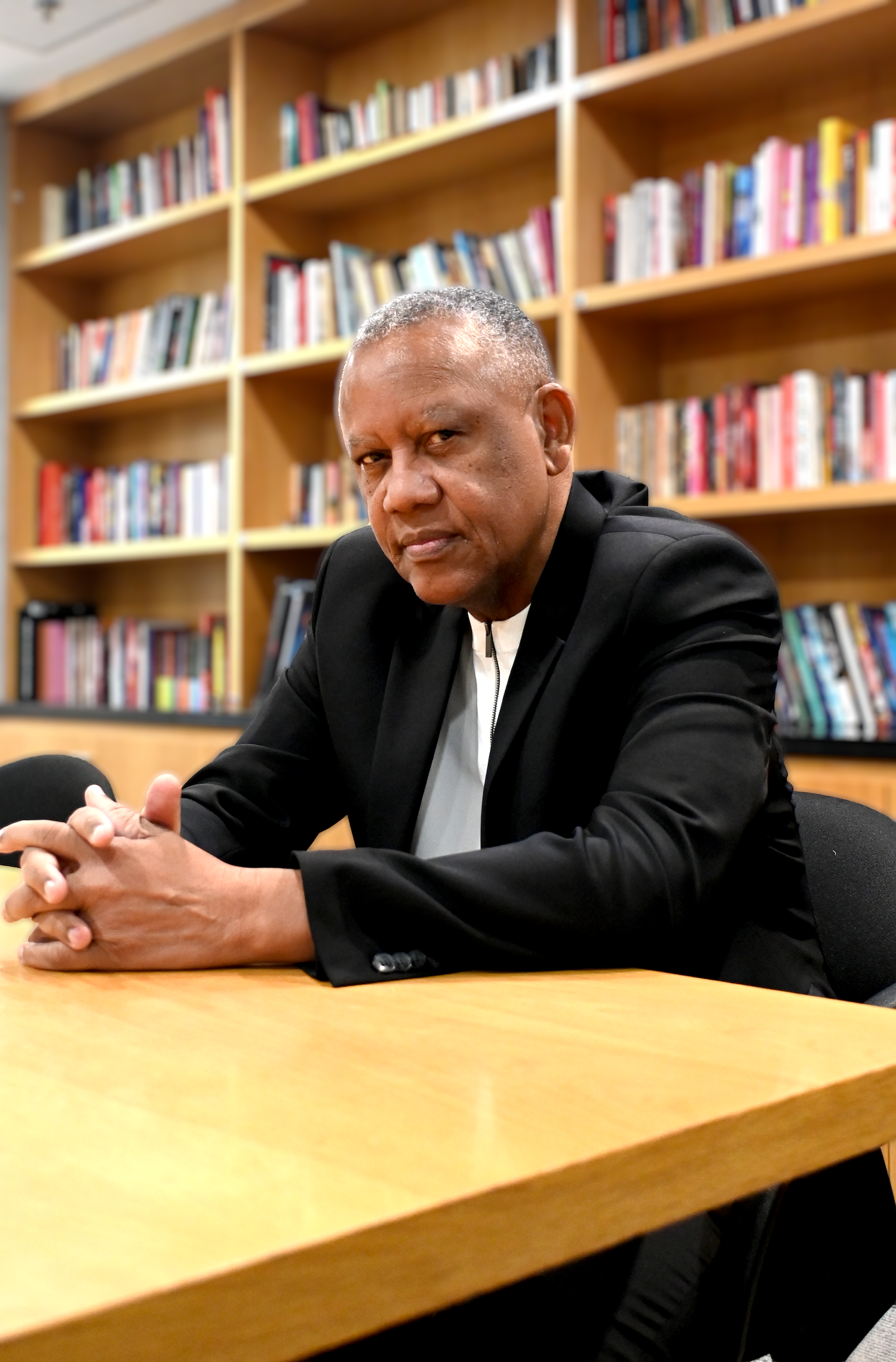 “I want the world to look at the favela as a place to learn from, too,” says Celso Athayde, who grew up in Rio de Janeiro’s favelas. Image: Courtesy of CUFA
When you’re a child living on the streets, your concern is survival. You do not yet have the perspective to understand why some people have so many possibilities while others have so few.
Over time, I realized that what we lacked was not ability. It was access. I knew creative, hardworking, talented people who could not find opportunities to develop their skills.
When I returned to street vending in Madureira and brought other vendors together to organize parties and activities, I saw what we could do collectively. Later, through hip-hop, I realized we could also tell our own stories and create role models for young people.
Those experiences taught me that inclusion means having a say in decisions, earning an income, and being able to choose your own path.
I don't want children to have to go through what I did to discover their talents. I want them to have the support to develop them. That is why I work to create opportunities in the favela without asking people to give up their identity to be recognized.
One of the greatest challenges is ensuring that the favela’s voice is recognized as legitimate.
Residents may be heard when they share a story of suffering, but they face much greater resistance when they question something, propose solutions, or demand a place in decision-making.
I use my platform to speak out and do my work, but being able to speak publicly does not mean that everyone has the same freedom to be heard. I have criticized the way protests by favela residents are treated, as though where they live somehow diminishes their right to protest.
Violence has also shaped my life. My brother was murdered, and when I was young and left the favela, I carried documents to prove my bicycle and watch were mine. It was one example of how racism can place someone under suspicion before they have done anything.
I’m not suggesting these experiences were retaliation for my activism, but they help explain the risks surrounding this work and the barriers people in these communities face.
For me, expanding civic space means recognizing favela organizations and leaders as legitimate participants in the conversation, with the freedom to participate, criticize, and build solutions independently. We must be heard even when what we say makes people uncomfortable.
We still need a great deal of support.
We need businesses willing to invest consistently, rather than only in individual projects. We need technology, funding, training, access to markets, and international connections. We also need global organizations to understand that solutions do not have to be imported into the favela. Many solutions already exist within it.
Global Citizen can help bring these solutions to the world by connecting CUFA with investors, businesses, governments, and community networks. Those connections can open markets and help communities in other countries learn from the experiences of Brazil’s favelas.
I do not want the world to see the favela only as a place that needs help.
I want the world to see the favela as a place to learn from, too.
One of the greatest lessons the favela can offer the world is how to turn scarcity into creativity, hardship into collective action, and community into strength.
The favela does not just want an opportunity to take its place in the world. It wants to help build it.
This article, as narrated to Guguleth Mhlungu, has been slightly edited for clarity.
The In My Own Series is part of Global Citizen’s grant-funded content.