Born and raised in a small village in Slovakia with a population of 800, Diana Virgovicova grew up imagining how technology could help solve some of the world’s biggest challenges. When Virgovicova was 12, she began exploring the impact of global warming for a school project.
At 14, after receiving a life-changing medical diagnosis that she believes may have been linked to environmental factors, she and her mom, a single mother and primary school teacher, embarked on a month-long backpacking trip across Asia, with minimal funds.
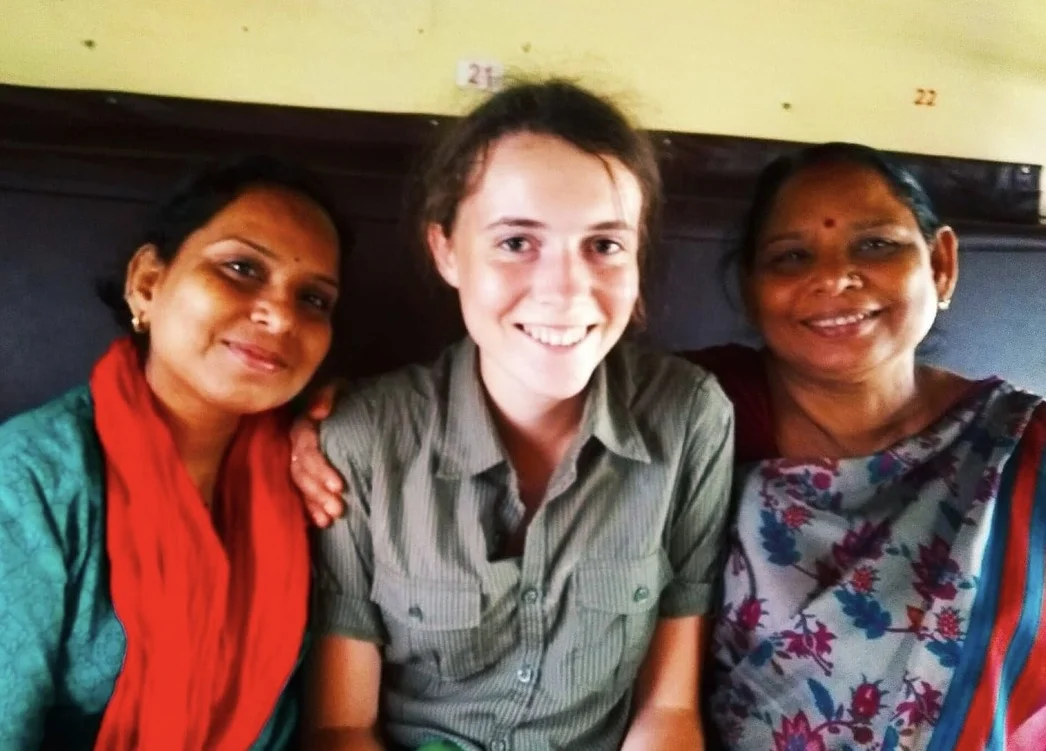 Virgovicova with women she met on a local train in India, 2015, on backpacking trip across Asia. Image: Courtesy of Diana Virgovicova
It was there that Virgovicova saw firsthand the impact of polluted water on communities, particularly on women and girls, and especially on their menstrual health.
When Virgovicova returned to Slovakia, she was determined to do what she could to help. She reached out to a professor who was working in water, and learned about quantum chemistry and photocatalytic activity, a process by which light (like sunlight or UV) is used to activate a catalyst or material(s).
At just 17, Virgovicova made her first scientific discovery, using quantum chemistry to design a new molecule that uses sunlight to break down harmful pollutants in water, making it safer to drink. This discovery earned her a Diploma of Excellence from the Swedish Royal Family.
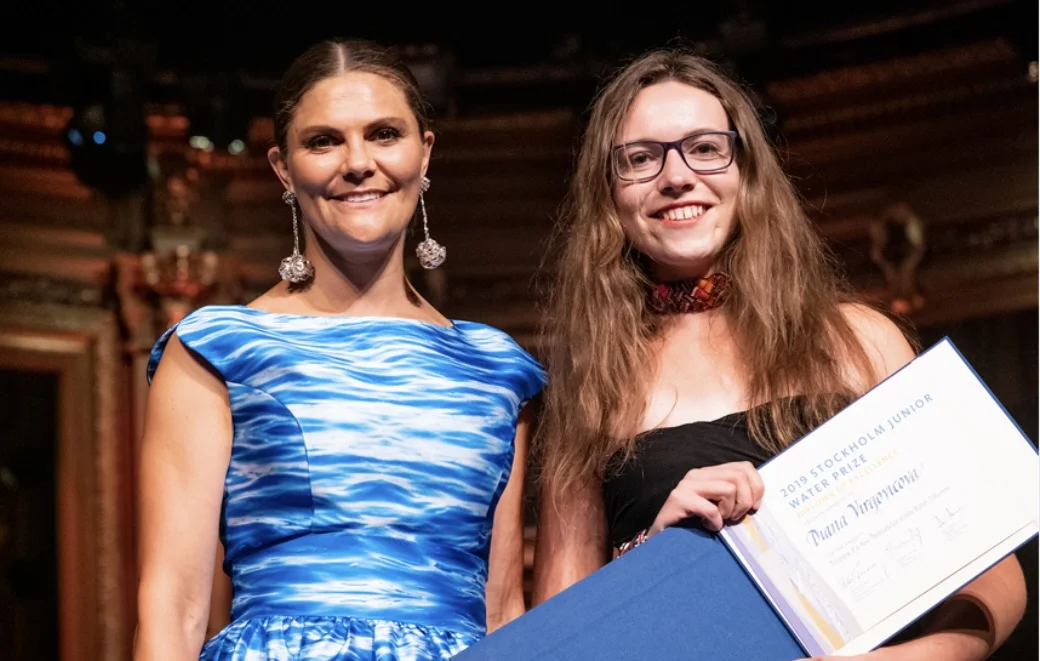 Virgovicova receiving Diploma of Excellence from Victoria, Crown Princess of Sweden during the World Water Week, 2019. Image: Courtesy of Diana Virgovicova
Soon after, Virgovicova was awarded a full scholarship to the University of Toronto. It was there, and through a fellowship program, that she met co-founders Kerem Topal Ismail Oglou and Shirley Zhong. Together, they founded Xatoms (pronounced X-Atoms), a water technology company that uses artificial intelligence and quantum chemistry to discover new materials capable of cleaning some of the world’s most polluted water via a photocatalytic process.
Today, at 24, Virgovicova is the recipient of this year’s Global Citizen Prize: Cisco Youth Leadership Award (CYLA), which recognizes young leaders driving innovative solutions to global challenges.
“Diana Virgovicova's work with Xatoms harnesses AI and quantum chemistry to tackle one of the world's greatest challenges: access to clean water” shares Fran Katsoudas, Executive Vice President and Chief People, Policy & Purpose Officer at Cisco. “At Cisco, we believe technology is a force for meaningful change and Virgovicova’s leadership brings innovation that not only purifies water but also eases the daily burden on millions, especially women and girls.”
Two Billion Still Without Access to Safe Drinking Water
Today, more than 2 billion people still lack access to safe drinking water — a crisis that continues to impact health, education, and economic opportunity worldwide.
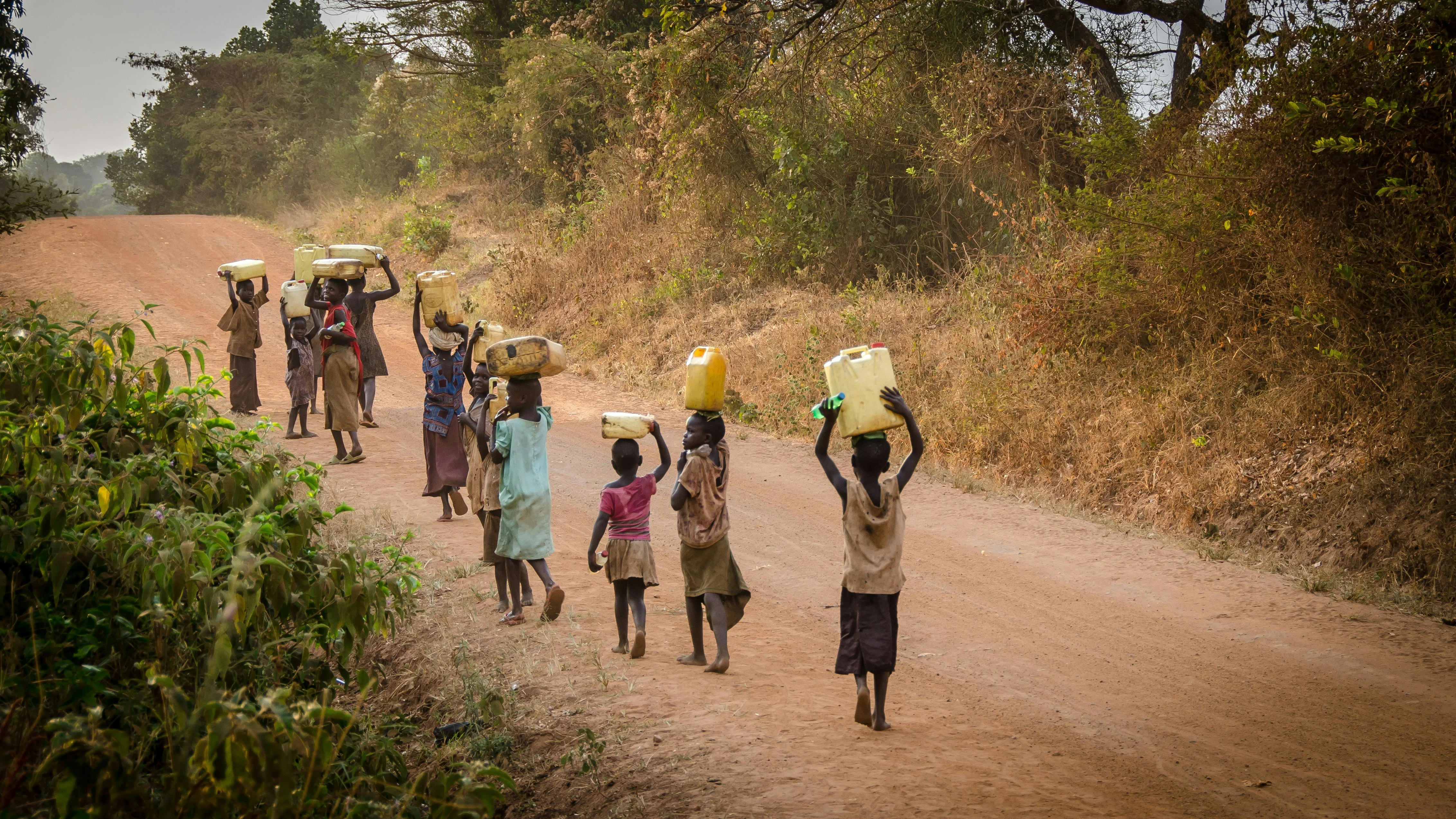
Virgovicova believes that the latest advances in science and technology, including those her company is developing, can help change that.
In addition to identifying solutions to clean polluted water, Virgovicova is also focused on raising awareness about how the water crisis disproportionately affects women and girls — an issue that continues to shape her work.
“Young girls at a very early age are exposed to dirty water and [associated] problems and end up getting sick. It has a really big effect on them and their lives,” Virgovicova shared during a one-on-one interview.
Globally, women and girls collectively spend 250 million hours per day — over 28,000 years — collecting water. This number is over three times more than that of men and boys.
The water collection process is both time and physically intensive, but access to clean water is imperative for a variety of reasons, including menstrual hygiene and safety during pregnancy.
Also pointing to the inequities in education, Virgovicova shared “the collective time spent between women and girls who have to fetch water each day is a huge problem, as they skip out on education in order to do so.”
Building Solutions That Matter
Each of the cofounders of Xatoms has a personal relationship to water. Zhong didn’t have access to clean water where she grew up in China; Oglou didn’t have access to tap water where he grew up in Turkey; and, as previously shared, Virgovicova believes that contaminants in the water, due to industrial buildings near her home village, may have contributed to her medical diagnosis.
So, for all, this issue hits close to home.
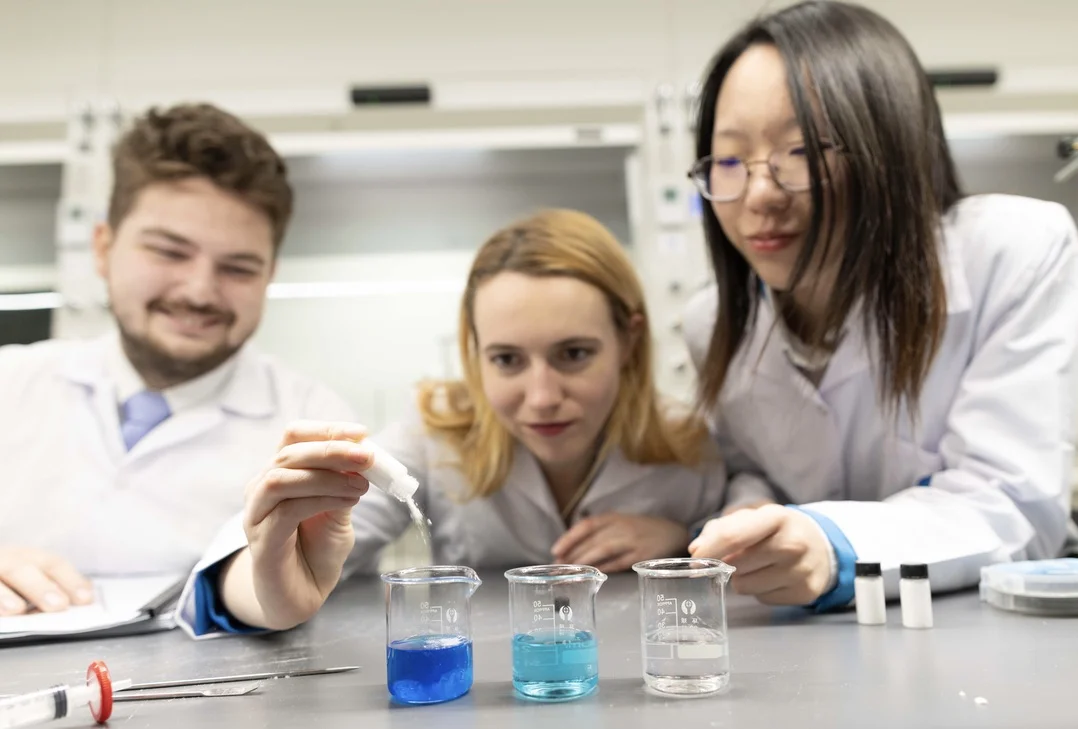 Co-founders Oglou, Virgovicova, Zhong, at Xatoms lab in 2026. Image: University of Toronto
“While we already see many solutions to address contamination like E. coli, we [at Xatoms] are looking at the very difficult contaminants that are coming from factories,” Virgovicova noted. “Not necessarily the ones causing immediate diarrhea, but those causing long-term effects like infertility and chronic diseases.”
“This process is becoming more difficult,” Virgovicova shared. “This is not a one-size-fits-all approach. We need customized solutions for different places, environments, and use cases.”
Under Virgovicova’s leadership, Xatoms has launched engagements across Canada, the United States, Kenya, and South Africa, testing and refining their technology in real-world conditions. The company is focused on discovering new materials and designing customized solutions that can purify water from virtually any source.
In Canada, the team is working with Indigenous communities in long-standing boil water advisory territories to remove persistent metal contaminants, while in Kenya, they are partnering with organizations to integrate solar-activated purification materials into water kiosks, expanding access to safe drinking water.
AI for Good
AI is seemingly everywhere these days… and, undoubtedly, there’s a lot of noise around it. But there are some, including Virgovicova and her team, that are using it for good, too.
“Many people are scared of AI, and understandably so… there are also water waste implications involved,” shared Virgovicova, “if we use AI and quantum in the right way, we can design solutions to complex problems.”
“We’re quite a few years from reaching the revolution of quantum,” she continued. “With AI we can really speed up the process. For example, it would take 10 years to discover a molecule, but we can now do it in 30 days.”
And if you’ve read this far, and you understand the impact Virgovicova has already had on the world, news like this is good.
Lasting Impact
“The mission of Xatoms is to clean polluted water, and we want to be a leader in the water purification space,” Virgovicova shared. “We are looking to bridge the gap between the use of new, complex technology and solutions to a huge, global issue like water pollution.”
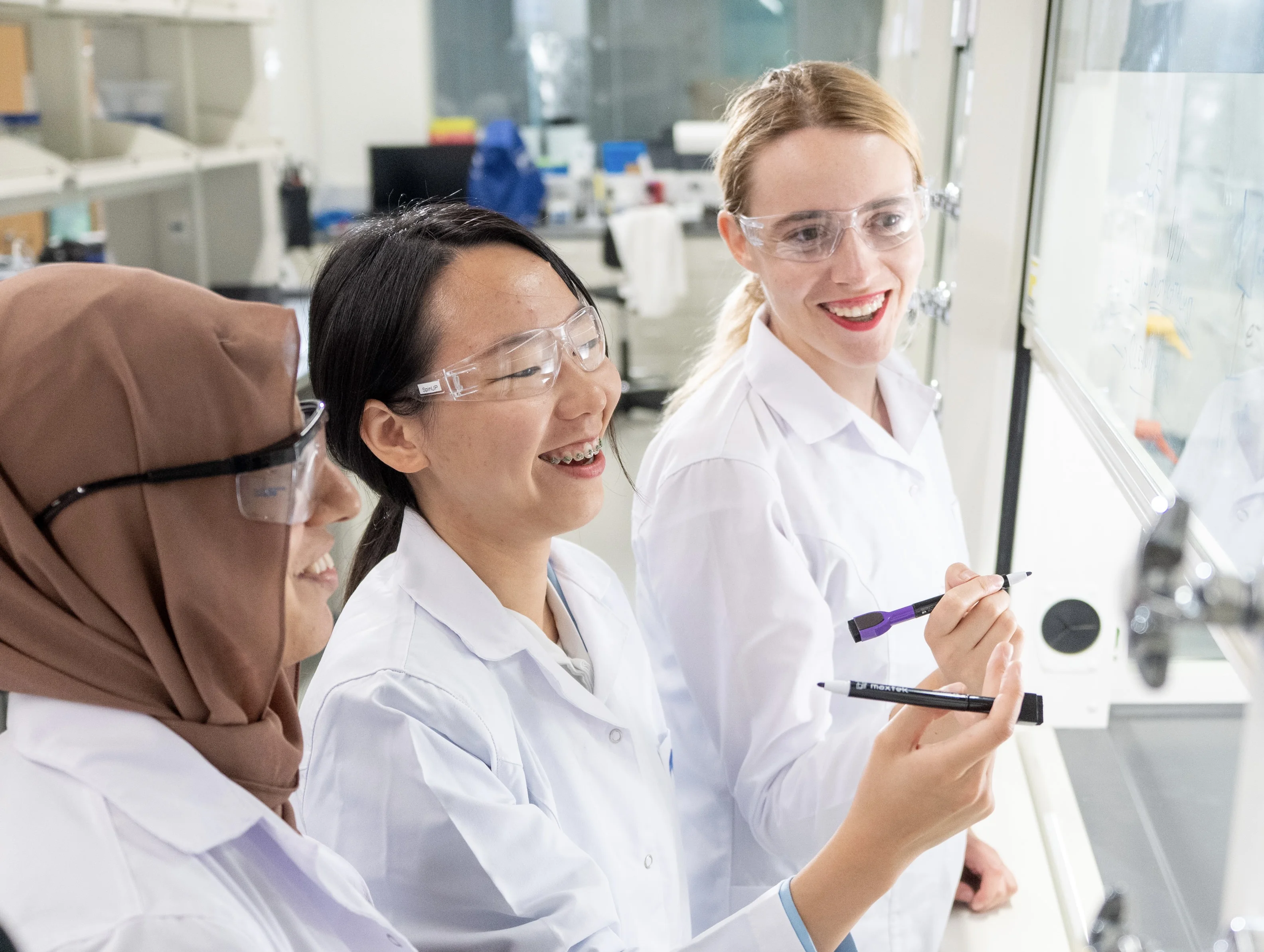 Materials scientist Sidrah Rana with co-founders Virgovicova and Zhong, at Xatoms lab in 2025. Image: University of Toronto
Virgovicova currently serves as CEO of Xatoms and leads a team of twelve in developing these sunlight-activated materials that can clean water for a variety of use cases.
While dedicating countless hours, nights, and weekends to building Xatoms, Virgovicova remains equally passionate about empowering the next generation of entrepreneurs. She mentors young founders globally, especially women working in science and climate, helping build the next generation of innovators tackling global challenges.
“We want to show the world, it really doesn’t matter how old you are, where you come from, or what financial background you have, you can really start a business,” Virgovicova shared.
As for the future, she says, “We don’t want to just be a company that’s about making revenue, we want to go to those places to actually interact with the communities [facing these challenges], see what we can do and how we can actually drive impact. That’s how we’ll achieve success.”
Most recently, Xatoms was named a Global Winner of the World Economic Forum’s Water Resilience Challenge, which led Virgovicova to speak in Davos about the future of water innovation.
“We are proud to support Diana's vision and the next generation of entrepreneurs driving progress toward a healthier, more sustainable future,” shares Katsoudas.
Virgovicova will officially receive the Global Citizen Prize: Cisco Youth Leadership Award at Global Citizen NOW: New York on May 14, 2026 — a moment that highlights not only her work, but the urgent need for bold solutions to the global water crisis.
Learn more about the Global Citizen Prize and how you can support solutions bringing safe water to communities worldwide at GlobalCitizen.org.