At Lefu Primary Health Care Center, a modest clinic in Niger State, located in the North Central region of Nigeria, 15 pregnant women are seated on low wooden benches. They’re here not only to receive care and health information from health workers, but to help assess and record one another’s health stats as well.
“Aisha, let me check your blood pressure,” one of the pregnant women says as she wraps the machine’s cuff around Aisha’s arm.
Nearby, other women take turns stepping on a scale and writing down their weight.
This is part of a preliminary check that gives the women essential information about their health before meeting with a health worker.
When the women finish noting each other’s vitals, health worker Kabiru Ibrahim joins them, carrying a large flip chart. One page features a man and woman seated on a mat, surrounded by bowls of vegetables, beans, fish, and fruit.
“Who can tell me why a pregnant woman should eat more food?” Ibrahim asks.
Hawa raises her hand. “Is it so she can be strong?”
“Yes – it’s for both her and the baby’s health and strength. Having a balanced diet will help the baby grow,” he says.
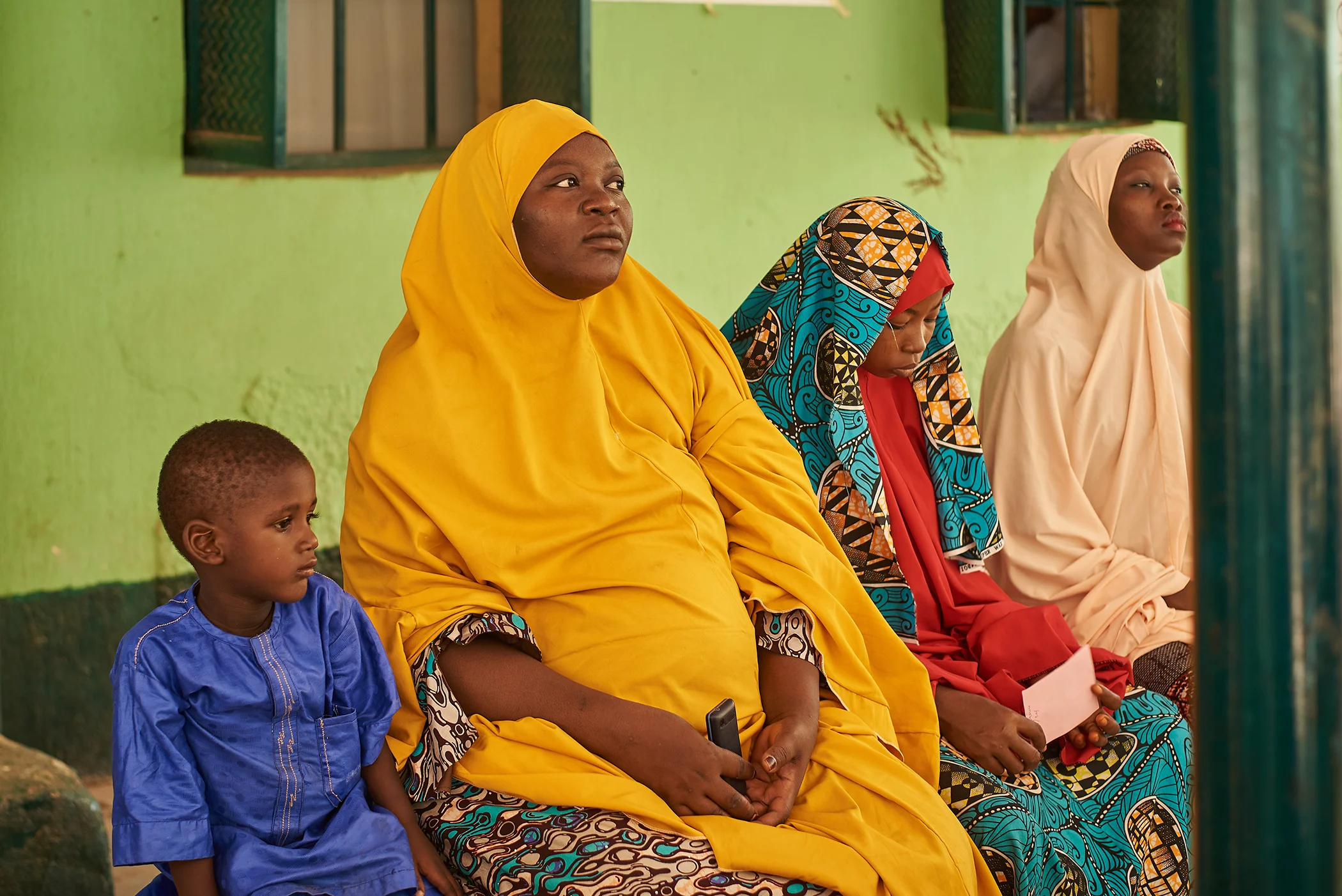 Saratu Haruna visits the antenatal clinic at the Maternal and Child Health Primary Health Center in Argungu, Kebbi state, Nigeria.
Ibrahim explains what it looks like to eat a balanced diet, telling the women to consume a variety of foods, including sources of protein such as meat, fish, eggs, milk, beans, and legumes, along with vegetables and fruit. He adds that people with blood-sugar concerns may be advised to moderate certain foods based on clinical guidance.
He turns another page on the flip chart, which has a crossed-out alcohol bottle and cigarette, with the words: ‘Ask others to smoke outside and away from you,’ written underneath.
Although several women in the group have previously been pregnant, this is their first time receiving antenatal care and learning this essential information. Sometimes called pregnancy care or maternal care, antenatal care (ANC) reduces the risk of stillbirths and pregnancy complications.
One Death Every Seven Minutes
The World Health Organization’s antenatal care guidelines indicate that a minimum of eight “contacts” are recommended to reduce perinatal mortality and improve women’s experiences while pregnant. This is an increase from the previously recommended four contacts, with a contact defined as: “More than a simple ‘visit’ but rather the provision of care and support throughout pregnancy … [implying] an active connection between a pregnant woman and a health care provider.”
Eight or more contacts for antenatal care can reduce perinatal deaths by up to 8 per 1,000 births when compared to four visits.
Pregnant women in Niger State experience several barriers to care, including a high maternal mortality rate where 352 out of 100,000 pregnant women die from complications, according to the global health nonprofit Project HOPE. Nigeria is among the countries with the highest estimated maternal death rate in the world, accounting for more than one in every four global maternal deaths – and resulting in the death of a pregnant woman in Nigeria every seven minutes.
In addition, in Niger State, malaria prevalence in pregnancy is high with nearly 60% of pregnant women in the state’s capital city of Minna contracting malaria while pregnant.
According to Project HOPE, ANC coverage is currently at 57% meaning that fewer than six out of every 10 women make contact with a healthcare provider four times while pregnant – let alone the WHO recommended eight contacts.
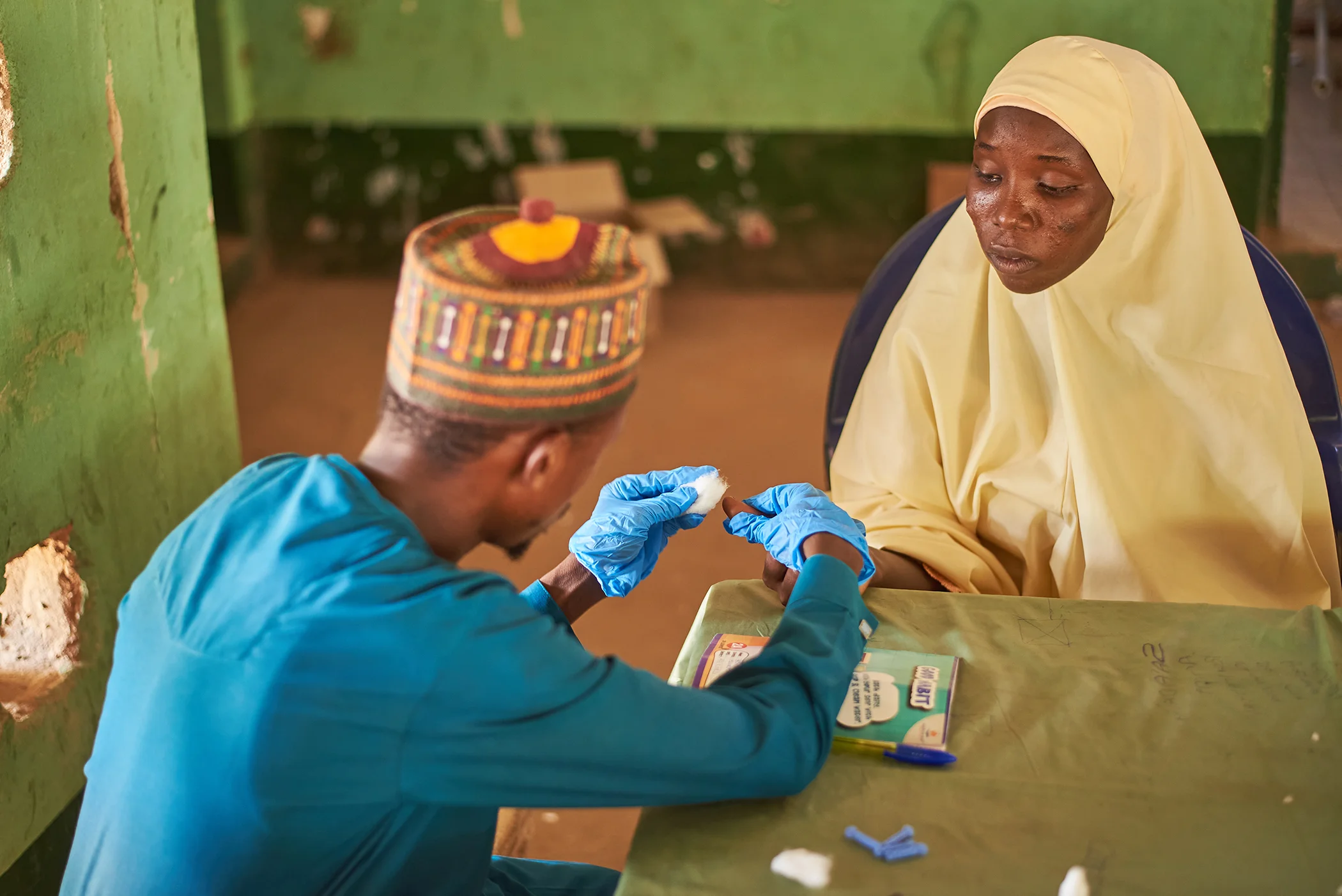 Jabir Adamu, a community case worker for Project HOPE, conducts an HIV test on pregnant mother Aisha Aliyu at Maternal and Child Health (MCH) Primary Health Center in Nassarawa, Kebbi state, Nigeria.
A Group-based Model of Care
In response to high maternal mortality rates and low ANC coverage in Niger State, primary health clinics including Lefu are implementing Group Antenatal Care (G-ANC). This model brings together pregnant women with similar gestational ages for sessions that combine health education, clinical assessments, malaria prevention, and structured peer-to-peer support.
The G-ANC intervention in Niger State, supported by Project HOPE, aims to improve maternal, newborn, and child health outcomes by increasing ANC coverage from 57% to 80% in the state. Currently being implemented across 14 local government areas, the initiative aims to build evidence to scale-up to other states.
To date, over 1,000 healthcare workers and 300 ANC providers have been trained. Ibrahim, a dedicated health worker at Lefu Primary Health Care Clinic, has been facilitating G-ANC sessions since 2022.
Ibrahim has heard just about every myth when it comes to pregnancy. Limited access to formal education and household resources can make it harder for some patients to access information and attend scheduled care, he says.
“Since most women are not [formally] educated, sometimes we find other difficulties, like women missing the [G-ANC sessions] or they come too early or too late. Most of them don’t have phones so we can’t call them to remind them to attend,” Ibrahim shares.
Many women do not have the resources to travel to a health clinic for an ANC visit, and sometimes, due to a lack of understanding of what these sessions are about, some husbands forbid their wives from attending these sessions.
Health workers like Ibrahim play a role in educating communities on the importance of ANC visits and how it can positively transform their experience and pregnancy outcomes.
During G-ANC sessions, he makes it a point to dispel prevalent myths.
“According to our culture, they say when a pregnant woman eats eggs, her baby will be stillborn. People started to believe that, so we have to tell the pregnant woman that eggs are nutritious, and can support both the mother and the unborn child to be healthy,” Ibrahim explains.
One of the women who attended the G-ANC sessions Ibrahim facilitates shared how it changed her experience of pregnancy. Rukayyat Alhassan, a mother of four, holds her one-month-old son Halidou as she describes her experience attending G-ANC sessions for the first time.
“With my other pregnancies, I would only go to the clinic if I felt anything was abnormal. I went maybe twice during each pregnancy,” she shares, unaware that regular assessments would help support her pregnancy, in addition to providing education.
“Before, I used to eat a lot of carbohydrates but not meat, so now I also eat meat, fruit, and other foods,” Alhassan explains.
She also started sleeping under a mosquito net while pregnant to prevent malaria, and learned the importance of early vaccination for her baby. With her previous three children, Alhassan would “bring them [to the clinic] on random days or wait until vaccination campaigns” unaware that vaccines including BCG (to prevent tuberculosis) and Hepatitis B are administered at birth.
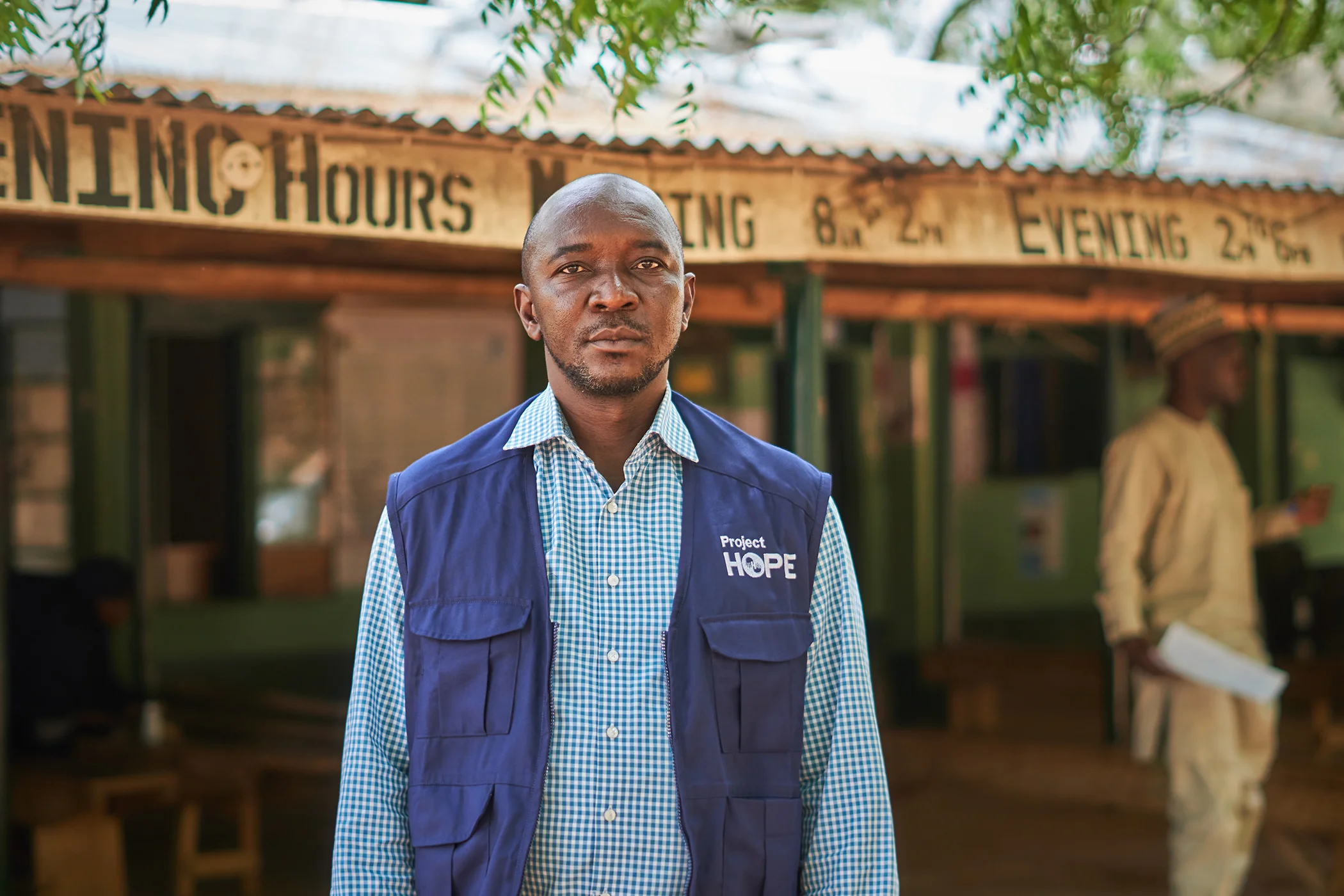 T. Samuel, HR and Logistics for Project HOPE. The Project HOPE team visited the antenatal Operation Triple Zero sessions at the antenatal care HIV testing center in the Maternal and Child Health Primary Health Center Nassarawa 1, in Kebbi state, Nigeria.
With only 43% of births in the country assisted by a skilled provider, vaccinations at birth can fall through the cracks, which contributes to Nigeria having an estimated 1.2 million to 2.2 million zero-dose children.
“I learned many things,” Alhassan reflects of her time attending G-ANC sessions, noting that she was unaware of what blood pressure was, let alone how to measure it. “When I am outside the house and run into the women [from the G-AMC group], we greet one another like friends or sisters. I think every woman should attend this program to improve the health of herself and her baby.”
For women like Alhassan, these group antenatal sessions offer a lifeline to safer pregnancies so that every mother can survive to welcome her child into the world.