With over 10 million people internally displaced in the Democratic Republic of the Congo (DRC)* and with about 1.1 million refugees seeking asylum in neighboring countries, the country is facing a severe humanitarian crisis. UNHCR has described the situation as a “catastrophic public health situation.”
Clashes between the Congolese armed forces and the M23 rebel group in eastern DRC are linked to longstanding insecurity and disputes over territory and resources, according to widely reported accounts. As M23 seized control in North Kivu and South Kivu provinces, including cities such as Goma and Bukavu, health centers in this region are no longer functioning, says Eujin Byun, global spokesperson for UNHCR.
“All the health facilities that we [UNHCR] built for internally displaced people are now gone. They have been destroyed. There are no services at all. Everything has been completely dismantled including health facilities,” Byun told Global Citizen.
Where basic health facilities once stood to provide medical services and referrals, only rubble can be found.
Displacement: A Public Health Risk
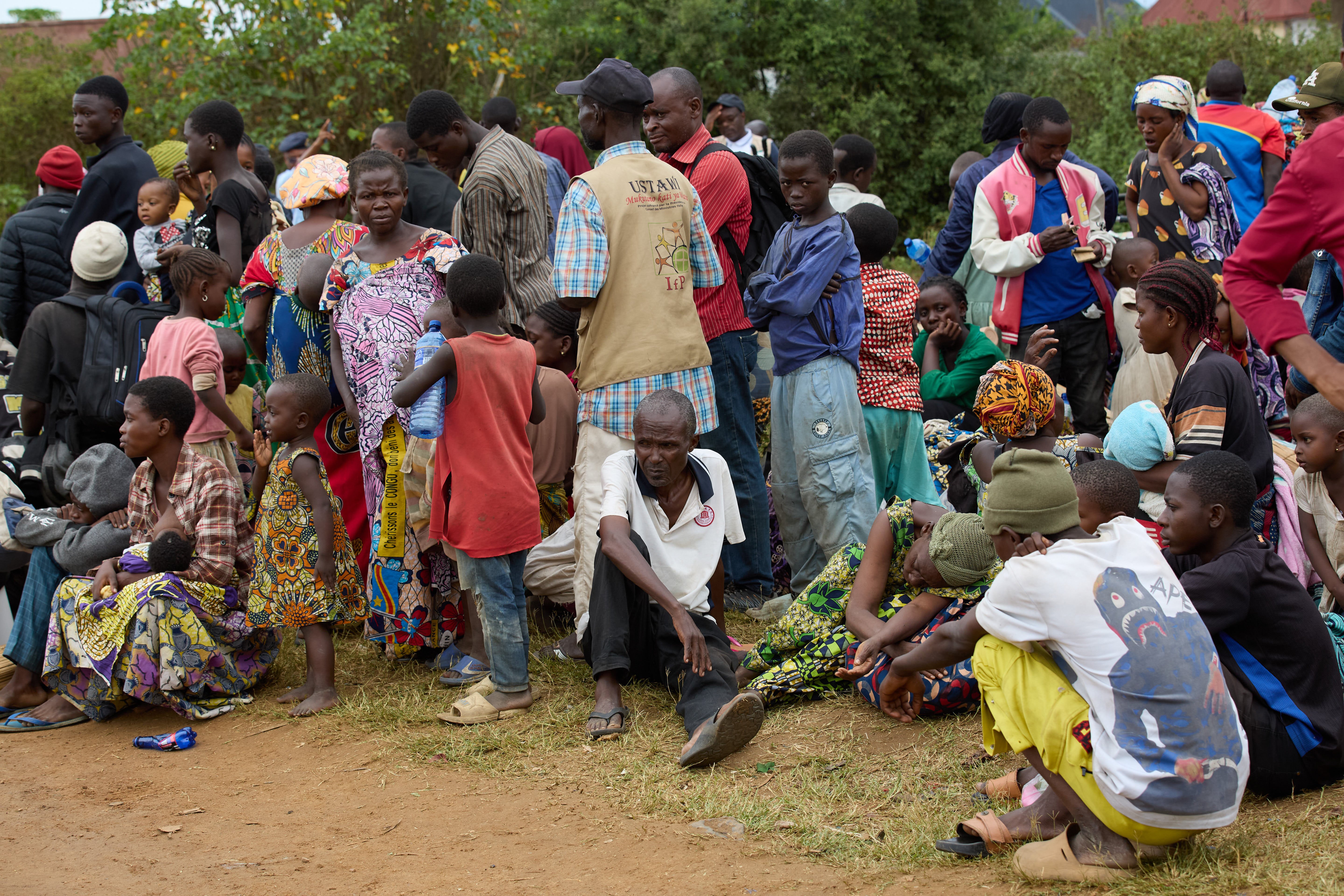 Internally displaced people (IDPs) fleeing fighting in Congo's South Kivu province arrive in Cibitoke, Kansega, Burundi, Dec. 11, 2025. Image: Berthier Mugiraneza/AP
Displacement at this scale can increase the risk of outbreaks and other serious public health impacts.
As of September, nearly 57,000 cholera cases had been reported in the DRC this year, with more than 1,700 deaths. In neighbouring Burundi, over 2,300 cholera cases and 10 deaths had been reported this year, including cases in 12 health districts, several of which border DRC.
“We saw a cholera outbreak happen so fast because of the lack of sanitation. They [displaced people] were in such overcrowded areas. Over 1,000 people were sharing one latrine. How is that even possible?” Byun says.
With overstretched health systems, life-saving medical care is often out of reach for those in critical conditions, so “vaccinations for a newborn becomes a luxury,” Byun told Global Citizen. Given the displacement of millions of people, humanitarian organizations are unable to track people’s movement, let alone keep a record of children's vaccinations, she explained, calling it a “mission impossible” situation.
Threats of Polio Reemergence
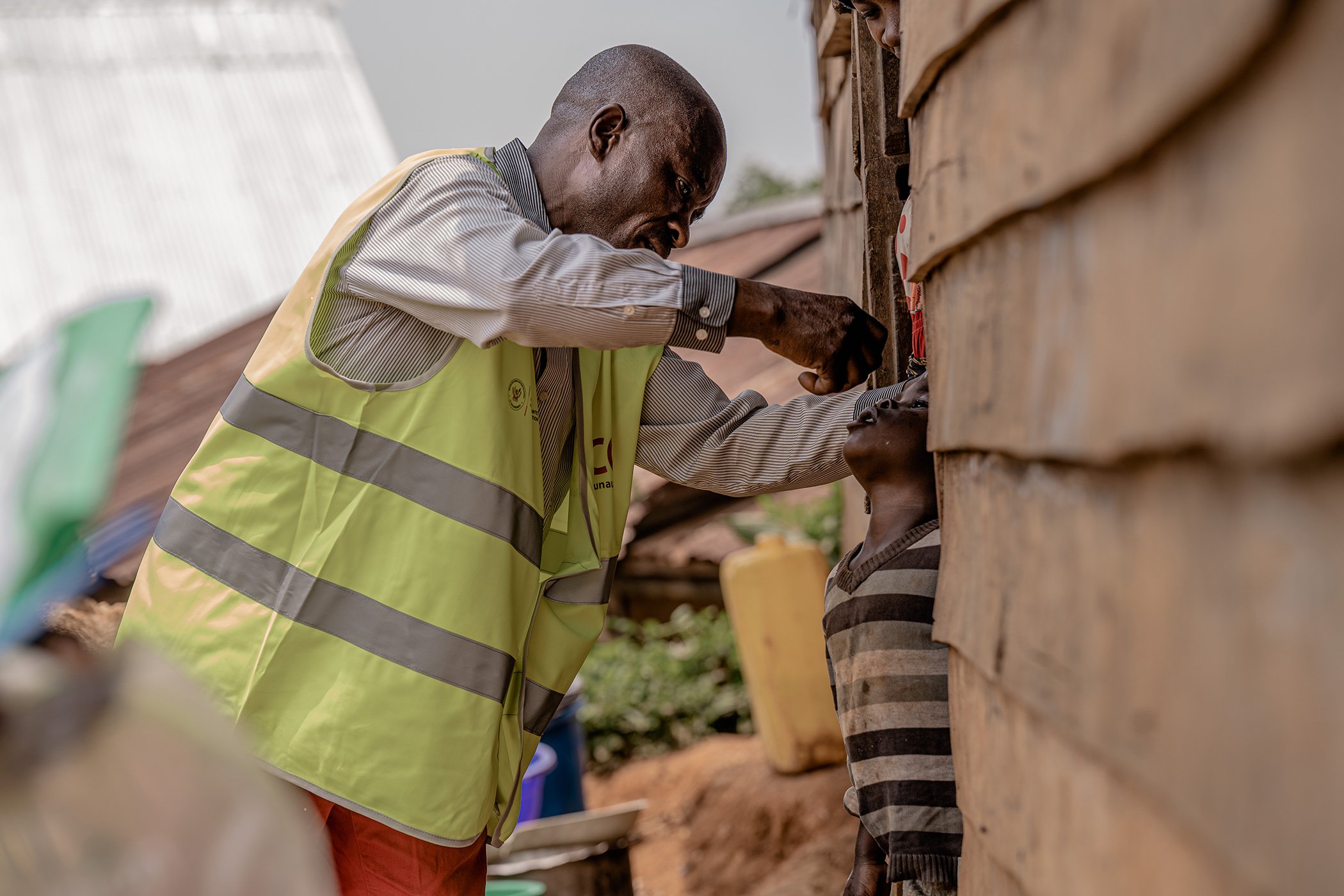 Matthieu Munganga, a UNICEF-supported vaccinator, administers a polio vaccine to a child in Ihusi village, Kalehe, South Kivu province, DR Congo, on September 10, 2025. Image: © UNICEF/UNI863837/Mirindi Johnson
While no polio cases have been reported to date due to the conflict, the scale of displacement, destruction of health services, and substandard sanitary conditions can create conditions that increase the risk of outbreaks. A polio outbreak in the DRC or the region would be a major backslide.
The DRC recorded 520 confirmed cases of circulating vaccine-derived poliovirus in 2022. That number fell to 263 in 2023, and 26 in 2024, representing a 95% decline in cases over the two-year period. This progress, however, is under threat.
People displaced by the conflict may cross borders through informal routes, including by swimming across rivers, which can complicate vaccine surveillance.
“We are not able to control [migration], so we enhance community surveillance,” explains Jean Claude Bizimana, the Director of Expanded Program on Immunization (EPI) at the Ministry of Health in Burundi. “We train community health workers to help us identify newcomers from other countries, and then encourage them to get vaccines. We don’t work as police or report them, we only deal with health matters.”
During their rounds, health workers have found zero-dose children who are then provided with an opportunity to receive vaccinations at a nearby clinic.
“Health is universal. We don’t separate a citizen from a refugee,” Bizimana says, explaining that in Burundi, government vaccines are provided to all, regardless of their status.
Byun, however, explains this isn’t always the case with countries hosting refugees. Given funding limits, some countries have excluded refugee populations from national vaccination campaigns, prompting UNHCR to advocate for the inclusion, such as during the COVID-19 pandemic. With recent cuts to foreign aid, Byun says, humanitarian partners are having to make difficult choices, like prioritizing food over vaccines.
Health Surveillance at Borders
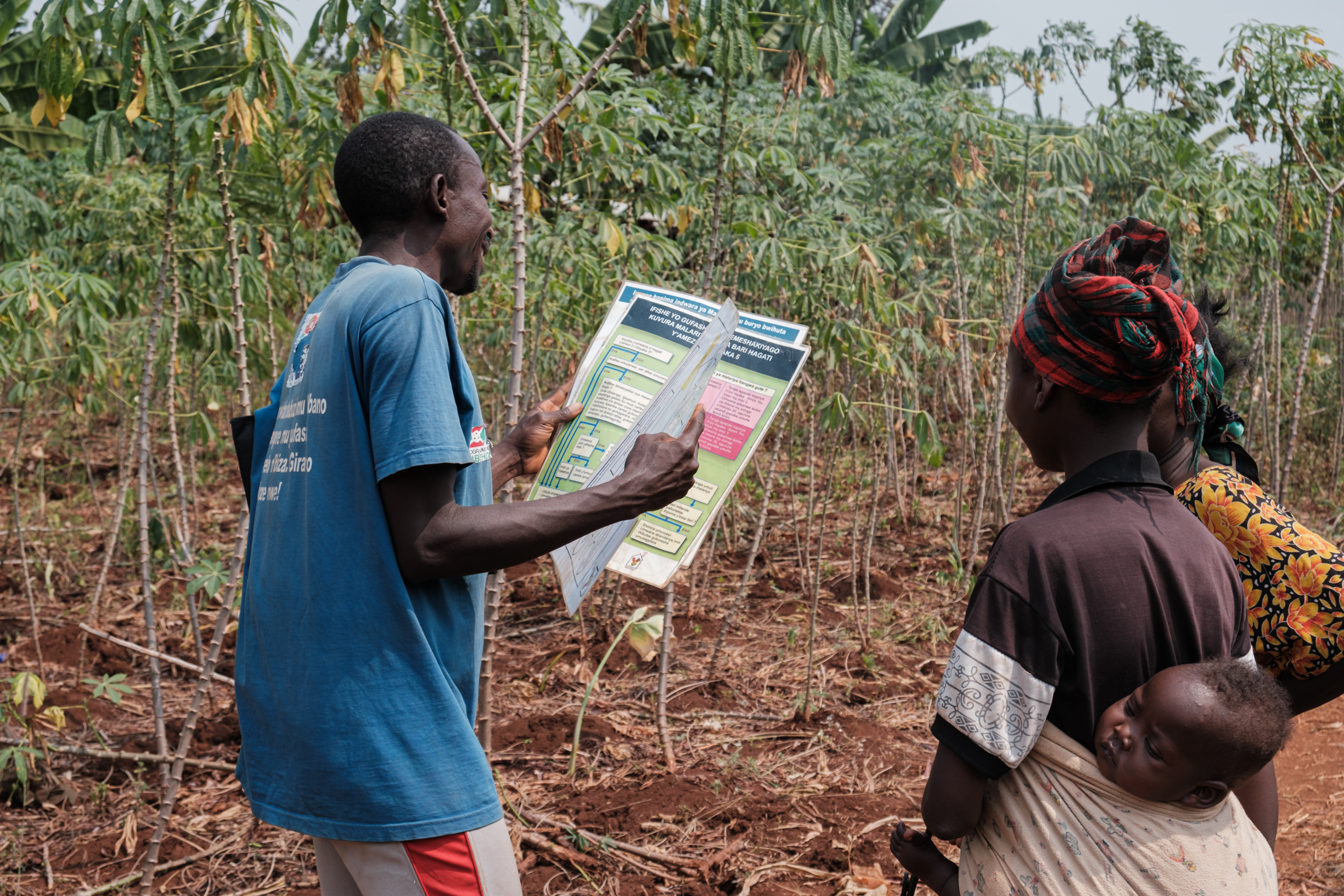
In the village of Rukana, nestled among hills at the Burundi-DRC border, is Pascale Kayobera, a dedicated community health worker. He spends his days identifying zero-dose children, diagnosing malaria, and educating community members on health issues such as malaria.
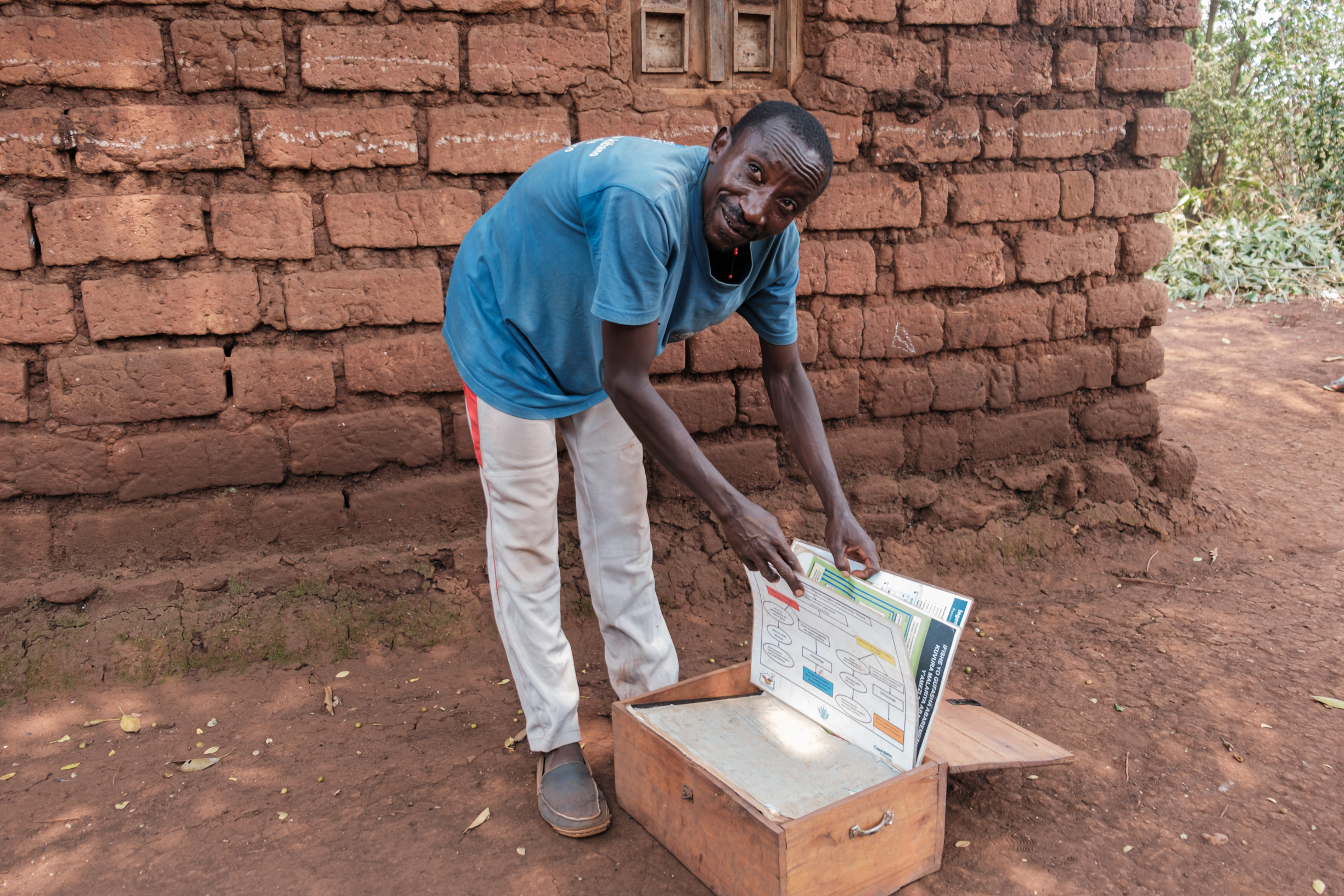
In a wooden box stored in his modest one-room brick home, Kayobera stores an assortment of tools including latex gloves, medications, and posters with cartoons featuring educational health messages.
“Burundians come and go, and Congolese come and go,” he tells Global Citizen, narrating the challenges of working in a border community. “It’s not easy to bring the kids to the health clinic [for vaccinations].”
Polio and the DRC
Pascale Kayobera is a community health worker, he spends his days identifying zero-dose children, diagnosing malaria, and educating community members on health issues such as malaria.
Polio and the DRC
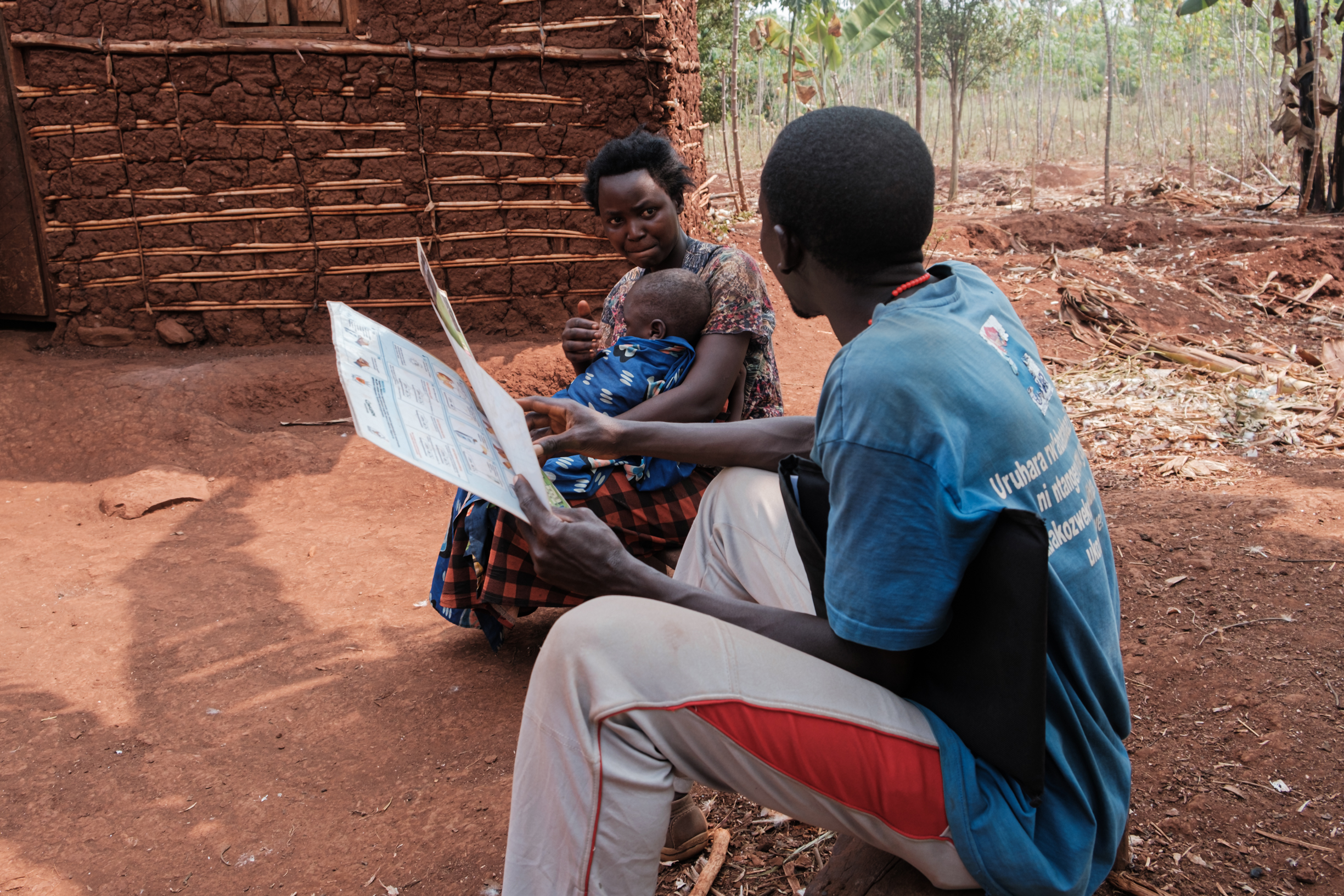
Pascale Kayobera speaks to a community member during a site visit where he discusses health and hygiene, including vaccinations as a part of his visit.
Polio and the DRC
Here, Pascale Kayobera speaks with community members during site visits in July 2025. Focused on children under five, he maintains a logbook to track visits and illnesses and is often the first person families turn to for medical care in Rukana.
Less than two miles away at the official crossing of the Burundi-DRC border, the International Organization for Migration (IOM) has established health surveillance in recent months, where health workers keep detailed logs on children who cross the border and their vaccine status. Many parents do not have vaccination records, and others are unaware of the exact vaccines their children previously received. Health workers at the border operate on a trust policy, and also help parents make sense of which vaccines their child likely received, based on their age.
With families regularly traveling back and forth between borders – typically for economic reasons – some children in Burundi travel to the DRC without completing their immunization schedule, Kyobera says. According to him, the DRC isn’t as strict as Burundi is about following up with children to ensure they’re fully vaccinated, and some children fall through the cracks.
With a focus on children under 5, Kyobera keeps a logbook to record information on children who’ve visited him and their ailments, as he is often the first point of contact for those seeking medical care in Rukana.
As he walks around the village, locals pass him by, some on their way from harvesting, others running errands. Kyobera bumps into Consilla Ndayishimye, a 56-year-old woman who reminds him of how much progress has been made over the years.
![Consilla Ndayishimiye, 56, is photographed in July 2025. "I saw kids and how they were dying before the vaccination program started in the 80s. I always tell relatives and neighbours [to get vaccinated]."](https://img.globalcitizen.org/SzlOjPhpy_Flk9XRAnBqjSnUpj8Y0H16tG2w_vrG/fit-in%2F2449x1633%2Ffilters%3Aquality%2885%29%3Afocal%281225%2C816%29%2Fhttps%3A%2F%2Fmedia.globalcitizen.org%2Faf%2F25%2Faf259fac-592d-4139-8e9b-0a9ca5607856%2Fgatespolio_worldpolioday_burundi_tchandrounitangaforglobalcitizen-022.jpg) Consilla Ndayishimiye, 56, is photographed in July 2025. "I saw kids and how they were dying before the vaccination program started in the 80s. I always tell relatives and neighbours [to get vaccinated]." Image: Tchandrou Nitanga for Global Citizen
Consilla Ndayishimiye, 56, is photographed in July 2025. "I saw kids and how they were dying before the vaccination program started in the 80s. I always tell relatives and neighbours [to get vaccinated]." Image: Tchandrou Nitanga for Global Citizen
“In my time, the kids were dropping like flies, but now that they’ve introduced vaccines, I can go a year without seeing [children dying],” she says.
Burundi’s vaccination program was introduced in 1980, so when Ndayishimye was growing up, children did not have protection against life-threatening diseases like polio, and she recalls several children her age who contracted the disease.
Given the improved access to healthcare, Kyobera shares his commitment to this grassroots health work, particularly amid the fragile humanitarian situation due to armed conflict in the DRC.
“This work is important for me, the community and the entire country,” he says — a reminder that public health is deeply intertwined in community that transcends borders.
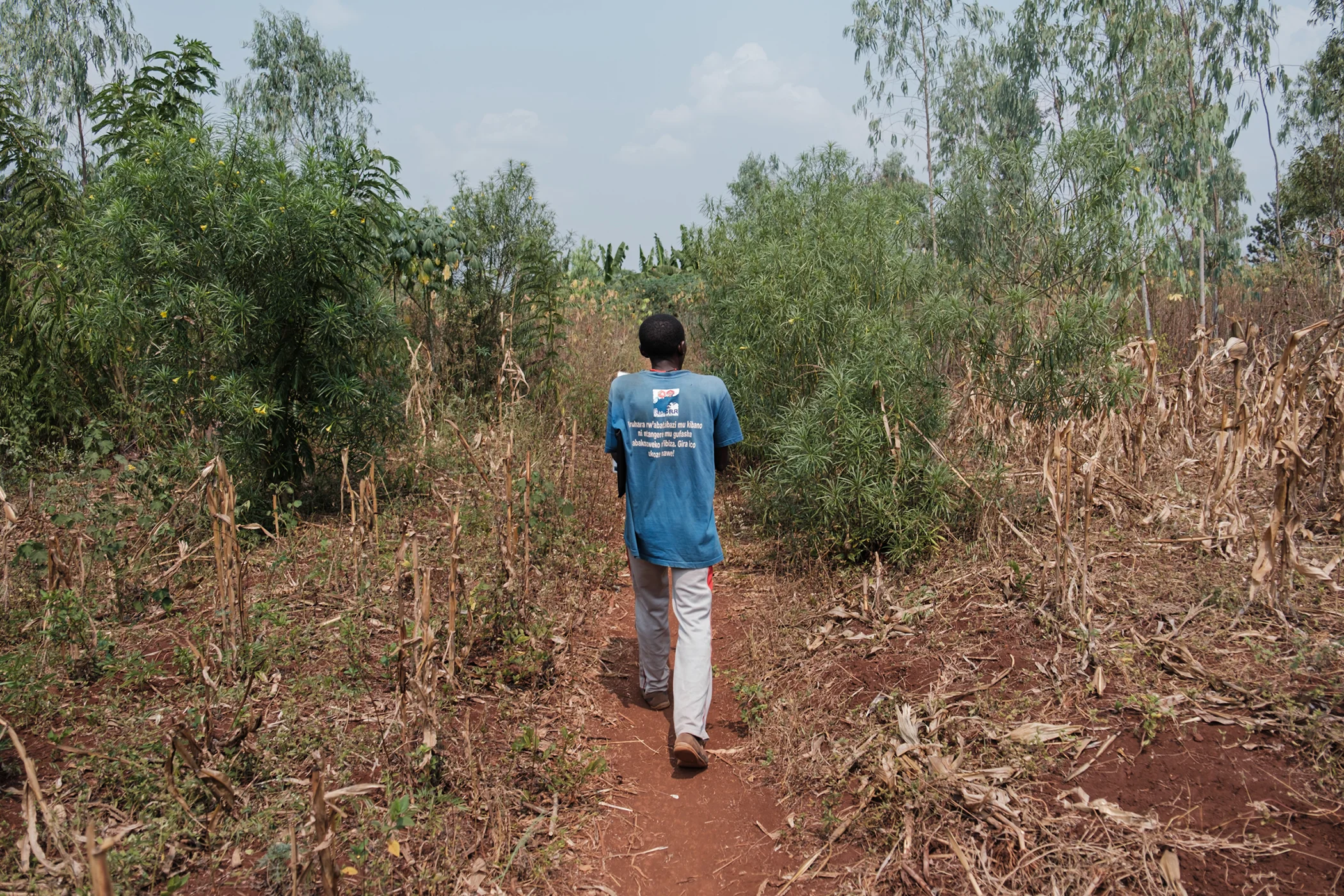 Pascale Kayobera is pictured in the field during a site visit in July 2025.. “This work is important for me, the community and the entire country,” Kayobera says. Image: Tchandrou Nitanga for Global Citizen
*This figure includes estimates for both IDPs (5.7 million people) and IDP returnees (nearly 4 million people), who were previously displaced and have returned to their towns of origin under adverse circumstances.
Editor’s Note: This reporting was made possible through the United Nations Foundation’s 2025 Press Fellowship for Individual Reporting on Polio. This is a part of Global Citizen’s grant-funded content through the Bill & Melinda Gates Foundation.