Dieu-Nalio Chery is a Michigan-based, Haitian-born photographer working as a staff photographer at the University of Michigan and a freelance photojournalist across The New York Times, Reuters, Washington Post, Haitian Times, and The Associated Press. In 2019 his coverage of the political and humanitarian crisis in Haiti earned Chery the Robert Capa Gold Medal from the Overseas Press Club.
His continued coverage of the crisis in Haiti, where civic space is repressed, also led him to become a finalist for the Pulitzer Prize in breaking news photography in 2020. Here, in his own words, Chery shares how the repression of civic space affected his life and award-winning work; and details how the Artistic Freedom Initiative helped him move to a new country after facing threats in Haiti.
I have been a photographer for more than two decades.
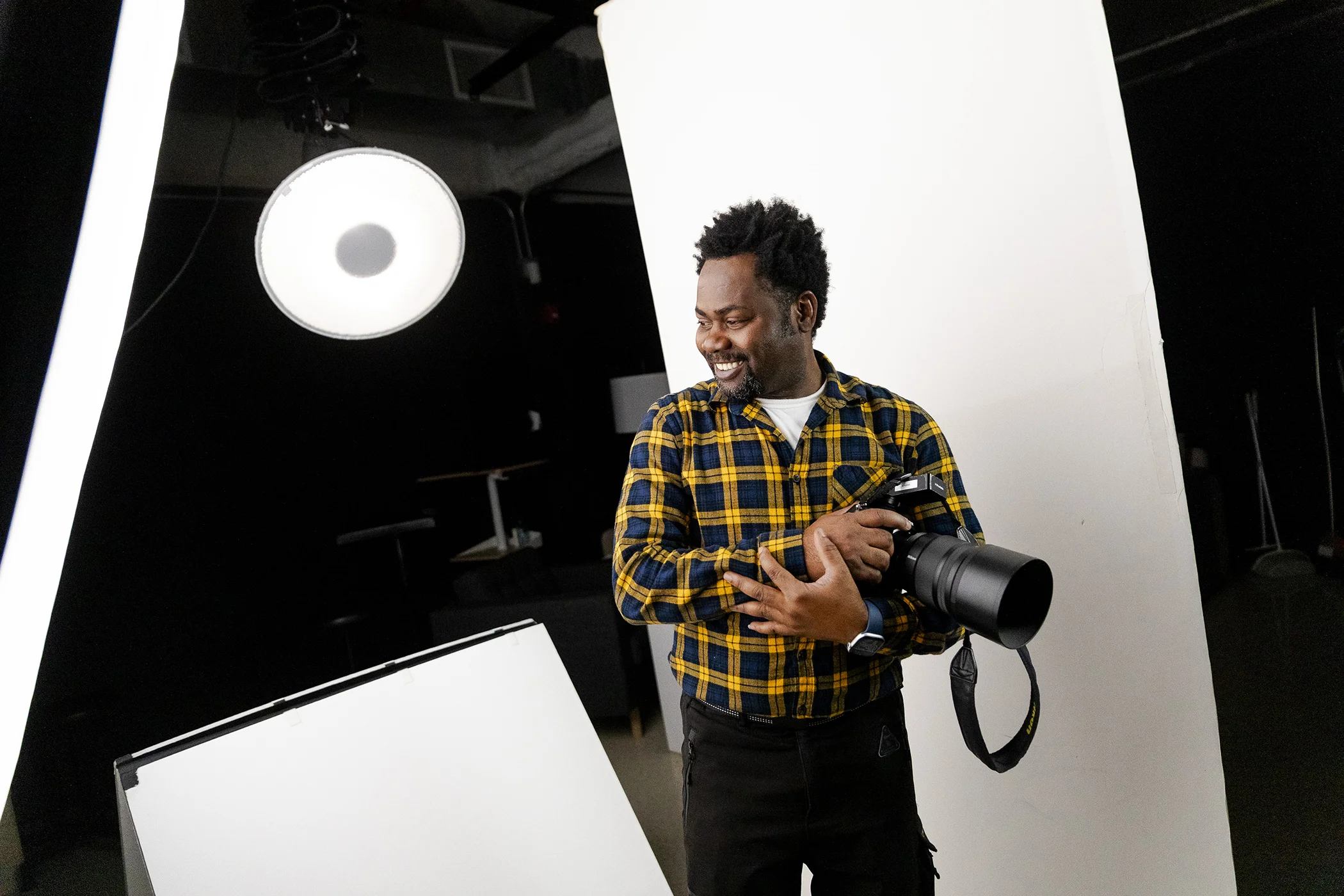 Photojournalist, Dieu-Nalio Chery, at the University of Michigan Photography studio on Dec. 12, 2025 in Ann Arbor, Mich. Chery is a renowned photographer and visual artist from Haiti, whose work focuses deeply on human rights abuses and social injustice.
I was born in Haiti, just before the revolution that ended the Duvalier regime in 1986. Growing up in a country grappling with political division and struggling for democracy, I developed a love for photography early on. I would create makeshift cameras in elementary school, pretending to capture moments with them. This passion eventually took me to my uncle’s photo studio in the capital, Port-au-Prince, at the age of 20, marking the start of my mission to tell the stories of those often unheard. Determined to be a photographer, I taught myself using books and a borrowed Minolta camera from a classmate and learned to appreciate the power of capturing moments through photography.
In 2003, I joined the Group Journalistes en Action, taking pictures of government events while President Aristide was in power. From there I began venturing into the slums, that were often rife with crime, and meeting ordinary people. It was a challenging time filled with lessons about crime, violence, and human suffering — particularly in areas like Cite Soleil, which is known for gang activity.
After the devastating 2010 earthquake hit Haiti, there was a major increase in murder, kidnappings, and violence.
When I observed how authorities treated the victims, I decided to pursue a career in photojournalism and began working for the Associated Press (AP) right after the natural disaster. At the time, many foreign photographers rushed in to capture the devastation of the 7.5 magnitude earthquake. Even though the international community provided substantial financial support to help rebuild, many locals felt none of that progress touched their lives. This bred frustration, especially when they saw people, both local and foreign, taking pictures of their suffering.
As I navigated the slums and the corridors of power, I became increasingly aware of the resilience of the Haitian spirit amidst adversity. For a journalist, there is no stronger way to chronicle and convey the daily life of a nation than through photography. Many of my images have, therefore, become iconic and widely recognizable records of major Haitian events including human rights abuses, violent demonstrations, illegal arrests, corruption, hunger, homelessness, earthquakes, hurricanes, and flooding. This also includes other critical events such as the violent evictions of people living in IDP (Internally Displaced Persons) camps after the 2010 earthquake. As a result, my photos have sometimes caught the attention of, and been used by, international human rights organizations.
In the challenging year of 2019, my commitment was put to the ultimate test.
I was tasked with covering the ratification of the newly appointed Prime Minister, Williams Michel. Experience has taught me to anticipate unrest, yet I couldn’t have predicted what ensued. Decked in safety gear, I arrived early, only to be enveloped in clashes between opposing political factions. Amidst the chaos, I found myself tracking Senator Jean Marie Ralph Féthière — whose encounter with protesters would change my life.
As tensions escalated, Senator Féthière, in a moment of panic, discharged his firearm. The scene turned chaotic; bullets flew and by a vile twist of fate, one found its way to my jaw. This single moment blurred the line between spectator and participant, and my camera lens captured it all. Frozen by shock, all I could think was, “I’m being shot.” Yet, my resolve to document the truth outweighed my fear. The realization of my injury came only when I spotted blood on my vest. My colleague, Andres Martinez Casares from Reuters agency, promptly came to my aid. Adrenaline masked the pain, but the reality of my situation was undeniable —I needed medical attention. Even in the face of such peril, my passion for journalism persisted.

Dieu-Nalio Chery
Ruling party Senator Ralph Fethiere fires his gun outside Parliament as he arrives for a vote on the ratification of Fritz William Michel's nomination as prime minister in Port-au-Prince, Haiti, Monday, Sept. 23, 2019.

Dieu-Nalio Chery
Protestors and a disgruntled sector of the Haitian police force known as Fantom 509 storm a police station to free imprisoned fellow officers in Delmas, Port-au-Prince, Haiti, March 17, 2021.
Dieu-Nalio Chery
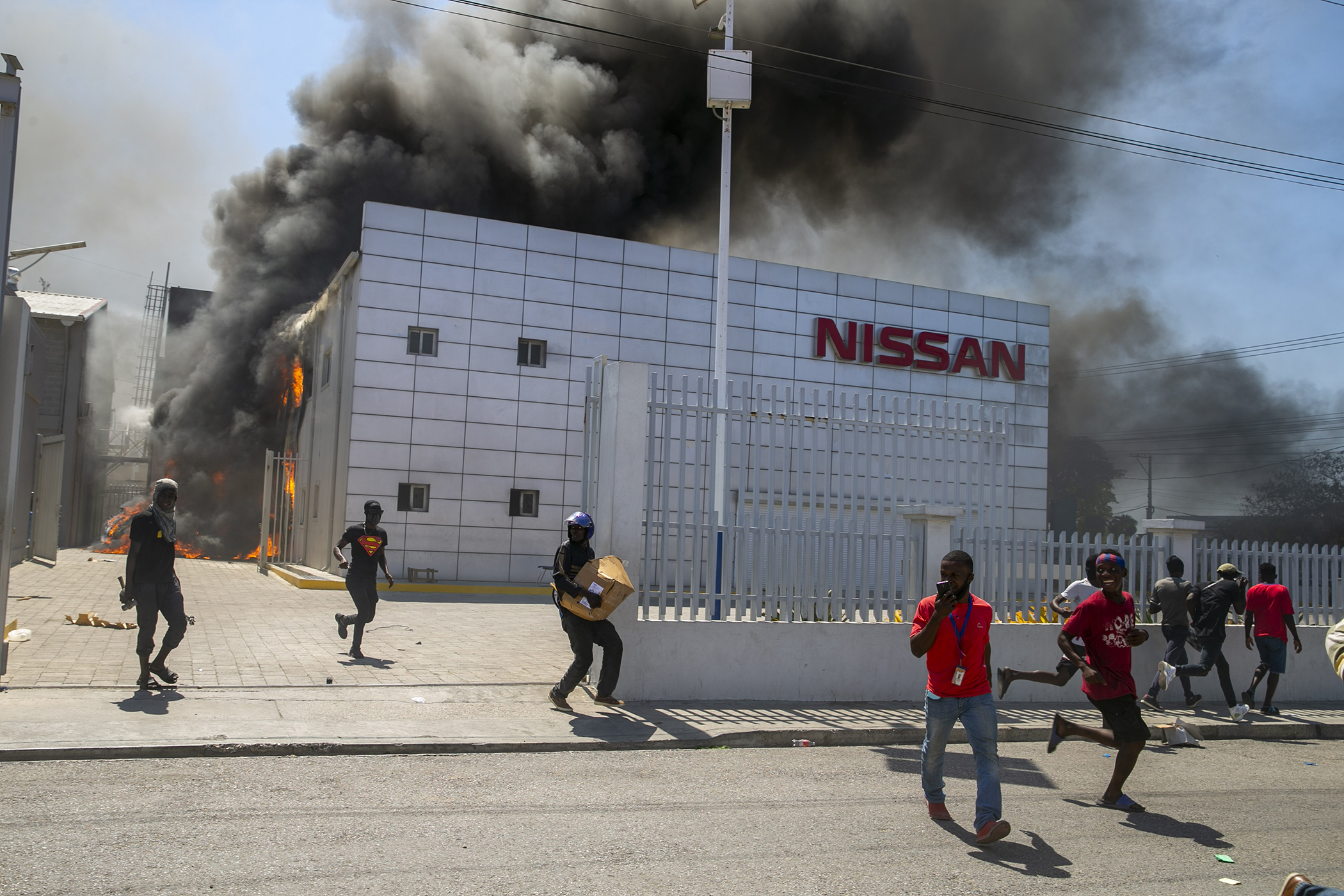
Looters flee from the Nissan auto dealership set ablaze during a protest by a disgruntled sector of the Haitian police force known as Fantom 509, in Port-au-Prince, Haiti, March 17, 2021.
Dieu-Nalio Chery
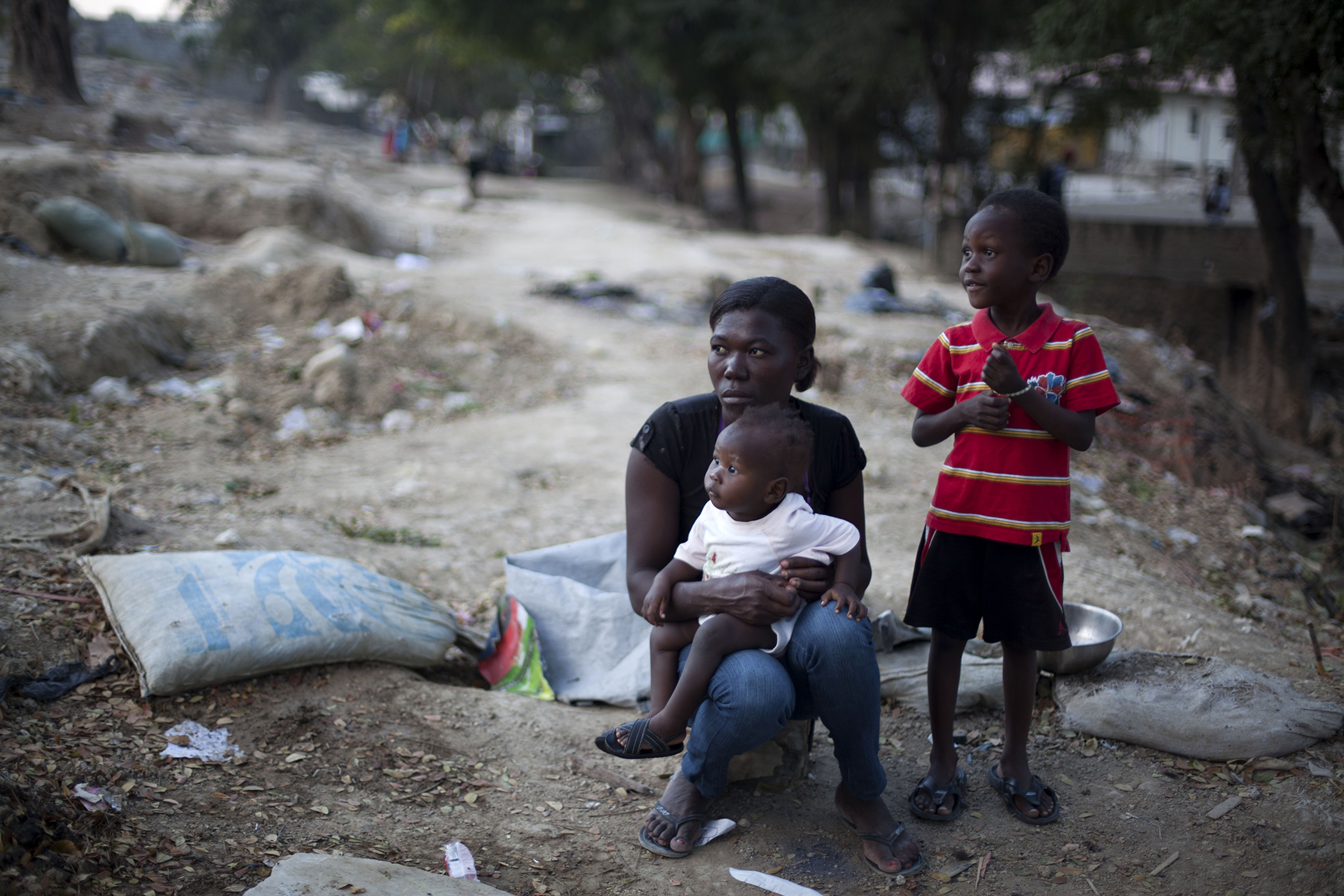
In this Jan. 22, 2014 photo, Betania Bruno, 26, sits with her children next to her few belongings after she was evicted from the Petion-Ville Golf Club, a camp for displaced people of the 2010 earthquake, in Port-au-Prince, Haiti.
In 2021, I was covering a protest by members of former police officers, Phantom 509. They demanded the release of the bodies of five police officials who were killed during an operation in a slum in downtown Port-au-Prince. The protest became violent as they went to a few police stations and released police officers who had been jailed. Afterwards they went to a Universal Motors car dealership, and started looting. I tried to take a picture in front of the car dealership. The masked former police officers pointed at me and one said: “you want to be the best journalist here in the country? So if you take a picture, we will kill you.”
I have my way of taking pictures so people don’t know, and I continued working. Then, there was a group of gangs that showed up because the car dealership paid them for security, and they started firing bullets at the looters. I lay on the ground behind a wall and tried to take a picture. Eventually they dragged the bodies of the looters they killed away. So I took a few pictures, and left. I told my driver that we should run away in a zigzag pattern so that we were less likely to get hit if they shot at us.
For a journalist, there is no stronger way to chronicle and convey the daily life of a nation than through photography.
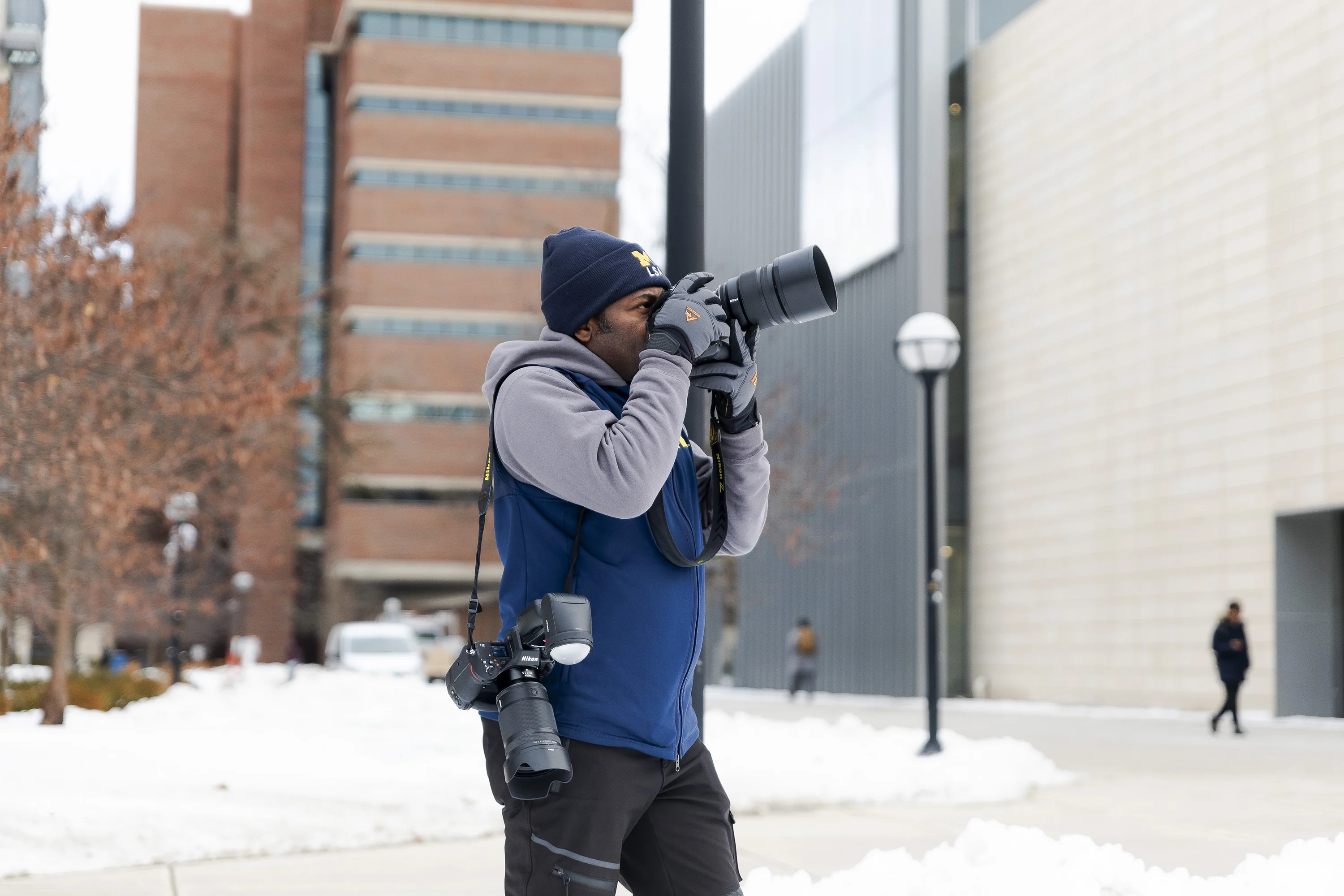 Photojournalist, Dieu-Nalio Chery, takes photos on campus for a “snow feature” assignment at the University of Michigan on Dec. 12, 2025 in Ann Arbor, Mich., where he now resides.
Three days after AP published the picture, a friend of mine, a journalist, called me and said: “Hey Chery, the gang chief of G9 of Cité Soleil called me, and he wants to find out about you because of the pictures that you published.”
I started panicking because, in 2018 they killed my colleague and friend, Vladimir Legagneur, who was photographing a story in the slum of Grand Ravine, a neighborhood in the capital. The investigation of his death went nowhere because authorities were involved in his murder. I had a successful career in Haiti, but after my life was threatened, I realized I couldn’t stay. I had to find a way to leave my country and start over somewhere else — I ended up in exile in New York.
Refugees moving to a new country face numerous challenges.
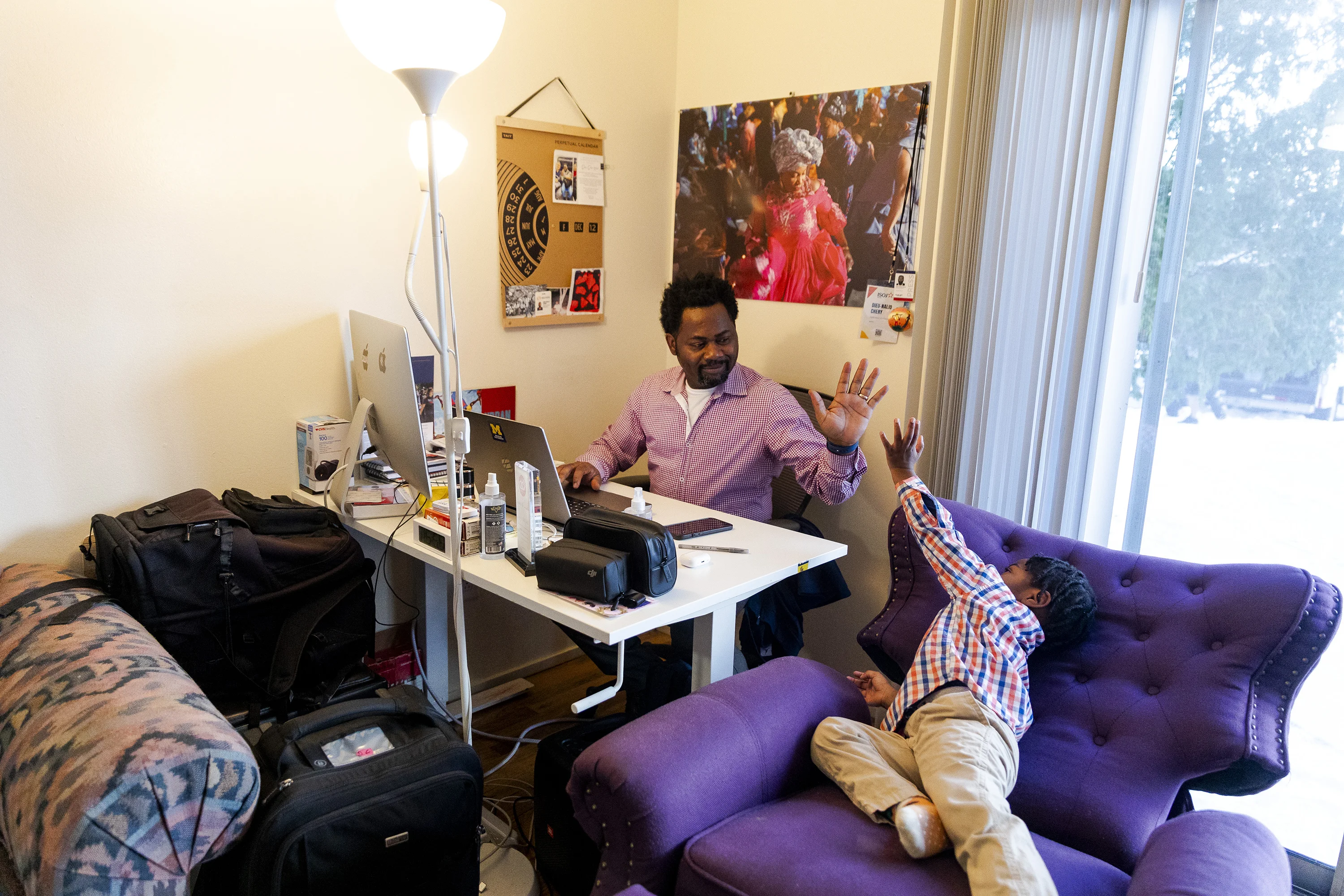 Photojournalist, Dieu-Nalio Chery, high fives his sone, Jahnalio, 3, while he works at his home office on Dec. 12, 2025 in Ann Arbor, Mich.
When I relocated to New York for safety in July 2021, I didn't have family support to help me settle in, nor did I know how to find a place to live or how to access legal help to understand my immigration path forward. Upon meeting the Artist Freedom Initiative, I felt a sense of relief. They assisted me in finding housing, connected me with key people in my network, provided workshops to help me integrate into professional fields, and guided me through the immigration process. Without their support, I wouldn’t have been able to continue my work after my one-year scholarship at The City University of New York. I believe that every artist or photographer seeking refuge in a new country needs this kind of assistance to successfully settle.
I aspire to publish a book featuring my work, documenting my experiences for future generations and inspiring them with my resilience. I want my art to reach the right people who can facilitate change.
As an artist, I require protection and the freedom to express my ideas through images. I also wish to feel a sense of belonging within the new community I have joined.
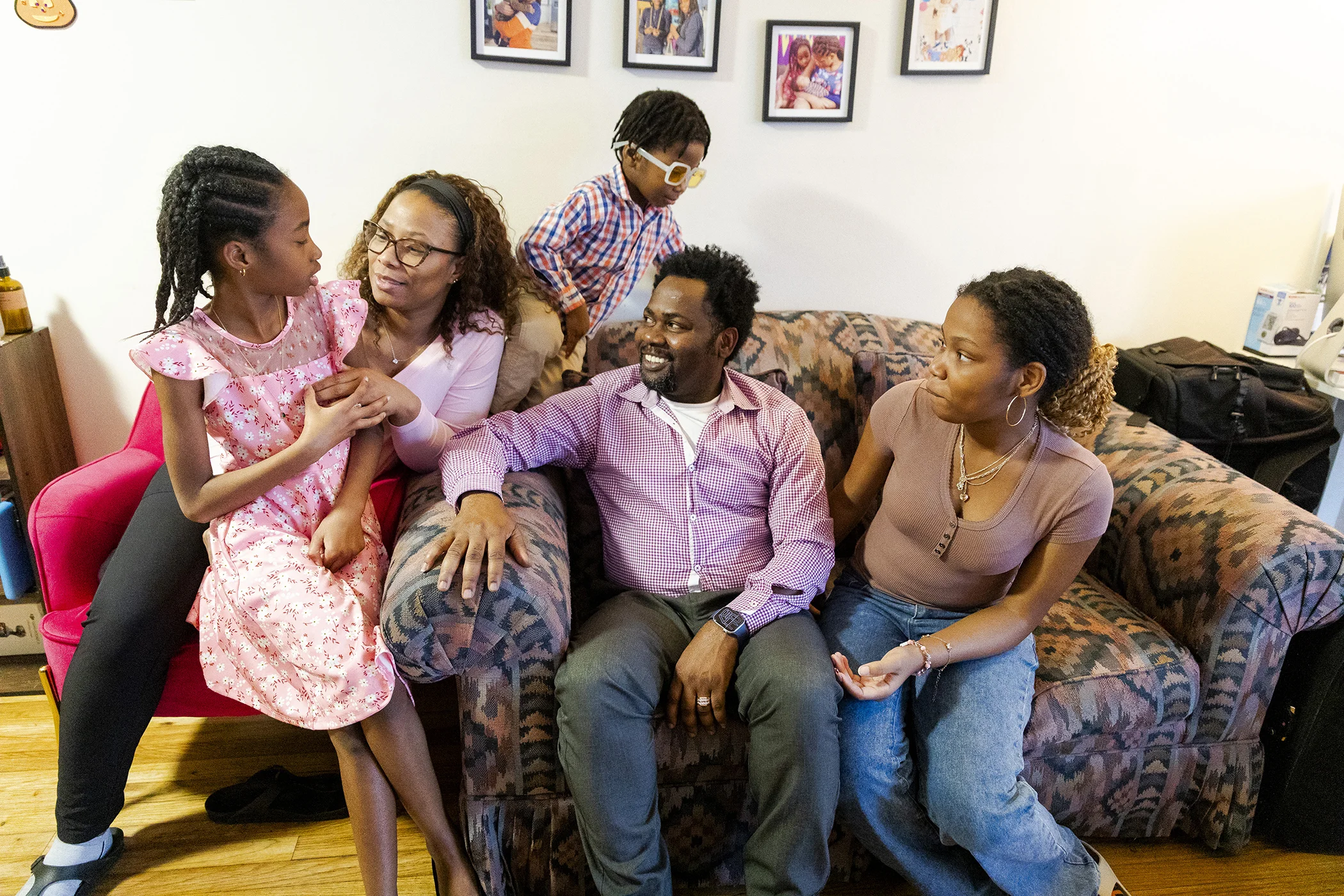 Photojournalist, Dieu-Nalio Chery, at home with his children Ruthnise, 16, Sara-Jah, 9, Jahnalio, 3, and wife Mathilde at his home on Dec. 12, 2025 in Ann Arbor, Mich.
This article, as narrated to Gugulethu Mhlungu, has been slightly edited for clarity.
The 2025-2026 In My Own Words series is part of Global Citizen’s grant-funded content.